Siem v Womble Bond Dickinson: High Court dismisses £50m negligence claim over failed Hyde Park Gate redevelopment
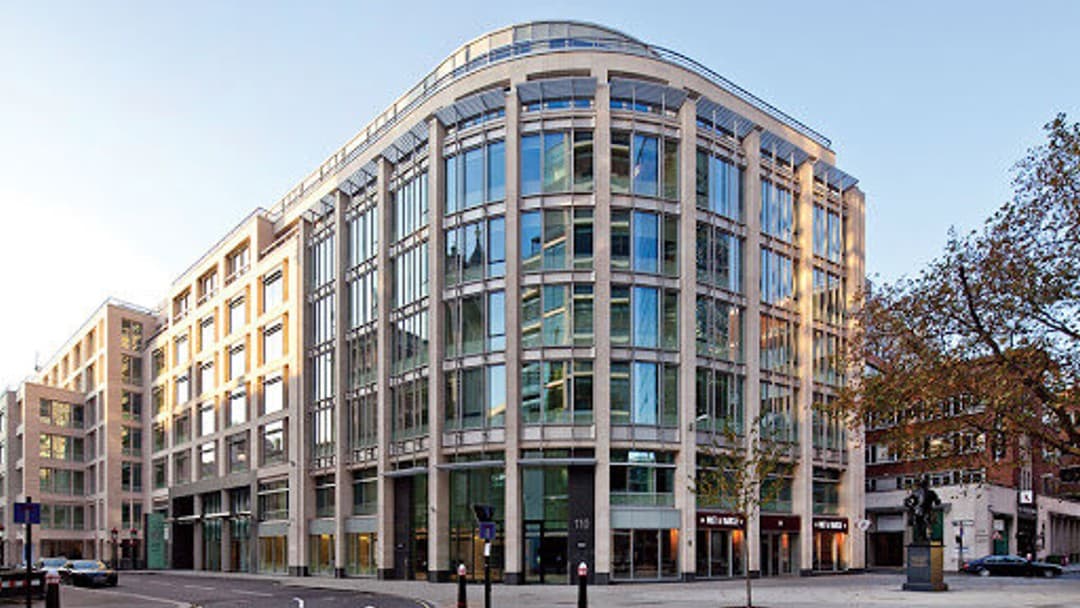
WBD cleared of professional negligence following a three-week trial in the Chancery Division.
Womble Bond Dickinson (UK) LLP has successfully defended a £50m professional negligence claim arising from the collapse of a proposed luxury residential redevelopment near Hyde Park Gate. The transatlantic firm, which operates across 40 offices in the US and UK, was sued by Norwegian shipping magnate Kristian Siem, property developer Steven Wake, and Wake's vehicle Chapters Property London Limited.
The claimants alleged that WBD's handling of a share purchase agreement had cost them a substantial chance of profit. Mr Siem had intended to acquire the upper floors of a brutalist 1970s property in the Royal Borough of Kensington and Chelsea for £19m. The plan was to demolish the building and replace it with up to fifteen high-specification flats. At over £3,000 per square foot, the potential returns were considerable.
Mr Justice Richards dismissed all four pleaded breaches of duty. He found against the claimants at the threshold question of breach, without needing to resolve the full dispute on duty of care.
The retention clause dispute
Central to the claim was WBD's decision in October 2017 to include a £1m retention provision in a draft share purchase agreement. The provision was designed to secure funds against potential warranty claims following the acquisition of Somerset Properties Limited, a Cayman Islands vehicle holding the upper flat. The claimants contended it was negligent commercial advice that needlessly provoked the selling side into withdrawing from negotiations.
Richards J rejected that characterisation. WBD partner Tom Fitzpatrick had advised sensibly given the state of negotiations at the time, the judge found, and the retention suggestion reflected a reasonable professional judgement. Critically, Mr Siem's own solicitor Howard Freeman of Freemans independently reached the same conclusion, advising that a retention was desirable and extending the proposed period from 12 to 18 months.
The judge was also unpersuaded that WBD had negligently failed to disclose the availability of a non-distribution undertaking. He preferred Mr Fitzpatrick's evidence that no such undertaking had been placed on the table in a September 2017 call with Withers LLP, who acted for the selling side.
Causation and Mr Siem's withdrawal
Even assuming breach, Richards J found the claimants could not establish factual causation. The primary counterfactual was that an SPA would have been signed by 3 November 2017 absent WBD's negligence. That case failed. Mr Siem's own negotiating stance on the exchange-to-completion timetable would have produced the same flashpoint with the selling side regardless of the retention issue.
Mr Siem withdrew from the transaction in January 2018. The judge found this was driven by his perception of a weakening prime property market and doubts about Mr Wake's ability to manage the redevelopment. It had nothing to do with WBD's conduct.
Witnesses and planning
Richards J found Mr Siem an honest witness. Mr Wake's reliability was more circumscribed. He was party to a litigation funding arrangement that offered an enhanced return on success, which the judge declined to characterise as a conventional funding agreement, noting it provided context for inconsistencies in his evidence.
On planning, all three proposed redevelopment schemes would have been refused permission. The basement policy in the Local Plan was an insurmountable obstacle. Separately, the proposed demolition of a building making at least some positive contribution to the Conservation Area carried a 60% likelihood of refusal in its own right.
On duty of care, Richards J concluded WBD had not assumed responsibility to Mr Siem in relation to warranty advice. Mr Siem had deliberately put in place an arrangement to rely on Freemans instead, and had obtained that advice accordingly.
A consequential hearing on costs has been listed no later than 18 June 2026.
 Copyright & permissions