ShortsTV loses Court of Appeal battle over YouTube Shorts trade mark
Global assessment of confusion favours Google in short-form video dispute
The Court of Appeal has dismissed Shorts International Ltd's appeal against Google LLC, confirming that Google's use of the word "Shorts" in connection with its YouTube Shorts platform does not infringe SIL's registered trade marks. The judgement, handed down on 25 May 2026, was given by the Chancellor of the High Court, with Lord Justice Phillips and Lady Justice Falk agreeing.
SIL, a producer and distributor of short films operating the ShortsTV television channel, holds five registered trade marks incorporating the word "shorts". Google launched its YouTube Shorts service in the UK in 2021, dedicated to user-generated videos under 60 seconds in vertical format. SIL contended that Google's various uses of the word "Shorts", including as a standalone term, within the name "YouTube Shorts", and in graphical forms, infringed its marks under sections 10(2) and 10(3) of the Trade Marks Act 1994.

The Deputy Judge at first instance, Michael Tappin KC, had found that the word "shorts" was descriptive of short-form audiovisual content more broadly, not merely of short films as SIL contended. The Court of Appeal upheld that finding, rejecting SIL's argument that the average consumer familiar with its registered marks would understand "shorts" exclusively to mean short films in the traditional cinematic sense.
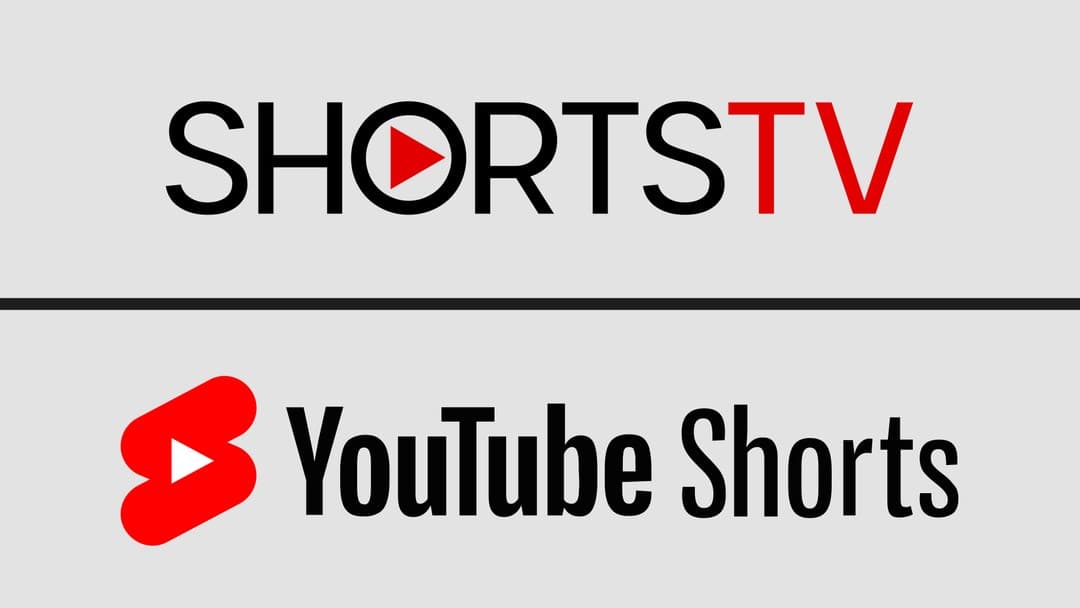
SIL's registered marks, the 2018 Marks, incorporate the word "shorts" in a sans serif font with a red triangular play symbol set within the letter "O".


The Chancellor rejected SIL's ingenious attempt to argue that, because the average consumer in trade mark law is deemed to be familiar with the registered mark, such a consumer would necessarily understand "shorts" to mean only short films. The Court confirmed that this legal fiction does not alter the factual finding about the word's meaning; there was simply no basis on the evidence for concluding that a relevant class of consumers understood "shorts" to carry only that narrower meaning.
On the section 10(2) infringement grounds, the Court also rejected SIL's submission that the judge had impermissibly allowed descriptiveness to "pollute" his comparison of marks and signs. Citing the Supreme Court's recent guidance in Iconix Luxembourg Holdings SARL v Dream Pairs Europe Inc [2025] UKSC 25, the Chancellor emphasised that the likelihood of confusion requires a global assessment, warning against the proliferation of "legal sub-tests with rigid methodological criteria" which risk producing "foot faults by trial judges" on what are, in truth, evaluative conclusions.
SIL's section 10(3) claim, which would have afforded enhanced protection, failed at the threshold. The marks lacked a reputation among a significant part of the relevant public in the UK as at June 2021, when Google commenced the acts complained of. The hard evidence was described by the Court as "paper thin": the most-streamed title on SIL's Amazon Prime Video channel attracted just 71 viewers in July 2021, and SIL's founder accepted that viewership was "very small" at the time.

The Court further upheld the invalidity of SIL's word-only mark, SHORTSTV (the 383 Mark), finding it descriptive of goods and services on which it was registered. SIL's fallback attempt to limit its specification by adding the words "save for short films" was rejected, both because "short films" lacks sufficiently clear and consistent meaning as a category, and because the word "shorts" had in any event been found to be descriptive of a wider class of content than short films alone.
Google's cross-appeal, which had been advanced reactively and only in the event that SIL's appeal succeeded, did not require determination.
Shorts International Ltd v Google LLC [2026] EWCA Civ 668. Simon Malynicz KC, Daniel Selmi and Laura Adde (instructed by Sheridans) for the appellant; Lindsay Lane KC and Jessie Bowhill KC (instructed by Fieldfisher) for the respondent.
 Copyright & permissions
.png&w=3840&q=60)







.jpg&w=3840&q=60)