“Freedom is the freedom to say that two plus two make four,” wrote George Orwell. The controversy involving Sally Rooney and Palestine Action illustrates how quickly that proposition is complicated at the intersection of political allegiance, money, speech and criminal law.
In June 2025, the Home Secretary announced that Palestine Action would be proscribed under section 3 of the Terrorism Act 2000. The order took effect on 5 July, following a series of direct-action incidents, including allegations of serious damage to military aircraft at RAF Brize Norton. The Act permits proscription where the Home Secretary believes an organisation is “concerned in terrorism,” including ideologically motivated action involving serious property damage.
The proscription represented a significant extension of the counter-terrorism framework into an area closely associated with political protest, renewing debate about the boundary between legitimate activism and conduct falling within terrorism legislation. This is because proscription is not merely a label; sections 11–13 of the Terrorism Act 2000 criminalise membership, inviting support, supportive meetings, suggestive displays, and fundraising for such groups. Political solidarity may thereby be brought within the machinery of counter-terrorism where its expression engages the criminal provision governing support for a proscribed organisation.
The Rooney-Faber Dilemma
Soon after Palestine Action’s proscription, Sally Rooney, the bestselling Irish author of “Normal People” and other critically acclaimed works of literature, publicly declared that she intended to continue supporting the group and to use proceeds from her work for that purpose. Although Palestine Action is not proscribed in Ireland, her declaration created a problem for her publisher in Britain.
Section 15(3) criminalises providing money or property where the provider knows, or reasonably suspects, that it may be used for terrorism. Similarly, section 17 criminalises participation in funding arrangements through which money is made available to another person, where the requisite knowledge or reasonable cause for suspicion exists. Both offences carry a maximum sentence of 14 years' imprisonment.
Consequently, Faber could not treat the destination of future royalties as an abstraction. One option was for the publisher to continue selling the books without passing on any earnings to Rooney, but it concluded that this would be “an unconscionable situation.” With Rooney’s agreement, it ceased UK supply of her books. Although no court has banned Rooney’s novels, and retailers can still sell existing copies, the financial offences have produced a comparable practical result: the books themselves became collateral damage in the practical consequences of the proscription regime.
When ordinary commerce becomes criminal liability
For Faber, the difficulty lies not simply in what Rooney intends to do with her royalties, but in what they can reasonably be expected to know about their potential destination. This issue was considered by the Supreme Court in R v Lane and Letts, in which the appellants were charged under section 17 after arranging to send money overseas to their son in Daesh-controlled areas in Syria. The central question before the Justices was whether the prosecution needed to establish that the defendants actually suspected the money might be used for terrorism, or whether an objectively reasonable basis for suspicion was sufficient. Ultimately, the Supreme Court unanimously adopted the latter interpretation, stating that Parliament intended to impose an objective standard, requiring consideration of what a reasonable person would have suspected in their circumstances.
Applied to Faber, the implications are clear. Rooney’s royalties arise from an entirely legitimate publishing contract, yet her public commitment to supporting Palestine Action could provide an objectively reasonable basis for suspecting that money paid to her might ultimately reach a proscribed organisation. Therefore, the publisher’s commercial obligation becomes potentially entangled with criminal liability, not because of its own political convictions, but because it may facilitate a financial transaction carrying a prohibited risk.
There are, however, potential limitations to this comparison. While Lane and Letts clarified the statutory suspicion requirement, there is little authority concerning situations in which legitimate commercial publishing contracts come under scrutiny because of an author's stated financial commitments. Nevertheless, Faber’s decision illustrates how the very possibility of criminal prosecution may influence commercial conduct long before any judicial determination of liability.
Could Faber have sought legal protection?
There is, however, an important qualification within the Terrorism Act itself. Section 21ZA provides a mechanism for individuals and organisations to obtain protection from criminal liability under sections 15–18 by disclosing a suspicious transaction to the National Crime Agency and obtaining prior consent. This provision has attracted particular attention in the context of humanitarian aid organisations operating in territories controlled by terrorist groups. Such organisations may face demands to pay local taxes, checkpoint fees or other incidental charges simply to deliver humanitarian assistance.
However, the effectiveness of section 21ZA has been questioned. Jonathan Hall KC, the Independent Reviewer of Terrorism Legislation, observed that the provision was unsuitable for addressing the operational difficulties faced by humanitarian organisations required to make ongoing payments. This criticism has particular relevance to Faber. Unlike a single payment requiring prior consent, the publisher’s contractual relationship with Rooney involves continuing royalty obligations. Although section 21ZA may provide protection for an identified transaction or arrangement, it does not operate as a general licence authorising an indefinite series of future payments. The practical difficulty is therefore whether the mechanism could offer sufficient certainty for an ongoing publishing relationship.
It therefore remains unclear whether the provision could have offered Faber a workable solution. This exposes a wider limitation of the statutory framework. While the law provides a mechanism for managing individual financial risks, it may offer considerably less reassurance to those whose legitimate commercial obligations are ongoing. In Faber’s case, the uncertainty surrounding criminal liability has itself been sufficient to bring an otherwise lawful publishing relationship to a halt.
An unprecedented arrest surge
The arrest figures sharpen the controversy. Home Office statistics for the year ending 30 September 2025 recorded 1,886 terrorism-related arrests, a 660 per cent increase on the previous year. Of those, 1,630, or 86 per cent, were linked to alleged support for Palestine Action. The official figures also reveal an extraordinary demographic shift, with the average age of those arrested in Palestine Action-linked cases being 57, compared with 30 for other terrorism-related arrests.
At one London demonstration in August 2025, more than 520 people were arrested for displaying placards allegedly supportive of Palestine Action. Their average age was 54; the largest cohort was aged 60 to 69. By June 2026, annual terrorism-related arrests had reached 3,867, 1,553 per cent higher than the preceding year. Proscription has thus coincided with the greatest recorded volume of terrorism-related arrests, driven overwhelmingly, on the published breakdown, by alleged support for the proscribed organisation.
This does not prove that the law is wrong. Parliament attached consequences to support for any proscribed organisation, regardless of age or motive, yet the age profile of many of those arrested as terrorism suspects nevertheless illustrates the potential distance between the statutory definition of terrorism-related offending and wider public conceptions of terrorism.
The courts and the constitutional question
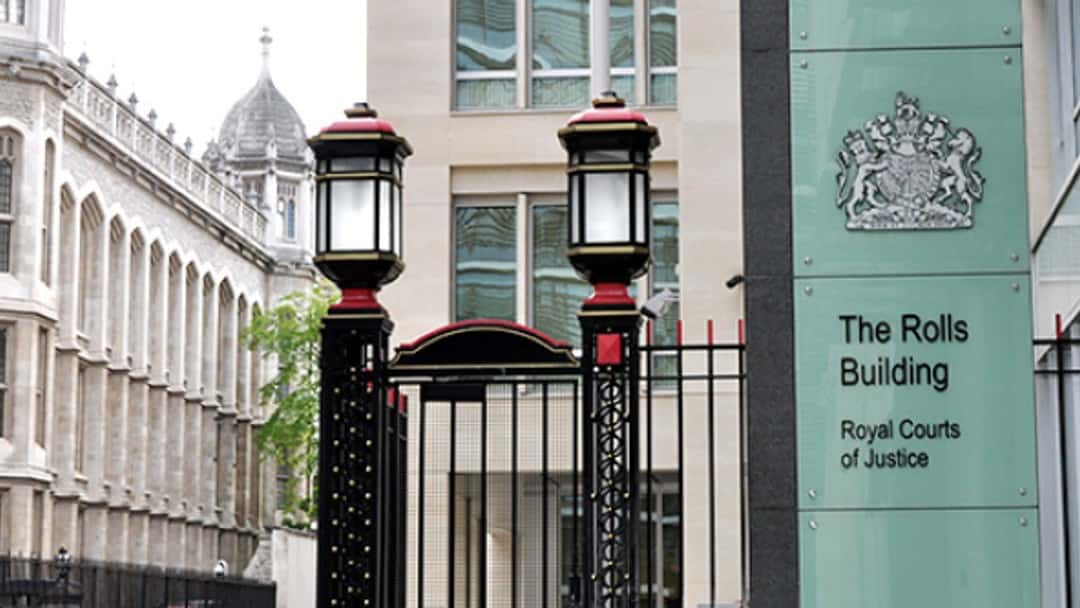
The legal challenge has produced conflicting judicial decisions. In February 2026, the High Court held the proscription unlawful, finding departure from policy and disproportionate interference with Articles 10 and 11 of the European Convention on Human Rights. In June, a five-judge Court of Appeal reversed that decision. The Supreme Court has granted permission to appeal in R (Ammori) v Secretary of State for the Home Department. The issue is stark: was the proscription lawful?
Importantly, permission to appeal has been granted only on the ground concerning the Home Secretary’s application of the published proscription policy, not the human-rights proportionality ground. Success may remove the legal foundation of the Rooney–Faber impasse. Failure would leave the restrictions in place, subject to legislation or a Strasbourg challenge. Earlier arrests and prosecutions may then raise separate questions of consequence and remedy.
Liberty at the point of discomfort
John Stuart Mill argued that silencing opinion injures society, even when the opinion is wrong, because truth is strengthened by hearing the error and then answering it. Yet free expression has never meant freedom from every legal consequence. The state also has a duty to protect the public and prevent terrorist financing.
The difficulty lies in classification and proportionality. While the existence of section 21ZA demonstrates that the law recognises the need to accommodate legitimate transactions, the practical question remains whether those safeguards sufficiently counterbalance the deterrent effect of potentially severe criminal liability.
A statutory regime designed to confront violent and clandestine organisations may also have consequences for transactions involving a novelist’s royalties and for protestors displaying supportive placards. The most difficult questions surrounding freedom of expression arise precisely where speech is provocative, unpopular or offensive. The Home Secretary must make difficult judgments, balancing a perceived threat to society against our freedom to protest and express our views.
The Supreme Court will decide the legality of the proscription, not the political merits of Palestine Action or Sally Rooney’s views. But its judgment will inevitably answer a larger question: how much dissent can a liberal democracy criminalise in the name of security before the protection of freedom risks becoming its restriction?






 Copyright & permissions