Ross v Phillips: High Court orders account after trustee fails to disclose rental income
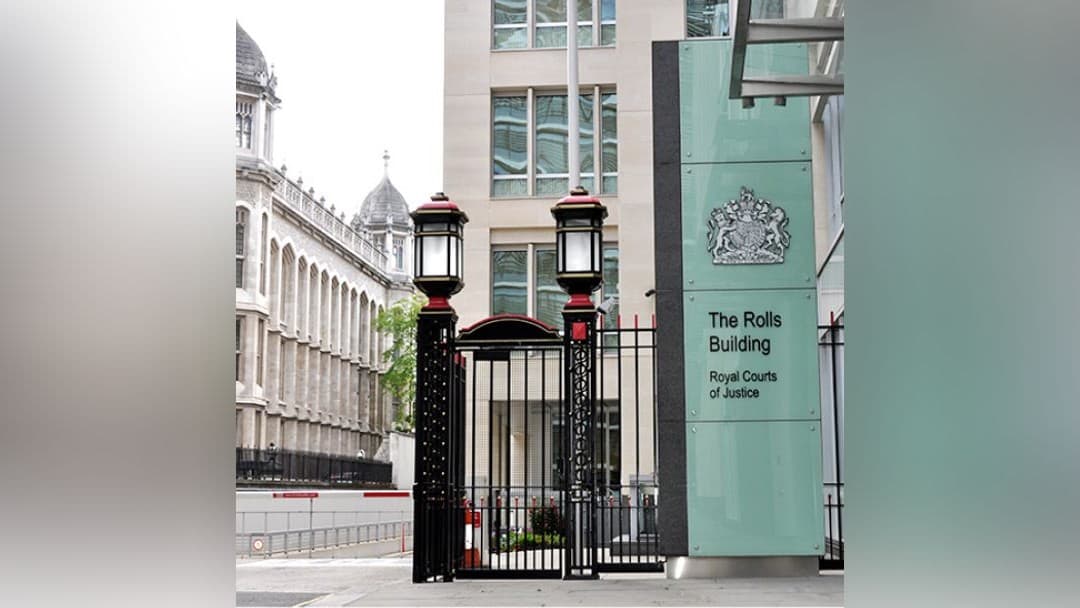
High Court rules on disputed rental account after a trustee failed to comply with disclosure orders.
The High Court has ordered a trustee to account for more than a quarter of a million pounds in rental income after he repeatedly failed to comply with directions requiring him to disclose what had actually been received from a portfolio of let properties.
The judgement, handed down by Master Teverson sitting in retirement, follows an earlier ruling by HHJ Johns KC in August 2025, which found that a 2015 declaration of trust purporting to transfer beneficial ownership of three Chatham properties from HRP Complete Solutions LLP to a newly formed sister LLP was invalid. That earlier judgement concluded that beneficial ownership of the properties had never left the original LLP, and Mr Andrew Phillips, along with a company called Bond 58 Homes Ltd, were declared to hold the properties on trust for it. HHJ Johns KC subsequently directed an account of the income and expenditure of the properties from October 2015 onwards, to be brought by Helen Ross on the original LLP's behalf.
Under the terms of that order, the defendants were required to file a verified account of rental income and expenditure by December 2025, with the claimant then permitted to raise objections supported by estate agents' evidence if the defendants failed to comply. Mr Phillips, representing himself and the second defendant at the hearing, did not file the required account. He instead relied on rental statements and bank statements that had already been disclosed during the earlier liability phase, together with an application for relief from the resulting sanction.
Master Teverson held that the account was one in common form, based on income actually received, rather than an account on the footing of wilful default, since neither the pleadings nor HHJ Johns KC's earlier remarks supported the more onerous basis. He granted limited relief from sanctions to allow the existing rental and bank statements into evidence, but declined to treat them as equivalent to a properly verified account, noting that they did not cover the full period in dispute and left unexplained gaps.
Faced with a shortfall between an expert's estimate of likely rental income and the lower sums evidenced by the available statements, the court adopted the claimant's approach of using the closest available monthly figures to fill the gaps, arriving at a net income figure of £251,849.74 up to July 2026, with interest to run at four per cent from a midway date in January 2021.
A separate limb of the account concerned a 2023 remortgage of one of the properties, which had released additional funds of over £74,000 into an account held jointly by Mr Phillips and his wife. Having previously been debarred from adducing further evidence on this issue for failing to comply with an earlier disclosure order, Mr Phillips was refused permission to rely on unverified figures produced from his phone at the hearing, and was ordered to account for the full sum released, again with interest.
The court left open the question of what, if any, deductions should be permitted for mortgage payments said to relate to specific properties, directing Mr Phillips to file further verified evidence on that narrow point before the account is restored for a further hearing.
 Copyright & permissions
.jpg&w=3840&q=60)