

Richardson v R: Court of Appeal refuses intermediary and diminished responsibility grounds in murder appeal
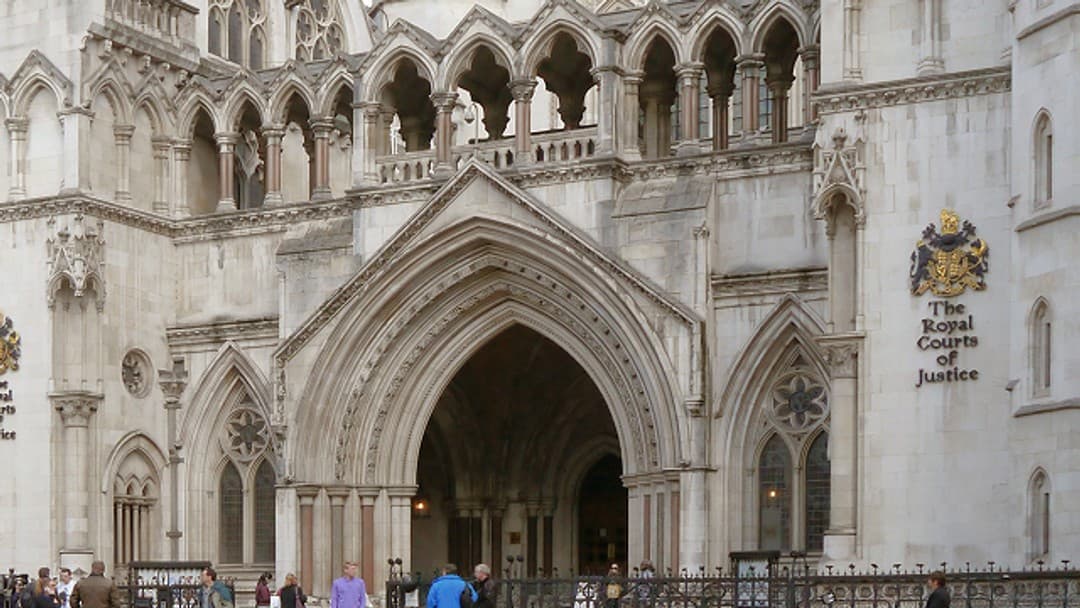
Court of Appeal refuses fresh evidence and leave in Richardson murder conviction and sentence appeal.
The Court of Appeal has refused leave to appeal against a murder conviction founded on the absence of an intermediary at trial and on psychiatric evidence obtained years afterwards, holding that competent explanations from experienced counsel had achieved what an intermediary would have provided.
In Richardson v R [2026] EWCA Crim 1131, handed down on 28 August 2026, Lord Justice Dingemans, sitting with Mr Justice Goose and Her Honour Judge Rosa Dean, refused applications for extensions of time, for leave to adduce fresh evidence and for leave to appeal against conviction and sentence. The applicant had been convicted at Lewes Crown Court in November 2020 of a murder committed weeks into the first pandemic lockdown, the prosecution case being joint enterprise between him and a co-defendant, with the Crown unable to say which man wielded the knife. He received life imprisonment with a minimum term of 25 years.
Four grounds were advanced: that an intermediary should have been provided; that psychiatric evidence should have been obtained to explore diminished responsibility; that psychological and psychiatric evidence should have gone before the jury; and that the applicant was not properly advised about giving evidence. The court sat for three days and heard oral evidence de bene esse from the applicant, assisted by an intermediary, from his trial counsel, and from three experts.
The factual findings shaped everything that followed. The applicant was found not to be a reliable witness. His account that he had seen his lawyers only twice during the trial was maintained until custody suite visit logs, obtained shortly before the hearing, showed regular visits throughout. He repudiated passages of his own proof of evidence, which the court concluded he had revised in his mind after repeated viewings of the CCTV. Trial counsel, by contrast, gave evidence that was clear, consistent and supported by contemporaneous documents.
No presumption in favour of an intermediary
The psychological evidence showed a full scale IQ of 105 with a markedly uneven profile, strong perceptual reasoning against a verbal comprehension score in the seventh percentile, together with ADHD diagnosed in childhood. Every expert considered the applicant would have benefited from an intermediary.
That was not the test. The applicable practice direction, drawing on C v Sevenoaks Youth Court and R v Cox, establishes no presumption in favour of appointment, and appointment is not mandatory even where the trial process would be improved. The judgement records that legal representatives routinely spend many hours ensuring defendants can follow proceedings. Leading counsel had spoken to his client when he was at his best, broken concepts into simple language and repeated them. Adjustments already made to the court day for the co-defendant produced a clear and structured hearing from which the applicant equally benefited. Since he did not give evidence, no question of an intermediary in the witness box arose.
Diminished responsibility raised after conviction
There is no requirement that a defendant admit a part in the killing before the partial defence can be advanced, as R v Erskine [2009] EWCA Crim 1425 shows. In all but rare cases, though, an assessment of substantial impairment is very difficult without evidence of the defendant's mental processes at the time, a point drawn from R v Curran [2021] EWCA Crim 1999. Here the applicant had always maintained he played no part in the stabbing, leaving nothing for a psychiatrist to assess.
One expert's evidence was found internally inconsistent, having proceeded on the mistaken premise that the applicant was the stabber. The other, whose evidence was accepted, could not say whether impairment reached the substantial level. On the third ground, R v Sossongo [2021] EWCA Crim 1777 was distinguished: a defendant who does not testify leaves no thought processes on which expert evidence could bear.
Applying the section 23 criteria, the court accepted the expert evidence as capable of belief but held that none of it could afford a ground for allowing the appeal. The minimum term was upheld, the sentencing judge having known of the conditions and having found the applicant to have held the senior role.
 Copyright & permissions












.jpg&w=3840&q=60)