Republic of India v RAKIA: Court of Appeal upholds investor-state arbitration jurisdiction
The Court of Appeal dismisses India’s challenge, ruling that government action affecting a company’s operations directly applied to an investor’s shareholding.
The Court of Appeal has dismissed the Republic of India’s challenge to an arbitral tribunal’s jurisdiction over a dispute brought by Ras Al Khaimah Investment Authority (RAKIA), holding that executive action cancelling a bauxite supply agreement could apply directly to a foreign investor’s shareholding in an Indian company.
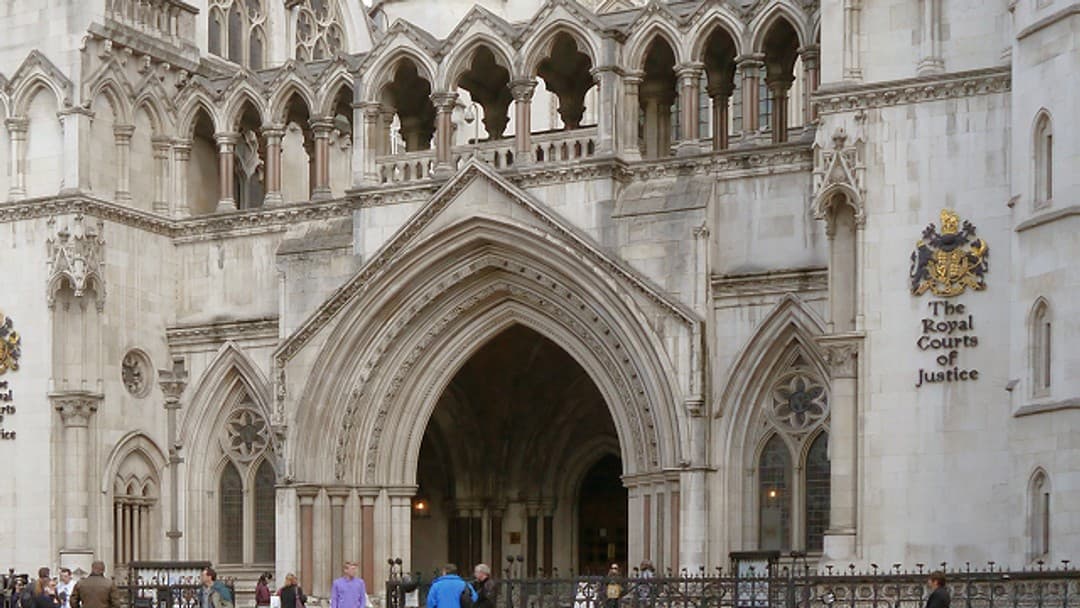
In Republic of India v Ras Al Khaimah Investment Authority [2026] EWCA Civ 1358, handed down on 22 October 2026, Lord Justice Phillips gave the leading judgement, with Lord Justice Miles and Lord Justice Males agreeing with the outcome. The court upheld the High Court’s decision to set aside the tribunal’s jurisdictional award and remit the dispute for determination on its merits.
The dispute arose from RAKIA’s investment of US$42.5 million in ANRAK Aluminium Limited, which constructed an alumina refinery and power plant in Andhra Pradesh. The project depended on a bauxite supply agreement with the state-owned Andhra Pradesh Mineral Development Corporation (APMDC).
Following public opposition to the proposed mining, the Andhra Pradesh government issued orders in 2016 purporting to nullify earlier authorisations for the agreement. APMDC subsequently notified ANRAK that it was cancelling the contract. RAKIA alleged that the government’s actions breached protections under the 2013 bilateral investment treaty between India and the United Arab Emirates, including obligations concerning fair and equitable treatment and expropriation.
A London-seated arbitral tribunal had concluded in May 2022 that the dispute fell outside the treaty’s arbitration provisions. It found that the governmental measures affected ANRAK and APMDC directly, while their impact on RAKIA’s shareholding was indirect.
In June 2025, Mr Justice Robin Knowles set aside that award under section 67 of the Arbitration Act 1996. He held that the government’s actions were directed at the investment and therefore fell within Article 10.2 of the treaty, which covered specified executive measures applied directly to an investment.
India appealed, arguing that RAKIA’s investment was its 12% shareholding in ANRAK, not the wider industrial project. It contended that measures could apply directly to shares only where they affected the shares themselves, rather than the company’s business or assets.
The Court of Appeal rejected the challenge to the identification of RAKIA’s investment. It agreed that the relevant investment was an asset, principally the shareholding received in exchange for the capital invested, rather than the project itself. The court also rejected RAKIA’s alternative argument that ANRAK’s own assets, including the bauxite supply agreement, formed part of its investment.
However, the court held that the treaty required the shareholding to be considered as an investment made in the host state, rather than merely as an asset viewed in isolation. The treaty expressly recognised that a change in the form of invested assets did not alter their character as an investment.
Phillips LJ concluded that the cancellation of the agreement directly affected the investment because it removed the principal bauxite supply underpinning the business for which ANRAK had been established. India’s proposed interpretation would substantially restrict treaty protection for investments made through shareholdings, undermining the effect of its substantive protections.
The court did not adopt the High Court’s distinction between measures targeted at a particular investment and wider executive action. Phillips LJ considered that the relevant distinction was between measures applied directly to an investment and consequences arising indirectly from action directed elsewhere.
The court also refused to allow RAKIA to revive an alternative argument that Article 10 provided a freestanding offer to arbitrate disputes without requiring a qualifying measure. RAKIA had abandoned that argument before the High Court, and permitting it to be raised on appeal would undermine the first-instance court’s role and the principle of finality in arbitration challenges.
The appeal was dismissed, leaving the underlying treaty dispute to proceed to determination on its merits.
 Copyright & permissions