Rasmala Trade Finance Fund v Trafigura: Court of Appeal upholds change of position defence
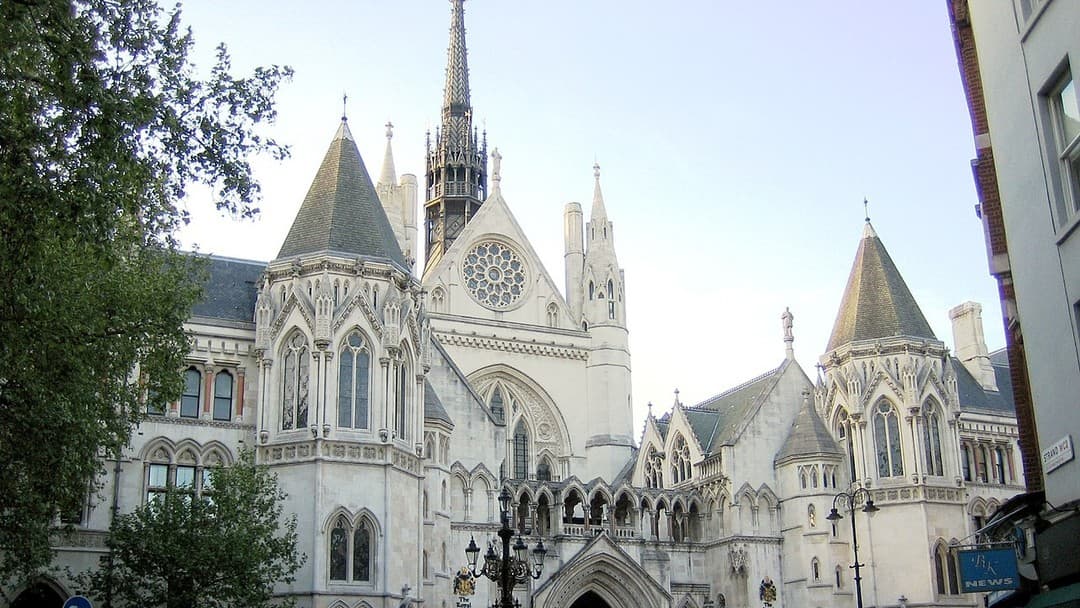
Court of Appeal rejects fraud victim's bid to recover $22m paid by mistake.
The Court of Appeal has dismissed an appeal by Rasmala Trade Finance Fund seeking restitution of payments made to Trafigura Pte Ltd under a fraud perpetrated by a third party, holding that Trafigura was entitled to rely on the defence of change of position.
In Rasmala Trade Finance Fund v Trafigura Pte Ltd [2026] EWCA Civ 1259, Nugee LJ, with whom Falk and Baker LJJ agreed, upheld the decision of Rajah J at [2025] EWHC 1569 (Ch).
The claim
Between August 2017 and March 2018, Rasmala paid Trafigura more than $22.6m, believing it was financing coal supply contracts between Trafigura and a trader, Farlin. Farlin had forged the contracts, and Rasmala's signature on third party agreements (TPAs) that Trafigura had required to confirm how the money could be used.
Trafigura applied the payments to Farlin's historic debts and kept trading, entering new contracts worth nearly $60m. When it stopped, it was owed slightly more than before the first payment. Rajah J accepted that the payments were made by mistake but held it inequitable to order repayment. On appeal, the claim was confined to roughly $11m, as Farlin's repayment of $10.56m had covered the first two payments.
Good faith
Nugee LJ held that good faith turns on what the recipient actually knew or suspected, not on what a reasonable person ought to have discovered. Negligence is insufficient. Rasmala relied on the observation in Niru Battery that bad faith can include a failure to act in a commercially acceptable way. The judge doubted that this was a separate category from sharp practice, and said that even if it were, Trafigura met the standard.
Trafigura had made inquiries, received a letter from Rasmala and obtained TPAs that appeared to be executed by it. Rasmala itself had structured the transaction so that only Farlin communicated with Trafigura, and Trafigura went beyond market practice in seeking the TPAs.
Causation and risk
The Court rejected both parties' formulations of causation. A simple "but for" test was too crude where the change of position is the defendant's own voluntary act, citing Rose v AIB and Haugesund Kommune v Depfa. But there was no need to choose between the payments and the TPAs as the cause. It sufficed that Trafigura acted on the faith of the payments, in the good faith belief that they were valid and the money was its own.
Rasmala's argument that Trafigura bore the risk of the TPAs being invalid also failed. There is no free-standing requirement to allocate risk, though risk may inform good faith, causation or whether repayment is inequitable. In any event, the payments were invalid because Rasmala had been defrauded, not because the TPAs were forged. The absence of a TPA for the final payment made no difference.
Detriment
Rasmala was given permission, despite its lateness, to argue that Trafigura had suffered no detriment because its eventual loss was smaller than the debts it held before the first payment. The Court disagreed. The question was whether repayment would leave Trafigura worse off than if it had never received the money, and it plainly would.
Trafigura had also lost the opportunity to stop trading with Farlin and pursue its debts in 2017, a loss that was substantial and irreversible even if not precisely quantifiable. Following the High Court of Australia in Australian Financial Services and Leasing v Hills Industries, Nugee LJ held that an elaborate valuation of the lost opportunity was neither necessary nor appropriate.
 Copyright & permissions
.jpg&w=3840&q=60)

-cropped-6au25meu.jpg&w=3840&q=60)




.JPEG&w=3840&q=60)