R v William Osmond: Court of Appeal upholds first tipping off conviction under POCA
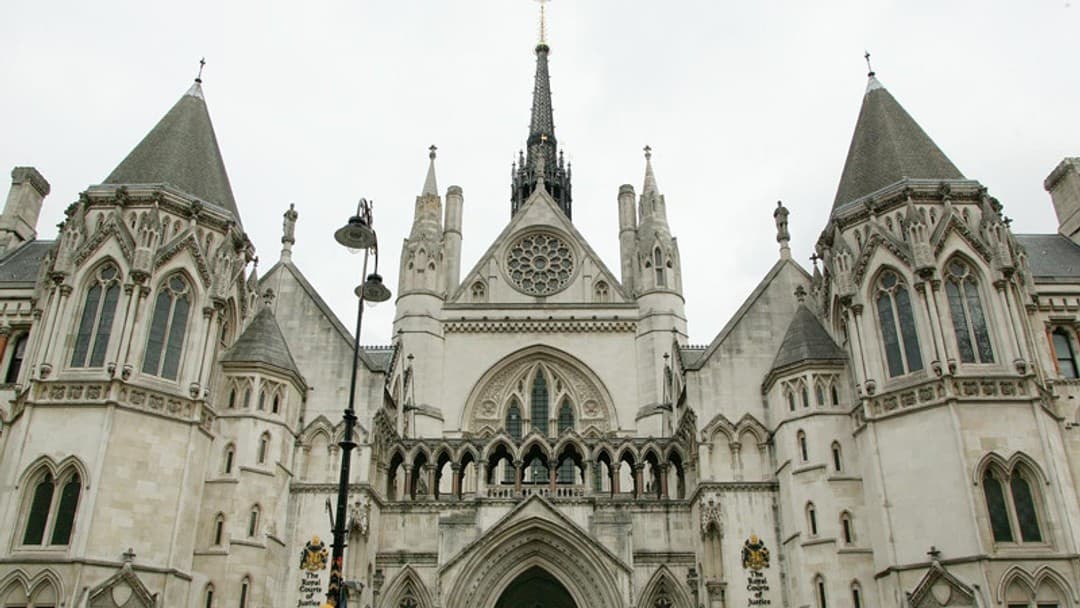
Court of Appeal refuses solicitor's appeal against tipping off and forgery convictions.
The Court of Appeal has refused leave to appeal against the convictions of a 72-year-old solicitor for tipping off and forgery, in what the court noted was the first case concerning the tipping off offence under section 333A(3) of the Proceeds of Crime Act 2002 to reach it.
In R v William Osmond [2026] EWCA Crim 979, Lord Justice Males, Mrs Justice Cutts and His Honour Judge Andrew Lees dismissed an application referred to the full court by the single judge, upholding a conviction handed down at the Central Criminal Court in November 2023 following a trial before Her Honour Judge Rebecca Trowler KC. Mr Osmond, senior partner of Osmond and Osmond Solicitors, had been sentenced to nine months' imprisonment suspended for eighteen months.
The prosecution arose from the Serious Fraud Office's investigation into Eurasian Natural Resources Corporation, during which it identified a £4 million payment made through Mr Osmond's client account towards the purchase of a Mayfair property, 10 Hays Mews, by a company linked to a senior ENRC figure. When the SFO contacted Mr Osmond in June 2018 seeking information about the transaction and warned him of the tipping off offence, he immediately informed his client, James Redding Ramsay, flying to Malta to discuss the matter and subsequently shaping his responses to the SFO around instructions from Mr Ramsay. Separately, when asked to produce a letter of engagement for the transaction that did not exist, Mr Osmond fabricated and backdated one before providing it to the SFO's investigator.
Before trial, the judge ruled on three issues of law: that the disclosure at issue was of the previously unknown SFO investigation into the Hays Mews transaction specifically, rather than the already publicly known wider ENRC investigation; that the information had come to Mr Osmond in the course of his business as a solicitor within the regulated sector, notwithstanding that it originated from the SFO itself; and that an SFO investigator accepting a forged document was doing so in connection with a duty owed to his employer, satisfying the requirement under the Forgery and Counterfeiting Act 1981 even though the SFO's underlying investigative function was a power rather than a duty.
On appeal, Mark Fenhalls KC argued that these rulings had wrongly removed factual issues from the jury and that the defence should have been permitted to rely on a further judgement by Mr Justice Waksman in ENRC's civil litigation against the SFO and Dechert LLP, handed down after Mr Osmond's trial, which found that SFO misconduct in inducing a breach of contract had caused the ENRC investigation to begin in the first place.
The Court of Appeal rejected each ground. It held that the pre-trial rulings were legitimate case management addressing pure questions of law, leaving the genuine factual issues, including whether the disclosure was likely to prejudice the investigation, properly to the jury. It confirmed that the regulated sector requirement was satisfied by the capacity in which information was received rather than its source, and that a duty owed to an employer was sufficient for the forgery offence. On the later civil judgement, the court found it addressed causation rather than establishing that the ENRC investigation itself was unlawful, and that the earlier misconduct involved different officials and a period unconnected to Mr Osmond's 2018 disclosure, meaning no abuse of process argument could have succeeded.
Leave to appeal was refused, though the court permitted the judgement to be cited given its status as the first appellate authority on the tipping off provisions.
 Copyright & permissions
.png&w=3840&q=60)








.jpg&w=3840&q=60)