R v Smith: Court of Appeal upholds sentences for Queen Victoria Memorial damage
Suspended sentences for protesters who dyed royal memorial confirmed appropriate and proportionate.
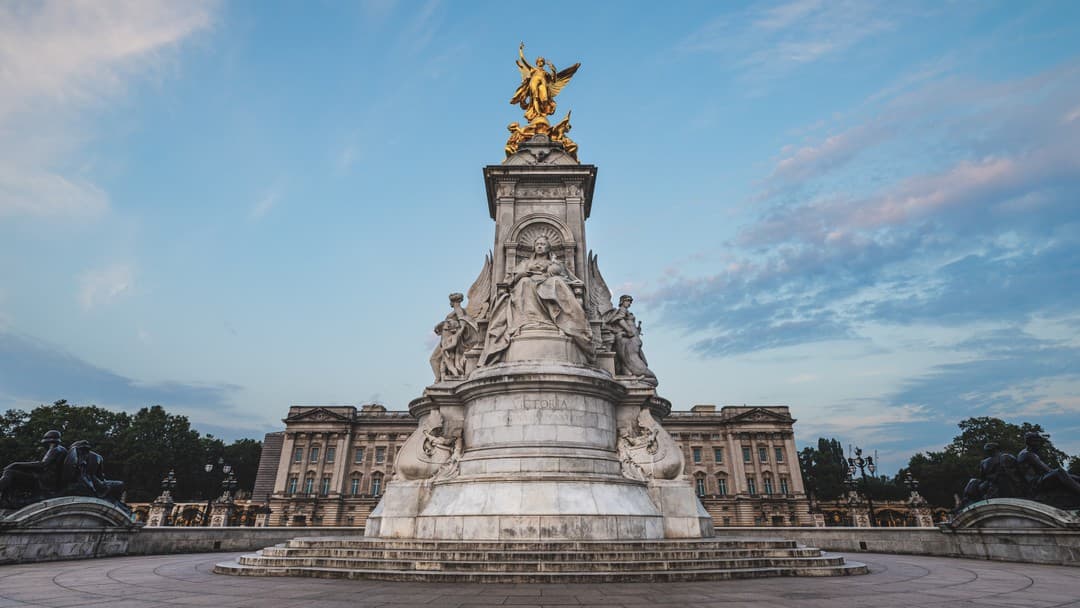
The Court of Appeal has refused leave to appeal against suspended sentences imposed on five animal rights protesters who caused criminal damage to the Queen Victoria Memorial in August 2021, affirming that custodial sentences were justified despite the demonstration's conscientious motivation.
Claire Smith, Louis McKechnie, Riley Ings, Christopher Bennett and Rachel Steele were convicted at Southwark Crown Court of criminal damage after deliberately pouring red dye into the fountains surrounding the Grade I listed memorial at Buckingham Palace. The protesters, associated with Extinction Rebellion, sought to create the appearance of a "bloodbath" to highlight concerns about animal agriculture.
The incident required 64 hours of specialist cleaning at a cost exceeding £7,000. Evidence at trial established that without prompt remedial action, the porous marble stonework would have been permanently stained. The protesters had ignored warnings on the dye containers stating that the substance could cause irreversible staining to stone surfaces.
His Honour Judge Perrins sentenced each protester to 18 months' imprisonment, suspended for two years, with unpaid work requirements and compensation orders. Bennett received an immediate custodial sentence to run concurrently with an existing sentence for tunnelling offences.
The sentencing judge categorised the offending as Category 1A under the Criminal Damage Sentencing Guidelines, reflecting high culpability through substantial planning and serious social harm. The protesters had coordinated their actions through encrypted messaging, arranged photography for social media dissemination, and deliberately timed the protest for maximum public impact on a summer's day when hundreds of tourists were present.
On appeal, counsel argued the sentences were manifestly excessive, contending the judge erred in finding high culpability and serious social harm, failed adequately to reduce sentences for conscientious objectives, and imposed disproportionate interference with Articles 10 and 11 ECHR rights. Additional grounds were advanced for Bennett and Steele, suggesting their lesser involvement warranted differentiation.
The Court of Appeal, presided over by Dame Victoria Sharp P, dismissed all grounds as unarguable. The judgement confirmed that extensive planning justified the high culpability finding, noting the protesters' deliberate sourcing of materials, coordination via Signal messaging, and calculated timing for maximum impact. Conscientious motivation does not preclude findings of high culpability where actions are disproportionate or extreme.
Regarding harm, the court emphasised that Section 63 of the Sentencing Act 2020 requires consideration of foreseeable harm, not merely actual damage. The risk of permanent damage to a memorial of exceptional national and historic importance constituted serious social harm, regardless of successful remediation. The judgement noted that subsequent legislative changes under the Police, Crime, Sentencing and Courts Act 2022 have since elevated criminal damage to memorials to "either way" offences with maximum sentences of ten years.
The court rejected arguments that Convention rights were inadequately considered, finding the suspended sentences themselves demonstrated appropriate regard for conscientious motivation whilst protecting against further offending. In a democratic society, numerous lawful means exist for expression and protest that do not involve criminal damage.
The court also dismissed the contention that Bennett and Steele warranted lesser sentences due to their positioning on the memorial's south side. The prosecution proceeded on joint enterprise principles, with all five protesters lending mutual encouragement and support, rendering them equally responsible for the resulting damage.
All applications for extension of time and leave to appeal were refused, confirming the suspended sentences as proportionate responses balancing deterrence, rehabilitation prospects, and the protesters' Convention rights.
 Copyright & permissions