

R v Sheikh: Supreme Court restores convictions in landmark domestic abuse ruling
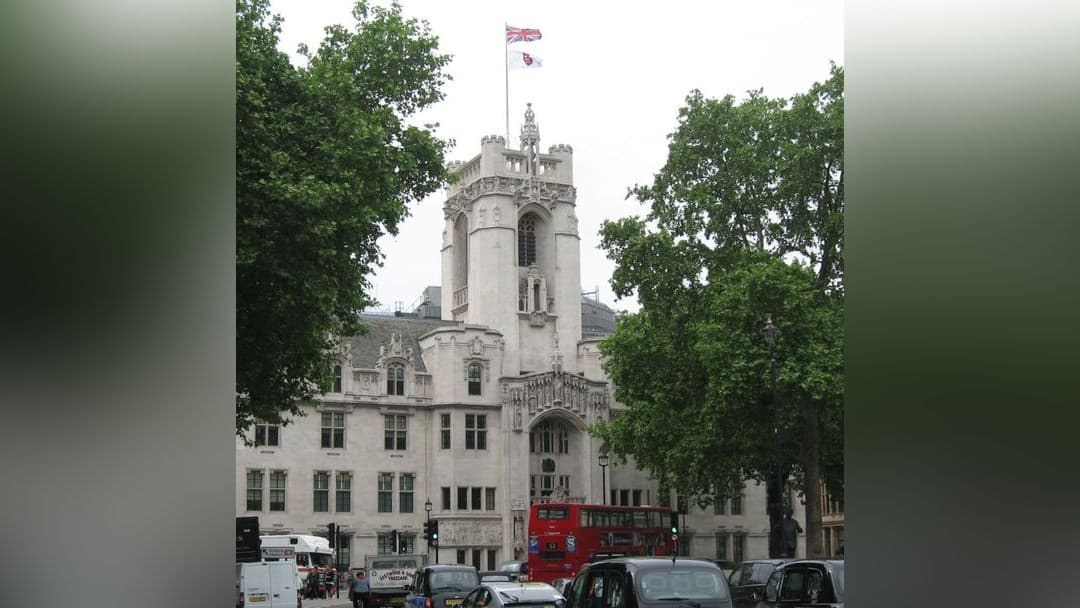
Supreme Court clarifies foreseeability test under Domestic Violence, Crime and Victims Act 2004.
The Supreme Court has restored the convictions of four family members found guilty of causing or allowing serious physical harm to a vulnerable relative, overturning a Court of Appeal ruling that had quashed the convictions on the basis that the act which caused the harm was too different in nature from an earlier injury the family should have foreseen.
In R v Sheikh and others [2026] UKSC 28, Lord Lloyd-Jones, giving the judgement of the court with which Lord Reed, Lord Burrows, Lady Rose and Lady Simler agreed, held that the Court of Appeal had taken an unduly narrow approach to section 5(1)(d)(iii) of the Domestic Violence, Crime and Victims Act 2004, which requires that an unlawful act causing death or serious harm occurred in "circumstances of the kind" that a defendant foresaw or ought to have foreseen.
The case concerned Ambreen Sheikh, who came to the United Kingdom in 2014 following an arranged marriage and lived with her husband's family in Huddersfield. She was found unconscious and taken to hospital, where a severe caustic-type lesion on her lower back, inflicted some days earlier, was discovered. Medical evidence suggested her subsequent catastrophic brain injury was most likely caused by the administration of an anti-diabetic drug belonging to a family member, capable of inducing a fatal hypoglycaemic coma even in small doses. She has never regained consciousness. Her husband, his parents and his sister were convicted at Leeds Crown Court of offences under section 5, along with related counts of perverting the course of justice.
Section 5 was introduced to address a recognised gap in the law where it could not be proved which of several household members caused a victim's death or serious injury, allowing prosecutors to establish liability either by proving a defendant caused the harm directly or by proving they knew, or ought to have known, of a significant risk of harm and failed to protect the victim from it. The provision at the centre of this appeal, requiring that the harmful act occurred in circumstances of a kind the defendant foresaw or ought to have foreseen, was intended as a further safeguard against convicting someone for entirely unrelated wrongdoing that happened to occur within the same household.
The Court of Appeal had held that the administration of the drug was "utterly different" from the earlier caustic injury and doubted a jury could properly find the later act fell within foreseeable circumstances. The Supreme Court disagreed, finding this reasoning wrongly focused on comparing the mechanisms of injury to the exclusion of the wider context, including evidence of general hostility towards the victim, a related injury to her ear, and prolonged neglect. Lord Lloyd-Jones held that the statutory language directs attention to the circumstances in which an act occurred, not to whether the act itself, or its method, matches an earlier one, and that requiring close correspondence between the two would unduly narrow a provision designed to operate in cases where abuse typically occurs behind closed doors and evidence of exactly what happened is often unavailable.
The judgement also endorsed the trial judge's decision to direct the jury using the statutory language itself rather than attempting to define or paraphrase "circumstances of the kind," describing this as the correct approach where Parliament's words carry their ordinary meaning and their application to the facts is a matter for the jury.
The Supreme Court reinstated the convictions on the section 5 counts, finding the trial judge had neither erred in rejecting submissions of no case to answer nor misdirected the jury.
 Copyright & permissions








.jpg&w=3840&q=60)


