

R v Michael Haslam: Court of Appeal suspends sentence after judge reneged on earlier indication
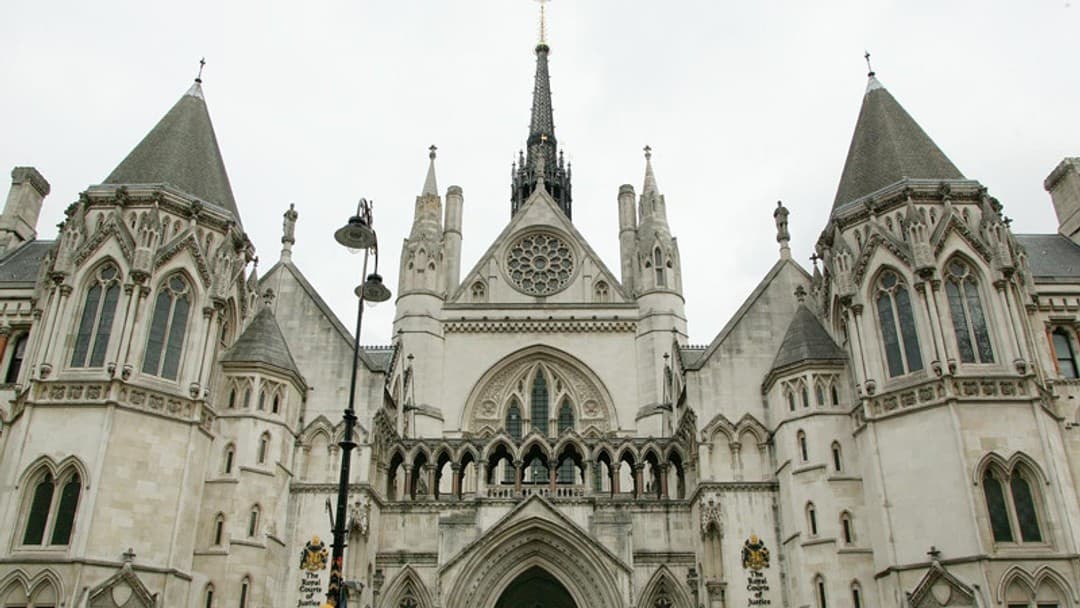
Court of Appeal finds unfairness where a Crown Court judge departed from his own sentencing indication.
The Court of Appeal has suspended a 28 month prison sentence imposed on a builder convicted of fraudulent trading, after finding that a Crown Court judge had created an expectation of a non-custodial outcome before departing from it at the sentencing hearing.
Michael Haslam, 74, pleaded guilty to a single count of fraudulent trading relating to the conduct of his company, M and J Builders Ltd, between November 2020 and November 2022. He was sentenced at the Crown Court at Derby by HHJ Shaun Smith KC, the Honorary Recorder of Derby, to 28 months' immediate imprisonment. Eight households had engaged the company for building works and paid substantial sums in advance, in several cases directly into the appellant's personal bank accounts, for work that was left unfinished or undone even as the company approached insolvency. The judge found the impact on the victims to have been financially, emotionally and psychologically devastating.
The appeal turned not on the length of the sentence but on the process by which it was reached. At a pre-trial preparation hearing in March 2026, before any plea had been entered, the judge indicated more than once that the appellant would not be going to prison, describing a likely fine and disqualification from acting as a company director. At a further hearing in May 2026, following the guilty plea, the judge again suggested a non-custodial outcome remained in prospect, referring to the offending as category 2 harm. By the sentencing hearing in July 2026, having heard victim personal statements and live evidence from two complainants, the judge concluded that the true impact of the offending placed it in a higher harm category, and that only immediate custody could achieve appropriate punishment. Neither counsel had reminded him of his earlier remarks.
Lady Justice Whipple, giving the judgement of the court with Mrs Justice McGowan and Mrs Justice Eady, held that the guilty plea had not been induced by the judge's indication, so the strict procedure established in R v Goodyear did not apply. There was accordingly nothing improper in the judge discussing likely sentence informally at the earlier hearings. The difficulty lay in the firmness of what was said and the fact that the judge subsequently changed course on largely the same information that had been available to him throughout, rather than as a result of any new evidence.
Drawing on R v Gillam, R v CD and the Attorney General's Reference concerning suspended sentences in R v AB and R v Keeling, the court accepted that judges are entitled to change their minds, but found that the appellant had been left with a legitimate sense of injustice after relying, for around three months, on an expectation that he would not face immediate custody. The court concluded that the case had genuinely sat on the borderline between suspension and immediate custody, such that the judge's original indication would itself have been a proper sentence.
To remedy the unfairness without disturbing the overall assessment of seriousness, the Court of Appeal quashed the immediate custodial sentence and substituted a suspended sentence order of 28 months, suspended for two years, with a rehabilitation activity requirement of ten days and an increased unpaid work requirement of 160 hours. The appeal was allowed.
The judgement offers a reminder of the limits on informal sentencing indications given outside the Goodyear framework, and of the weight the Court of Appeal will give to an appellant's reasonable reliance on such indications even where they fall short of inducing a guilty plea.
 Copyright & permissions






.jpg&w=3840&q=60)





.jpg&w=3840&q=60)