R v McLeary and Francis: hearsay conviction upheld, secondary party conviction quashed
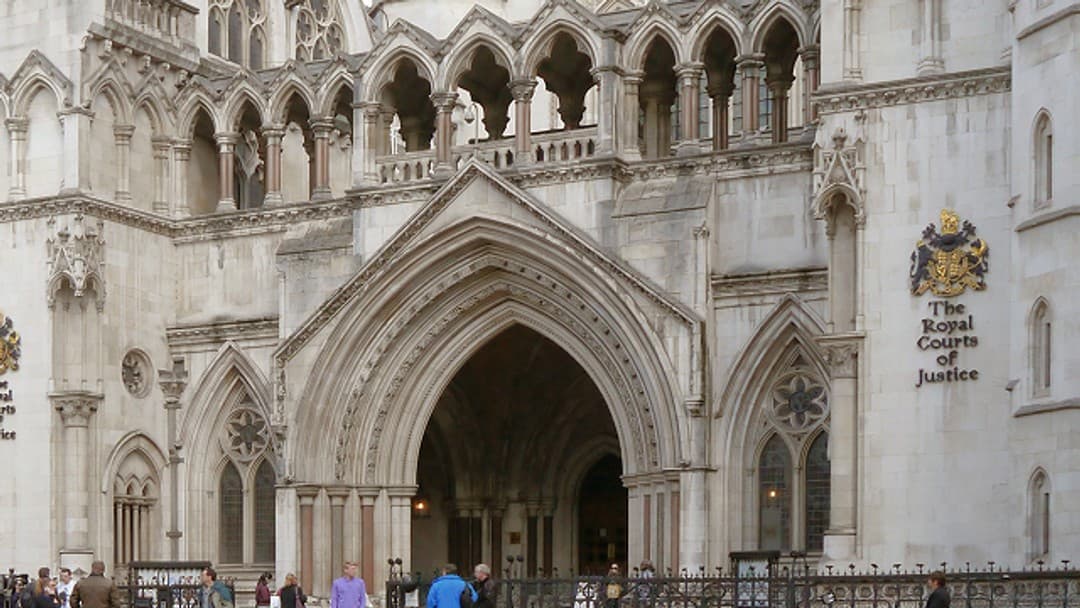
Dead witness's statement properly admitted, but presence alone could not found joint enterprise.
The Court of Appeal has dismissed Courtney McLeary's appeal against his conviction for murder and quashed that of his co-defendant David Francis in R v McLeary and Francis [2026] EWCA Crim 903, holding that the hearsay statement of a deceased eyewitness was properly admitted but that the evidence against the alleged secondary party amounted to little more than presence. Lord Justice Fraser gave the judgement of the court, sitting with Cutts J and His Honour Judge Patrick Field KC.
Davices Anderson, known as Ricardo, died from a single stab wound to the heart on the morning of 28 April 2023, at the end of an all-night gathering at a Nottingham flat where those present had been smoking crack cocaine and heroin. McLeary was convicted unanimously and Francis by a majority of 10 to 2 before Her Honour Judge Shant KC. Minimum terms of 19 years and 16 and a half years were imposed.
The only eyewitness inside the room was Katrina Intress. She told police under caution that she had not seen the stabbing. In a signed statement of 23 October 2023 she said she had, describing McLeary launching himself across the room with a knife at a man who had calmed down fifteen minutes earlier. She died eight days later from the acute toxic effects of class A drugs.
Counsel for McLeary argued that where there is demonstrable, multi-faceted unreliability the judge is duty-bound to refuse admission. Fraser LJ rejected that formulation. Applying Riat as restated in R v BOB, he emphasised that the Ibrahim precondition is that evidence be potentially safely reliable, and that section 124(2)(c) of the Criminal Justice Act 2003 exists precisely to put previous inconsistent statements before a jury. Were inconsistency invariably fatal, the section would be unnecessary.
The judgement contains a notable passage on the witness's background. Intress had spent her childhood in care, made allegations of sexual abuse that were not proceeded with, and had convictions for drugs and theft. Fraser LJ observed that describing such a life as bad character may not be fully accurate, and that those involved in that lifestyle will rarely have a background free of matters capable of impugning credibility. That does not mean they are incapable of telling the truth. Reliability was a classic question for the jury, and the material available to test it was ample, particularly given the prosecution's concession not to adduce her stated reason of fear.
The judge had not expressly worked through the section 125 duty as a standalone exercise, but had considered its essence, and neither defendant called evidence, so nothing arose after the ruling to alter the position.
Francis fared differently. The evidence against him, set out in a schedule ordered by the Full Court on the grant of leave, reduced substantially to Intress's account that he stood in the doorway and put his arm out as she left. Applying Jogee, Fraser LJ held that standing in a doorway with an arm across it, a pose Intress had earlier described as lounging against the door, could not contribute to the force of numbers, particularly where the violence erupted suddenly and unexpectedly. Guilt by mere association has no proper part in the common law. The submission of no case should have succeeded.
The third ground, that prosecuting counsel invited the jury to speculate that Francis held the dying man's hand to prevent him naming his attackers, was not determinative but drew comment. Fraser LJ declined to accept that this was acceptable comment on the evidence, noting a jury note showing they had spotted the absence of any evidence, and observed that such matters should be raised with the trial judge at the time.
 Copyright & permissions