R v McCafferty: Supreme Court narrows public nuisance offence to genuine public rights
Blocking a private road cannot found the second limb of section 78.
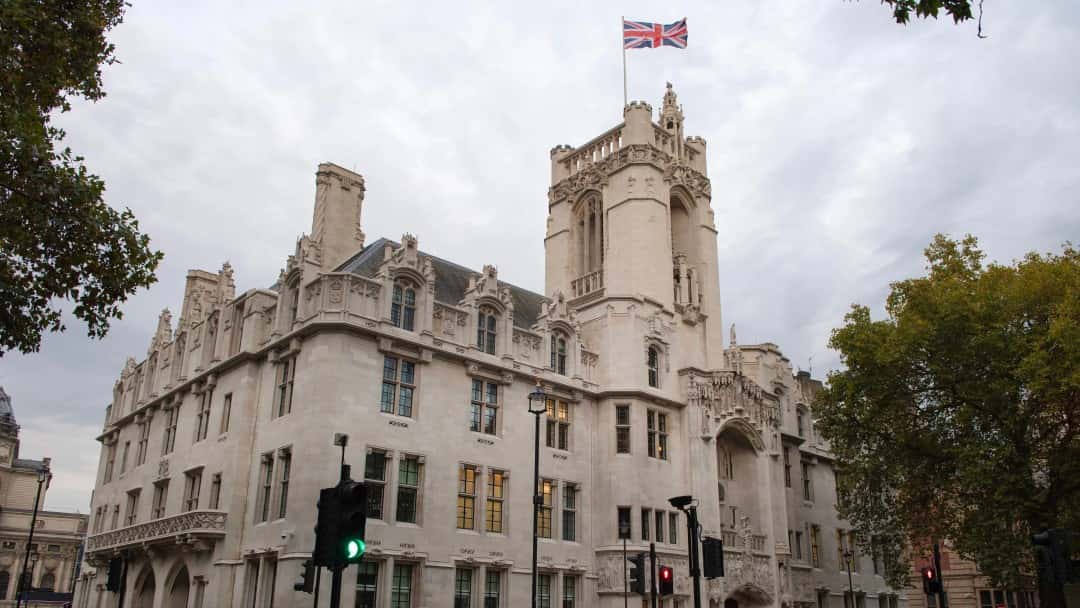
The Supreme Court has allowed the appeal in R v McCafferty and others [2026] UKSC 20 and ordered the acquittal of six Animal Rebellion protesters, holding that a mere licence or permission to enter private land is not a "right that may be exercised or enjoyed by the public at large" within section 78(1)(b)(ii) of the Police, Crime, Sentencing and Courts Act 2022. Lord Leggatt gave the judgement of the court, with Lord Reed, Lady Simler and Lord Doherty agreeing. Lord Sales concurred in the result by a different route.
The defendants chained themselves to fencing or glued themselves to the road surface outside the Müller UK dairy works on the Stonebridge Cross Industrial Estate near Droitwich on 8 September 2022, halting vehicle access for around four hours. The obstruction occurred on Pointon Way, a no through road owned by an investment company and signed as private land. The Crown declined to rely on the first limb of section 78, which requires a risk of or actual serious harm, and proceeded solely under the second limb. His Honour Judge Jackson ruled there was no case to answer. The Court of Appeal (Holroyde LJ, Goss and McGowan JJ) reversed him, relying in part on defence concessions that the public at large enjoy a right to pass along Pointon Way and to attend premises opened to the public on conditions.
The Supreme Court declined to accept those concessions, citing Bahamas International Trust Co Ltd v Threadgold for the proposition that a court decides the law for itself. On the evidence there was no basis for inferring that the road's owner had granted the general public permission to use it, and the sign displayed showed the contrary. Someone walking Pointon Way for their own purposes is a trespasser even where the trespass is tolerated.
The court went further. Even a permission granted to the public generally would not be a "right" for these purposes. A right of way is an interest in land which others owe a duty not to interfere with; a licence merely renders lawful what would otherwise be trespass and is revocable at will. The majority regarded the statutory language as clear. All members agreed that, if ambiguous, the principle against doubtful penalisation required the narrower reading, an offence carrying ten years' imprisonment being at stake.
Tracing the offence from Bracton through Stephen's draft codes and the 1879 Royal Commission to R v Rimmington, Lord Leggatt held that the rights common to all the King's subjects protected at common law were free passage along a highway and the cognate rights of navigation and fishing in tidal waters. The two limbs of section 78 codify distinct mischiefs, and the very reason a second limb was needed was that obstruction of public rights did not capture cases of annoyance or danger. Paragraph 3.45 of the Law Commission's 2015 report, urging a broad reading of "rights", rested on a mistaken premise and was unsupported by authority. The Boat Race swimmer relied on as justification was covered by the narrow reading in any event.
The Crown's fallback, that everyone enjoys a right of egress from private premises, failed: a trespasser does not cease to trespass by heading for the exit, and partial interference with movement is not imprisonment (Bird v Jones).
Lord Sales found the word "right" genuinely ambiguous, capable of a relational sense, and would have admitted the Law Commission report as an aid to specific meaning had the Pepper v Hart conditions been met. They were not.
Aggravated trespass and section 78(1)(b)(i) remain available on such facts; neither was charged here.
 Copyright & permissions
.jpg&w=3840&q=60)