R v Hauser & Wirth: Southwark Crown Court dismisses Russia sanctions charges over Condo artwork sale
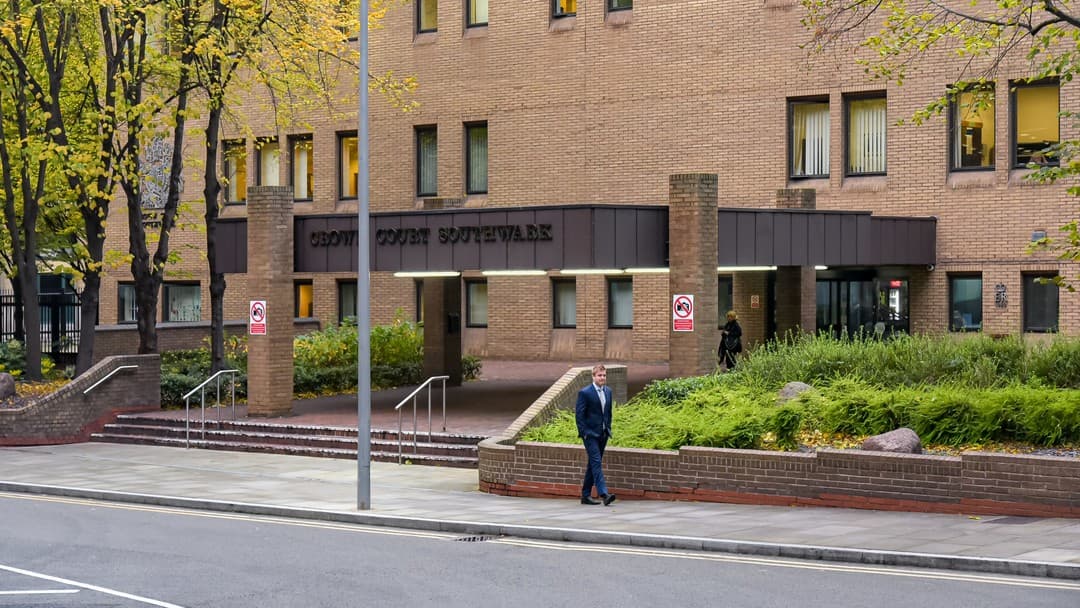
Buyer not ordinarily resident in Russia, though artwork was made available to him.
Southwark Crown Court has dismissed charges against a leading contemporary art gallery and a fine art logistics company under the Russia sanctions regime, holding that no properly directed jury could conclude the purchaser was ordinarily resident in Russia at the material time.
In R v Hauser & Wirth Gallery Limited and Artay Rauchwerger Solomons Limited [2026] EWCR 7, handed down on 9 July 2026, His Honour Judge Baumgartner, Recorder of Westminster, granted applications to dismiss under paragraph 2 of Schedule 3 to the Crime and Disorder Act 1998. Kevin Dent KC and Danielle Barden appeared for the prosecution. Hugo Keith KC and Robert Morris appeared for the gallery, instructed by Skadden Arps. Sean Hammond appeared for the logistics company, instructed by Cartwright King.
Background
The charges concerned George Condo's Escape from Humanity, sold to Alexander Popov under a sale agreed in July 2021, some seven months before the invasion of Ukraine and nine months before regulation 46B of the Russia (Sanctions) (EU Exit) Regulations 2019 came into force. Mr Popov is not a designated person.
Final payment was received on 27 July 2022. The artwork passed into the custody of Mr Popov's shippers on 26 August 2022 and was seized by Border Force at Heathrow on 8 September, consigned not to Moscow but to Yerevan.
Making available
The defence contended that regulation 46B(2)(b) requires physical delivery, relying on Re Petropavlovsk Plc [2022] EWHC 2097 (Ch), PJSC National Bank Trust v Mints [2023] EWHC 118 (Comm), Customs and Excise Commissioners v Thorn Materials Supply Ltd [1998] 1 WLR 1106 and the GR Solutions line of tax authority, together with OFSI guidance on financial benefit.
Judge Baumgartner rejected that construction. The words denote practical availability for use or disposal rather than mere transfer of legal title, but nothing in the regulation imposes a delivery requirement. Petropavlovsk concerned goods already in Russia and expressly disclaimed any binding construction. Thorn Materials turned on a fetter supplied by the Sixth Directive that has no counterpart here. Resort to the OFSI guidance would offend the rule in Pepper v Hart.
Nor is regulation 46B(2)(b) geographically confined. Subparagraphs (a) and (c) speak of Russia; (b) speaks of a person connected with Russia, closing the loophole of goods taken abroad and onforwarded. The artwork was made available to Mr Popov by 26 August 2022 at the latest, on the combination of title, payment, constructive possession and release into a logistics chain he directed. A properly directed jury could convict on that element.
Ordinary residence
The prosecution case failed on the second element. Regulation 21 requires ordinary residence in, or location in, Russia. It was not alleged that Mr Popov was located there.
Drawing on Levene v Inland Revenue Commissioners [1928] AC 217, MacRae v MacRae [1949] P 397, R v Barnet LBC ex p Shah [1983] 2 AC 309 and R (Davies) v HMRC [2011] 1 WLR 2625, the judge held that ordinary residence is a question of fact and degree, may exist in more than one country, and may be brought to an end by genuine departure and the establishment of life elsewhere.
The prosecution pointed to a valid Russian passport, two Moscow businesses, continuing property ownership, family ties and evidence of presence in Moscow. Against that stood a documentary record of relocation: paintings moved to Kyrgyzstan and then Armenia in April 2022, the Moscow residence let out on 1 May, visa agreements in May and June, an application to renounce Russian citizenship on 15 June, registration and a lease in Bosnia and Herzegovina by 1 July, a leased property in Italy in August, and Bosnian taxpayer registration on 12 August.
The statutory test is not one of continuing connection, nationality or association. The question is whether Russia remained part of the settled and regular order of Mr Popov's life. No evidence showed continuing occupation of the Moscow property after it was let. The judge described the absence as a significant failing in the prosecution case, and held that no jury could be sure of ordinary residence on the material before the court.
Since proof that Mr Popov was connected with Russia is an essential element, the deficiency was fatal to both counts irrespective of the finding on making available. Both were quashed.
 Copyright & permissions








.jpg&w=3840&q=60)