Privy Council quashes Warren Cassell’s conviction but orders acquittal in Montserrat proceeds case
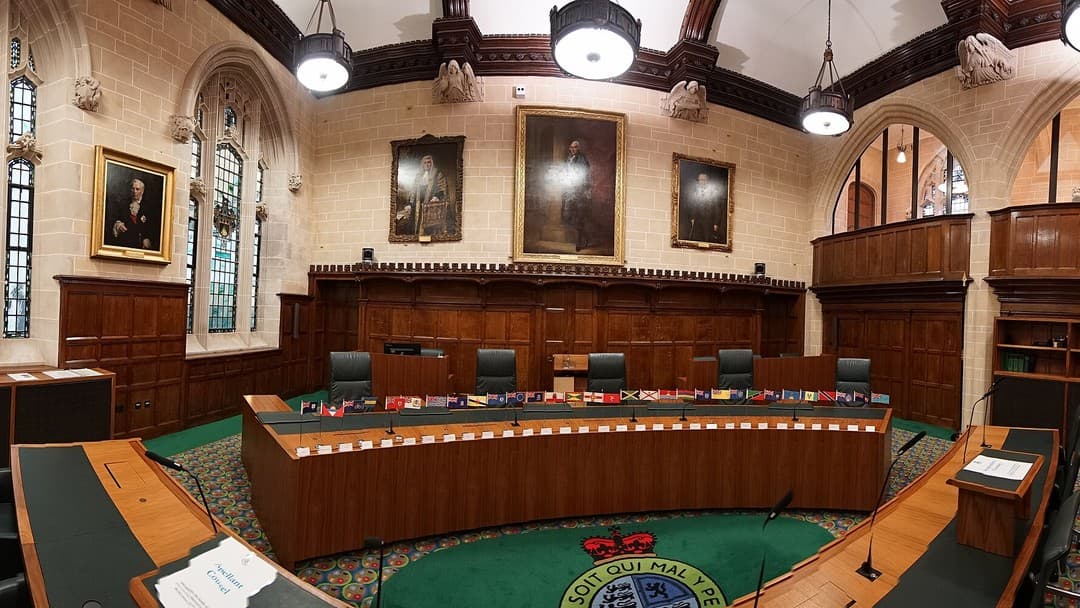
The Privy Council rejects the prosecution’s appeal over trial procedure but quashes Warren Cassell’s conviction because of a defective indictment.
The Privy Council has ruled that a jury in a criminal trial may be shown unchallenged documents during the prosecution’s opening and that documentary evidence can be admitted through witnesses without each item being separately marked as an exhibit. However, it upheld the quashing of Warren Cassell’s conviction for concealing criminal proceeds because the indictment allowed the jury to convict on a basis that did not necessarily constitute an indictable offence.
In Warren Cassell v The King [2026] UKPC 36, delivered on 22 October 2026, the Board allowed the Crown’s appeal against the Court of Appeal’s reasoning but also allowed Cassell’s cross-appeal. It advised that a formal verdict of acquittal should be entered.
Cassell had been convicted in June 2022 of concealing the proceeds of criminal conduct under section 33(1)(a) of Montserrat’s Proceeds of Crime Act 1999. He was sentenced to three years and six months’ imprisonment and served the sentence.
The prosecution arose from dealings involving land owned by Providence Estate Limited. The Crown alleged that Cassell had represented himself as entitled to act for the company, arranged sales of plots and paid purchasers’ cheques totalling EC$855,380.54 into an account controlled by his law firm.
The Court of Appeal quashed the conviction in February 2025, holding that documents shown to the jury during the prosecution’s opening had not been properly admitted into evidence. It considered that, without those documents, the prosecution had insufficient evidence to proceed. The Crown appealed to the Privy Council, while Cassell challenged other aspects of the conviction, including the indictment’s wording.
The Board rejected the Court of Appeal’s approach to the documentary evidence. Lord Snowden, giving the judgment, said there was no general rule preventing the prosecution from showing the jury copies of relevant, unchallenged documents during its opening. Such material can help explain a document-heavy case, provided the trial judge safeguards fairness and disputed evidence is not presented as admissible before its status has been resolved.
Nor was there a requirement for every document to be individually marked as an exhibit when a witness identified it. The Board held that witnesses had authenticated the documents by identifying them expressly or implicitly while giving evidence. The documents had been assembled in paginated bundles, and Cassell had not challenged their authenticity or accuracy.
The Board nevertheless emphasised that documents not subsequently authenticated, or found inadmissible, should be removed from the jury bundle before deliberations. Whether a failure to do so warrants quashing a conviction depends on the prejudice caused to the defendant.
Cassell’s cross-appeal proved decisive. The indictment alleged that the proceeds derived from four alternative forms of dishonest conduct, including filing a change-of-directors notice with the Companies Registry. Under the 1999 legislation, the property had to represent proceeds of criminal conduct amounting to an indictable offence, subject to the statutory exclusions.
The Board accepted that filing an inaccurate directors’ notice could amount to a summary offence under the Companies Act 1998, rather than an indictable offence satisfying the money-laundering provision. Because the jury had been directed that it could convict if it found any one of the four alternatives proved, the Board could not be sure the verdict rested on conduct meeting the statutory test.
The indictment was therefore defective, and the conviction had to be quashed. The Board did not need to consider the remaining criticisms of the trial judge’s summing-up.
The ruling distinguishes procedural objections to the handling of documentary evidence from a fundamental defect in the legal basis on which a jury may convict. Although the Crown succeeded on its challenge to the Court of Appeal’s evidential reasoning, Cassell’s conviction remains quashed and an acquittal is to be entered.
 Copyright & permissions