Petersen v Argentina: English court stays enforcement claim as US appeal saga rolls on
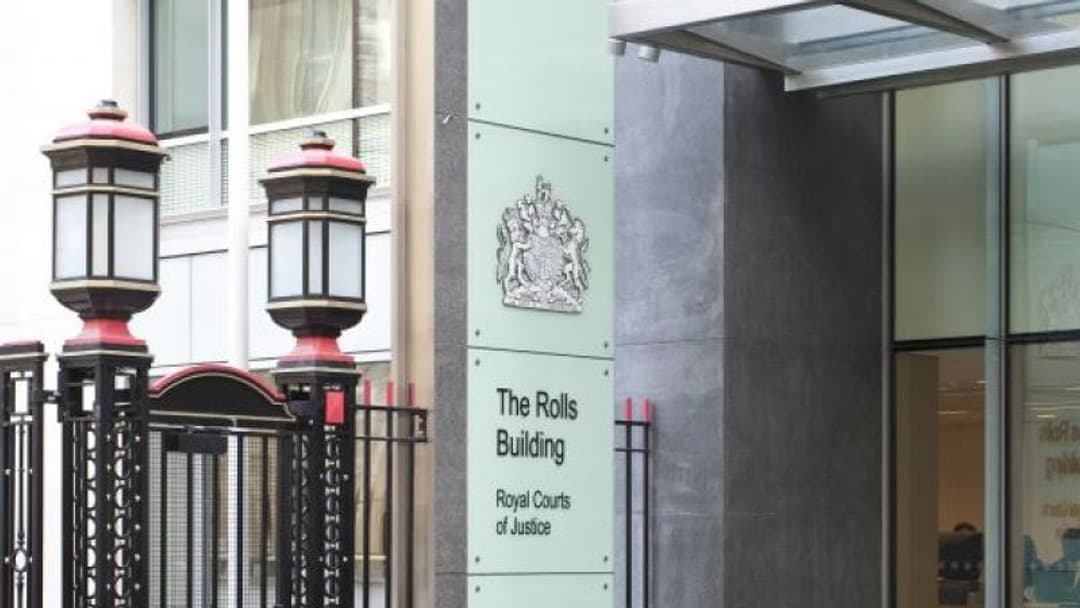
A $16 billion judgement reversed on appeal, a rehearing declined, and a Supreme Court petition looming. Mr Justice Robin Knowles had to decide what to do with the wreckage.
When a foreign judgement worth more than US$16 billion is overturned on appeal, the instinctive response might be to sweep away any English enforcement proceedings with it. The Commercial Court has declined to take that course, and in doing so has provided a useful statement of principle on how English courts should manage recognition and enforcement claims when the underlying foreign judgement is in flux.
The litigation has its roots in Argentina's 2012 expropriation of YPF, the state energy company. The Petersen entities and Eton Park funds brought claims in New York arguing that Argentina had breached contractual obligations to make a tender offer for their shares. In September 2023, Senior District Judge Loretta Preska entered judgement on liability and awarded damages exceeding US$16 billion. Argentina appealed, and in March 2026 a divided Second Circuit panel reversed the liability finding, with Judge Cabranes dissenting. A petition for rehearing en banc was filed in May 2026 and subsequently declined; the mandate issued on 10 June 2026. The claimants have indicated they intend to seek Supreme Court review.
The English proceedings began in March 2024, when the claimants issued a claim in the Commercial Court for recognition and enforcement of Judge Preska's judgement. Argentina challenged jurisdiction and also sought a stay. By July 2025, Argentina had withdrawn the stay application on terms that included undertakings from the claimants and their litigation funder, Burford Capital, to consent to set aside the English claim and pay costs if the US appeal concluded by overturning liability.
That is now precisely what has happened at the Second Circuit level, and Argentina moved to have the English claim dismissed immediately, seeking to amend its jurisdiction challenge to add a "Ground A" argument: that with the judgement reversed, there is simply nothing left to recognise and enforce.
Mr Justice Knowles accepted the amendment in principle but declined to determine it now, instead ordering a stay of the recognition and enforcement claim. The reasoning draws heavily on the Court of Appeal's 2025 decision in Motorola Solutions Inc v Hytera Communications Corporation Ltd, which arose from a comparable situation where the Seventh Circuit had overturned a damages award and remitted the matter. There, the Court of Appeal stayed an existing English enforcement order rather than revoking it, emphasising the undesirability of repeatedly granting and revoking final judgements in response to the turns of foreign litigation. The court was candid that this creates commercial inconvenience, but treated that as an accepted consequence of a private international law framework that permits enforcement of final first-instance foreign judgements even while they remain under appeal.
The present case is factually distinct: no English order of recognition or enforcement has yet been made, so the claimants are further back in the process than Motorola was. That cuts both ways. Argentina argued the reversed judgement meant the English claim had no foundation and should go now. The claimants wanted a stay to preserve their position pending Supreme Court proceedings. Knowles J found the balance, narrowly, in favour of a stay.
The practical reasoning is straightforward enough. No significant costs need be incurred by either party during the stay. If the Supreme Court declines to hear the case or the claimants fail to pursue it diligently, the stay can be lifted quickly. A liberty to apply ensures the court can respond to unforeseen developments.
What the judgement really reflects is a mature understanding of how complex, multi-jurisdictional enforcement litigation actually works. Forcing parties to abandon and recommence proceedings every time a foreign appellate court moves the dial would be disproportionate and wasteful. The English court is not a passive recording device for whatever state the foreign proceedings happen to be in on any given day; it manages its own process in the interests of justice. That the underlying litigation involves a sovereign state and sums in the tens of billions makes the stakes higher, but does not change the applicable framework.
Argentina's ability to pursue recovery of its costs, and the uncertain financial position of the Petersen claimants absent Burford's support, were noted but treated as modest considerations in the overall balance. The stay was the proportionate response.
Whether the US Supreme Court takes the case remains to be seen. If it does not, or if certiorari is refused, the English proceedings are likely to unravel quickly. If it does, this stay may need to hold for considerably longer.
Petersen Energia Inversora, S.A.U. & Ors v The Republic of Argentina [2026] EWHC 1492 (Comm), Mr Justice Robin Knowles CBE, 17 June 2026.
 Copyright & permissions







.jpg&w=3840&q=60)