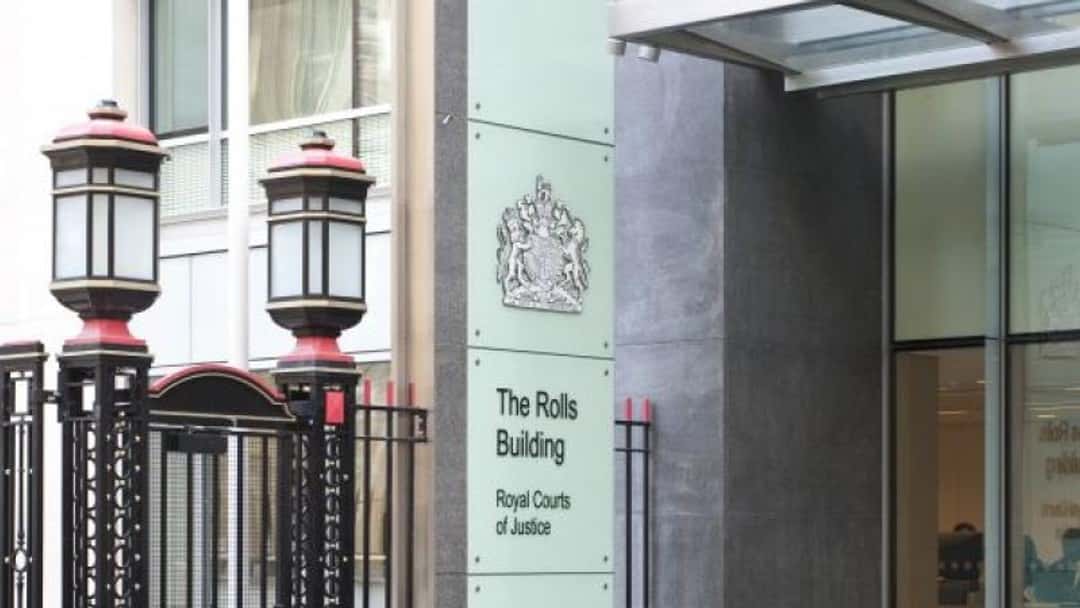
Peart v Defra: High Court grants Aarhus costs protection in Burnhope Moor grazing rights dispute

Sheep farmer secures Aarhus Convention costs cap in long-running fight over Single Payment Scheme subsidy allocation.
The High Court has ruled that a judicial review brought by a County Durham sheep farmer against the Secretary of State for Environment, Food and Rural Affairs qualifies as an Aarhus Convention claim, entitling both parties to the costs protection set out in CPR 46.26.
Handing down judgement in R (Peart) v Secretary of State for Environment, Food and Rural Affairs [2026] EWHC 2052 (Admin), Mrs Justice O'Farrell resolved a cluster of procedural applications that had accumulated around the substantive dispute, which itself dates back more than two decades.
The claimant, a stint holder on Burnhope Moor, an upland common with Special Area of Conservation and Special Protection Area designations, challenged a December 2024 decision by minister Daniel Zeichner refusing his appeal against the Rural Payments Agency's refusal to allocate him a share of structural surplus grazing payments under the Single Payment Scheme. The RPA had calculated his entitlement solely by reference to grazing rights recorded in the 1965 Commons Register, excluding any share of the surplus attributable to ownership of the soil, a position the claimant argues wrongly favours the freeholder over stint holders whose rights derive from an 1815 Inclosure Award.
Before reaching the merits, the court had to determine whether the claim attracted Aarhus costs protection. The claimant had asserted Aarhus status from the outset, and the defendant's original acknowledgement of service did not dispute it. Only after the Court of Appeal's decision in HM Treasury v Global Feedback Ltd [2025] EWCA Civ 624 clarified the scope of Article 9(3) did the defendant seek to amend its position, prompting cross-applications for retrospective extensions of time under the Denton framework.
Applying Denton, Mrs Justice O'Farrell found delays on both sides serious and significant, but ultimately allowed each extension, noting that both parties should be permitted to argue the Aarhus question fully in light of the intervening Court of Appeal authority, and that no real prejudice had resulted from either delay.
On the substantive Aarhus issue, the judge distinguished the case from Global Feedback, where a challenge to tariff regulations was held to fall outside Article 9(3) because it concerned public law principles rather than any provision of national law relating to the environment. Here, by contrast, the Single Payment Scheme legislation itself, through cross-compliance obligations tied to good agricultural and environmental condition, was found to relate directly to environmental protection and regulation, bringing the claim within Article 9(3).
The claimant's parallel application for a costs capping order under section 88 of the Criminal Justice and Courts Act 2015 was dismissed. The judge accepted that the case raised novel points concerning stints and commons registration but held it did not meet the threshold of general public importance, given that only a small number of stint holders across a handful of stinted commons could be affected by the outcome, and that direct payments under the scheme are being phased out entirely by 2027.
The claimant's application to amend his grounds fared mixed results: amendments elaborating the Article 9(3) case were permitted, but proposed new grounds alleging procedural unfairness over an IAAP hearing, and a fresh case based on Article 9(1) access to environmental information, were both refused as unarguable or unsupported by any identifiable information request.
The court ordered costs in the case and listed the substantive claim for an expedited three-day hearing in the week commencing 12 October 2026.
 Copyright & permissions