Odeh v City of London Police: Crown Court cannot release forfeited funds for appeal costs
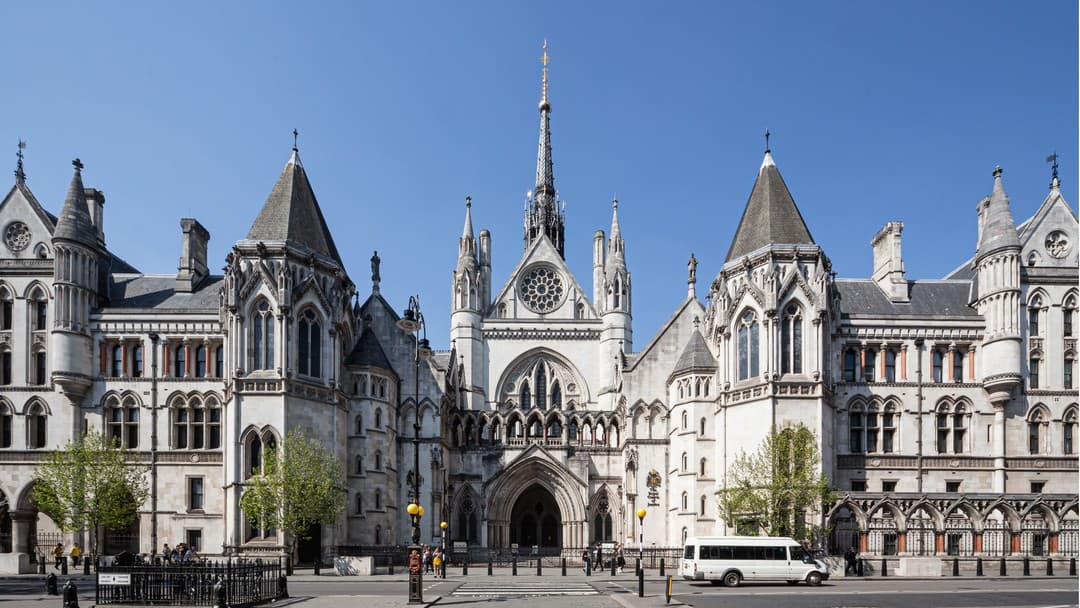
High Court rules Crown Court lacks power to release forfeited funds for appeal legal expenses.
The High Court has held that the Crown Court cannot release forfeited money to fund an appellant's legal expenses. Such applications must be made to the magistrates' court while an account freezing order remains in force.
In Sarah Odeh v City of London Police [2026] EWHC 2904 (Admin), Mrs Justice Foster DBE dismissed an appeal by way of case stated from HHJ Tomlinson at Southwark Crown Court. She answered the first question posed in the negative, so the second did not arise.
A late request for funding
In February 2022 the City of London Police (COLP) obtained an account freezing order (AFO) from Westminster Magistrates' Court over £348,000 held in an account in Ms Odeh's name. The grounds were a reasonable suspicion that the funds had been obtained through money laundering. COLP applied for forfeiture under s.303Z14 of the Proceeds of Crime Act 2002 (POCA) in January 2024.
Days before the final hearing in November 2024, Ms Odeh sought an adjournment, saying she could no longer fund representation and wished to seek a variation of the freezing order. This was refused as too late. She appeared unrepresented, and forfeiture of the full balance was ordered.
On appeal, she applied for part of the forfeited sum to be released for legal expenses under s.303Z16(3), which allows the court hearing the appeal to "make any order it thinks appropriate". HHJ Tomlinson found no such power, though he would have exercised it had it existed.
Competing readings of s.303Z16(3)
Kathryn Arnot Drummond, for Ms Odeh, argued that the provision conferred a power equivalent to the magistrates' exclusion power under s.303Z5. Once forfeiture had ended the AFO, nothing remained to vary, leaving the Crown Court as the only forum. Any narrower reading would infringe Article 6 ECHR.
Gary Pons, for COLP, contended that, read in context, the phrase was confined to orders consequential on the outcome of the appeal, such as the release of money where an appeal succeeds under s.303Z16(4).
Frozen and forfeited funds distinguished
Foster J accepted COLP's construction. The Crown Court provisions concern orders on an appeal and do not incorporate the "quite particular power" to draw on a forfeited fund. On forfeiture, proprietary rights are lost and the AFO ceases once the money is transferred to a nominated account.
The judge contrasted s.303Z15, which allows a disappointed enforcement authority to extend an AFO for 48 hours pending appeal, with the absence of any equivalent for respondents. That asymmetry reflected the design of the scheme.
No fundamental unfairness arose, the court found. The s.303Z5 exclusion power covers future legal expenses, and a Crown Court appeal forms part of "proceedings under this Part". An application could therefore be made while the AFO is in place, framed to include provision for any appeal, or raised at a case management hearing. The judge added that s.303Z6, or the magistrates' case management powers, could stay dissolution of the AFO pending a funding decision.
Foster J doubted that Article 6 was engaged and declined to read down s.303Z16(3). Doing so would require a coherent costing framework that could not be deduced from the statute. She distinguished predecessor drugs legislation, which had expressly given the Crown Court such a power, and drew support from R (NCA) v Westminster Magistrates' Court [2022] EWHC 2631 (Admin) in characterising the regime as stringent, draconian and designed for swift forfeiture.
Timing is decisive
The decision places the onus on respondents to seek an exclusion covering representation, including on any appeal, before a forfeiture order is made. Once forfeiture takes effect, that route closes.
 Copyright & permissions