Mudford Parish Council v Somerset Council: when does a local plan policy to "provide" a use require its delivery?
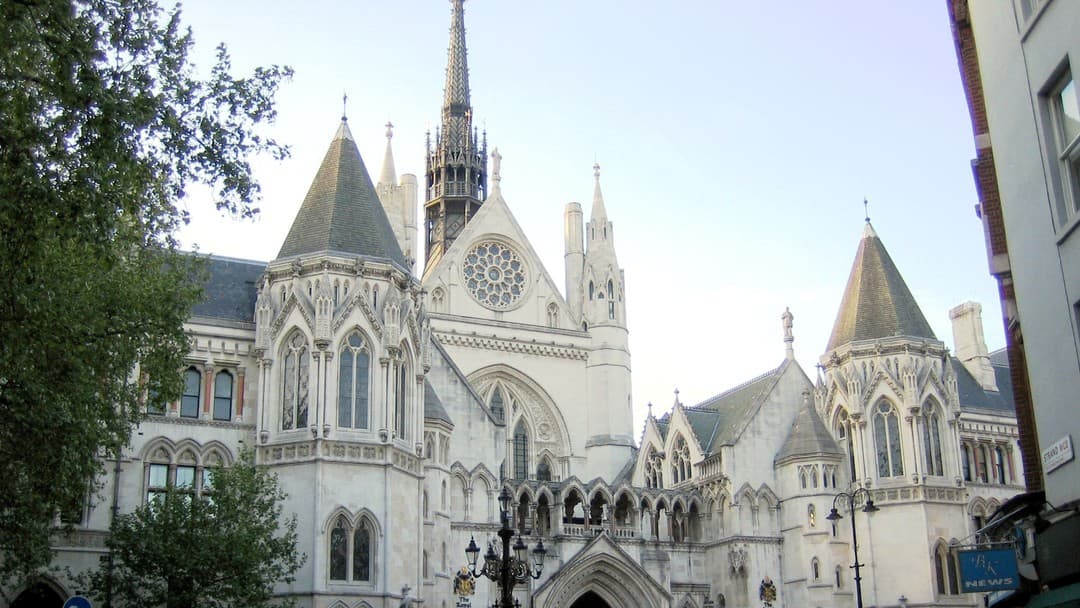
Planning Court rules on the meaning of Policy YV2 in a challenge to outline permission for 765 dwellings.
The High Court has dismissed a judicial review brought by Mudford Parish Council against Somerset Council's decision to grant outline planning permission for a 765-dwelling sustainable urban extension at Primrose Lane, Mudford, Yeovil. The case turned on the proper interpretation of Policy YV2 of the South Somerset Local Plan 2006-2028, which requires the Yeovil Sustainable Urban Extensions to "provide" employment land, a neighbourhood centre, a primary school and a health centre alongside the residential development.
The parish council argued that the permission unlawfully allowed the housing element to be delivered without any guarantee that the employment land or neighbourhood centre would actually be built. Somerset Council and the interested party, Abbey Manor Group, maintained that the challenge was, at its core, one of policy application rather than interpretation, and that the s.106 agreement securing marketing obligations was a rational and lawful response to the policy requirement.
Employment land: land, not buildings
On the employment land question, Kimblin J held that officers correctly interpreted the policy. The relevant wording required the provision of "approximately 2.58 hectares of land for economic development" and no more. The policy allocated a specific use; it did not require the construction of speculative employment buildings. The supporting text explaining the aspiration of one job per dwelling did not alter the policy's plain terms, but rather explained the purpose behind the allocation. Employment uses, unlike residential or retail, do not necessarily require the erection of buildings, reinforcing the distinction between the provision of land and the delivery of built development.
Even had the interpretation been wrong, the judge identified three further reasons to refuse relief. First, the policy contains no requirement that employment development must precede, or run in parallel with, residential development. Second, Condition 3, a phasing condition, reserves to the Council full control over the sequencing of the development. Kimblin J rejected the submission that this condition should be read down in line with the officer's report, applying the interpretive approach in Trump International Golf Club Scotland Ltd v Scottish Ministers [2015] UKSC 74. Third, the Hillside Parks principle means that variation from the approved plans cannot be undertaken piecemeal, limiting any future scope to repurpose the employment land.
Neighbourhood centre: delivery, not merely land
The position on the neighbourhood centre was materially different. Kimblin J held that the policy required the centre to be constructed and in use by the time the residential development it would serve was complete. The six elements within Policy YV2 are an integrated framework, and the policy's references to sustainability objectives and garden city principles make clear that the neighbourhood centre is to be delivered as a functioning facility, not merely as allocated land. A reading that required only the provision of land would, by the same logic, require only the provision of land for 765 dwellings, which would plainly be wrong.
However, the judge did not find that officers had given legally inaccurate advice. The committee debate had proceeded on the basis of whether a specific construction trigger should be imposed on the developer, which is a question of application rather than interpretation. Provided officers held a positive view of the prospects of delivery through the marketing mechanism, they were entitled to conclude that the policy would be satisfied. On the evidence, they did hold such a view, and the judgement was not irrational.
Witness statements and costs
Kimblin J disregarded both the Council's lead planner's statement and that of the interested party's managing director, applying the well-established principle in Newsmith Stainless Ltd v Secretary of State [2001] EWHC 74 (Admin) that such evidence is rarely admissible beyond exhibiting the contemporaneous decision materials. He directed that the costs of those statements not be allowed, a notable reminder of the strict approach taken in the Planning Court to post-decision opinion and argument dressed as evidence.
The claim was dismissed in respect of both the principal decision and the related permission for engineering works.
 Copyright & permissions