MSA Properties v The Drapery Northampton: landlord wins access dispute over rotten floor joists
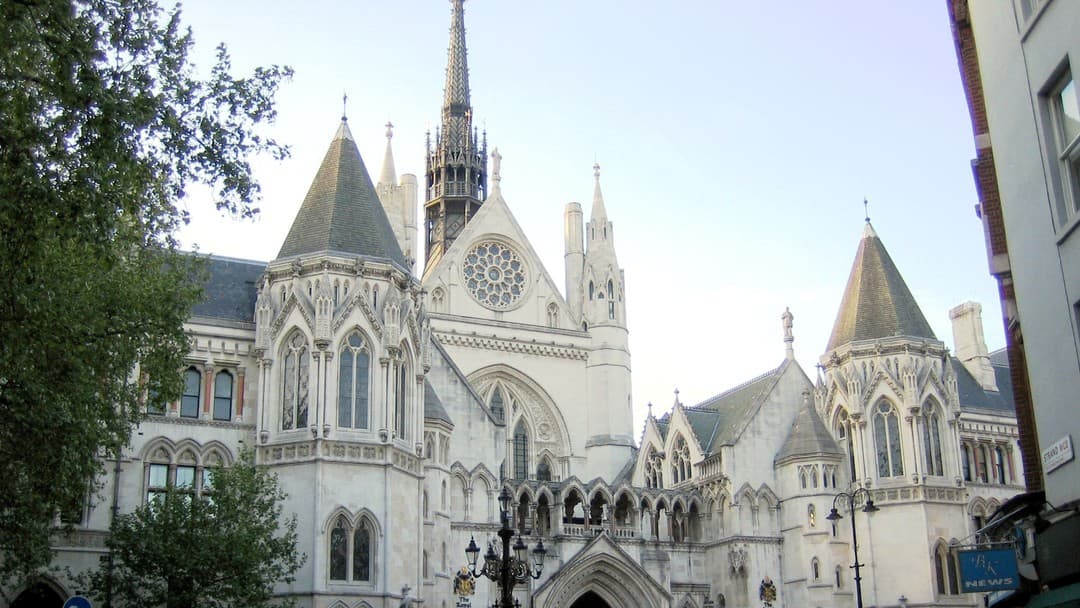
High Court grants six-week exclusive possession for structural repairs; counterclaim fails for want of documentary evidence
The High Court has ruled in favour of a freeholder seeking access to residential flats above a collapsed loading bay ceiling, finding that the landlord was entitled to exclusive possession of the affected premises for six weeks to carry out structural joist replacement. The judgement, delivered on 10 June 2026 by Elizabeth O'Neill sitting as Deputy Judge of the High Court, is reported at [2026] EWHC 1420 (KB).
The dispute arose from a ceiling collapse at 1/1A The Drapery, Northampton in August 2022, which exposed severe rot in structural floor joists beneath flats 16 and 17, held by the defendant under a 999-year lease dating from 1998. The claimant freeholder, MSA Properties Limited, maintained that replacement of six of the seven affected joists was necessary and that the works could only safely be undertaken from above, requiring the flats to be vacated. The Drapery Northampton Ltd resisted on grounds that localised repairs from below would suffice and that the claimant had no contractual right to compel vacation.
The court preferred the evidence of the claimant's structural engineer, Mr David Smith, over that of the defendant's expert, Mr David Haggan. Mr Smith had conducted a closer physical inspection, inserted a screwdriver through the most degraded joists to assess their condition, and engaged fully with mycologist reports on the extent of fungal infestation. Mr Haggan, by contrast, had chosen not to inspect the joists closely during his July 2025 site visit despite access having been expressly provided under a court order, had failed to engage with all of the mycologist's reports, and had not referenced his own earlier and more detailed inspection from January 2023 in his expert report. The court found that his evidence reflected a degree of conflation between his roles as a contractor engaged in negotiations and as an independent expert witness, which materially reduced its utility.
On the legal framework, O'Neill DJ rejected the defendant's reliance on McGreal v Wake (1984) for the proposition that a landlord may only choose a method of repair requiring vacation if it is the sole available method. The court held that McGreal addressed the scope of an implied licence to enter for identified works, not the anterior question of which method of repair a landlord may reasonably select. Applying Century Projects Limited v Almacantar (Centre Point) Limited [2014] EWHC 394 (Ch) and Goldmile Properties Ltd v Lechouritis [2003] 2 P&CR 1, the court confirmed that the reconciliation of a repairing covenant with a covenant for quiet enjoyment is a fact-sensitive exercise governed by reasonableness, not by an absolute rule that the least disruptive method must always prevail.
The court found that proceeding from above was the only method consistent with the risk-avoidance principles embedded in the Construction (Design and Management) Regulations 2015, having regard to risks to occupants, workers, and other building users. The landlord had acted on considered professional advice and without any improper motive. The breadth of the repairing and access covenants in the lease, read in the context of a 999-year term, reinforced that conclusion.
The ten-week period of exclusive possession originally sought was, however, reduced to six weeks, which the court found sufficient to complete the works whilst minimising disruption. The request for two days of exclusive possession for a preliminary inspection was declined as disproportionate; a right of entry for inspection was granted without the exclusivity component.
On the counterclaim, the defendant's allegation that the claimant had breached its repairing covenant by leaving the loading bay ceiling uncovered from mid-2023 onwards was upheld in principle. The court found that, following clear advice in July 2023 to reinstate the fire-retardant ceiling covering, the claimant had deliberately withheld reinstatement as leverage to pressurise the defendant into agreeing the substantive works, and that this was not a reasonable justification for the delay. A prohibition notice served by Northamptonshire Fire and Rescue Service in November 2023 had rendered the flats unsuitable as sleeping accommodation until March 2024. The counterclaim nonetheless failed because the defendant had adduced no documentary evidence to substantiate the alleged rental loss of £9,404.35, the quantum originally pleaded having also been identified as erroneous.
 Copyright & permissions
.png&w=3840&q=60)








.jpg&w=3840&q=60)