Manolete Partners v Smith: company cash used to fund share sale found to be transaction at an undervalue
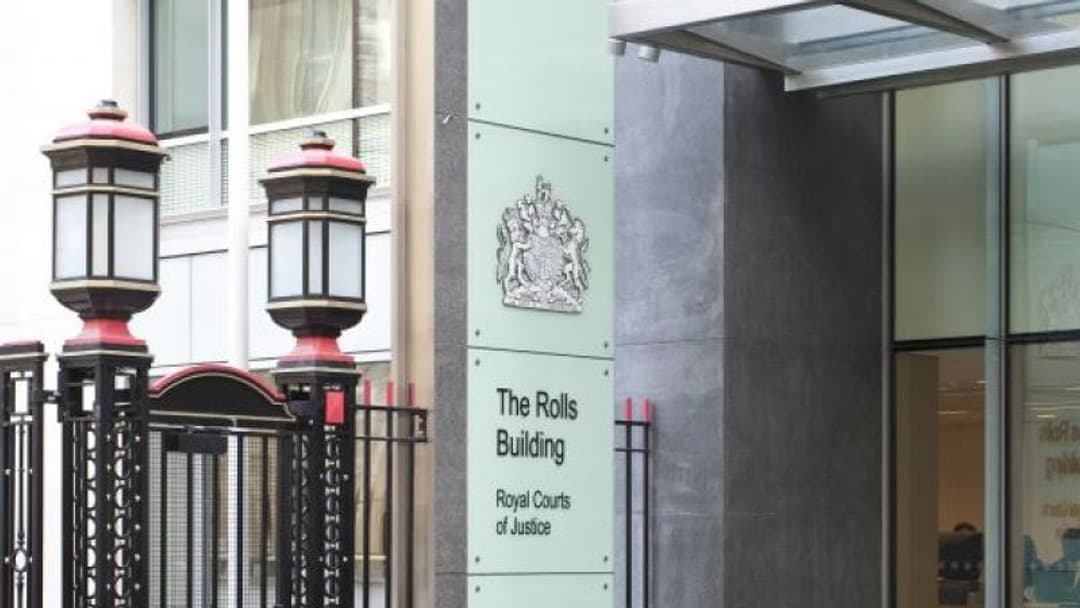
A joinery company's cash reserves were used to fund the purchase of its own shares — the High Court finds the payments void under the Insolvency Act 1986.
In Manolete Partners Plc v David Smith [2026] EWHC 1046 (Ch), ICC Judge Prentis held that payments totalling £748,270 made by A & D Joinery Limited to its departing sole director constituted transactions at an undervalue under s.238 of the Insolvency Act 1986. The judgement also found a partial breach of fiduciary duty in respect of two payments made on 27 July 2021, the day of completion.
The facts arose from a sale of the entire issued share capital of A & D Joinery — a profitable North-West joinery manufacturer with 34 years of trading history — to A&D MTE Ventures Limited. Ventures had no liquid assets of its own. The mechanism agreed between the parties was that the Company would advance funds to satisfy Ventures' payment obligations under the share purchase agreement, with those advances recorded as loans from the Company to Ventures. The Company paid out the full purchase price in tranches between 27 July and 27 August 2021. It ceased trading on 29 September 2021 and entered administration on 9 November 2021, with an estimated creditor deficiency of £454,543.
Transaction at an undervalue
The central question was whether Ventures' repayment obligations constituted valuable consideration for the payments made by the Company. Following Phillips v Brewin Dolphin Bell Lawrie Ltd [2001] UKHL 2, the court assessed the value of the consideration received by the Company, not merely the formal structure of the transaction.
The judge applied the Brewin Dolphin principle that where the value of consideration is speculative, subsequent events may and should inform its valuation. Ventures had no liquidity and could only have repaid through further borrowing, a future disposal of its shares, or dividends from the Company itself. Expert evidence established that repayment through dividends alone would have taken 19.5 years. As a matter of commercial reality, Ventures could not have obtained further borrowing. By November 2021, it had entered creditors' voluntary liquidation, having paid nothing under the loan agreement. The consideration was accordingly valued at zero.
The court also noted that the loan carried no interest, which on the authority of Re Ciro Citterio Menswear plc [2002] EWHC 662 independently constituted an undervalue. The Company was found to have been balance sheet insolvent at the date of each payment, and cashflow insolvent in consequence of them, satisfying s.240(2) without reliance on the connected-person presumption.
The s.238(5) defence
Mr Smith contended that the Company had acted in good faith and for the purpose of carrying on its business, as required by s.238(5). The court rejected this. The Company had received no independent advice, had no separate board representation, and had not applied any financial analysis to the consequences of stripping out over £735,000 in cash. The Court of Appeal's recent observations in Taqa Bratani Limited v Fujairah Oil and Gas UK LLC [2025] EWCA Civ 1669 were cited to the effect that s.238(5) operates narrowly, reflecting the policy that insolvent companies ought not to prefer shareholders over creditors. The transaction was directed at satisfying the private obligations of the shareholders, not at carrying on the Company's business.
Breach of duty
Limited to the 27 July payments, when Mr Smith remained a director, the breach of duty claim succeeded. He had failed to consider the impact on the Company's creditors, notwithstanding that the Sequana duty to have regard to creditor interests had been engaged by the Company's precarious financial position. Reliance on solicitors who did not advise him to seek financial forecasts did not provide relief under s.1157 Companies Act 2006, given that the risks ought to have been obvious and the direct beneficiary of the payments was Mr Smith himself.
The court declined to determine the alternative knowing receipt claim, which related to payments made after Mr Smith had ceased to be a director, as it would have required findings against third parties who were not before the court.
Manolete, as assignee of the administrators' claims under s.246ZD of the 1986 Act, succeeded on both the undervalue and breach of duty grounds. Consequential orders were reserved for agreement between the parties.
 Copyright & permissions