

LLJ v London Borough of Hackney: High Court finds housing appeal decision unlawful over Band A refusal
A family with a severely disabled child in a mould-ridden, overcrowded flat wins judicial review.
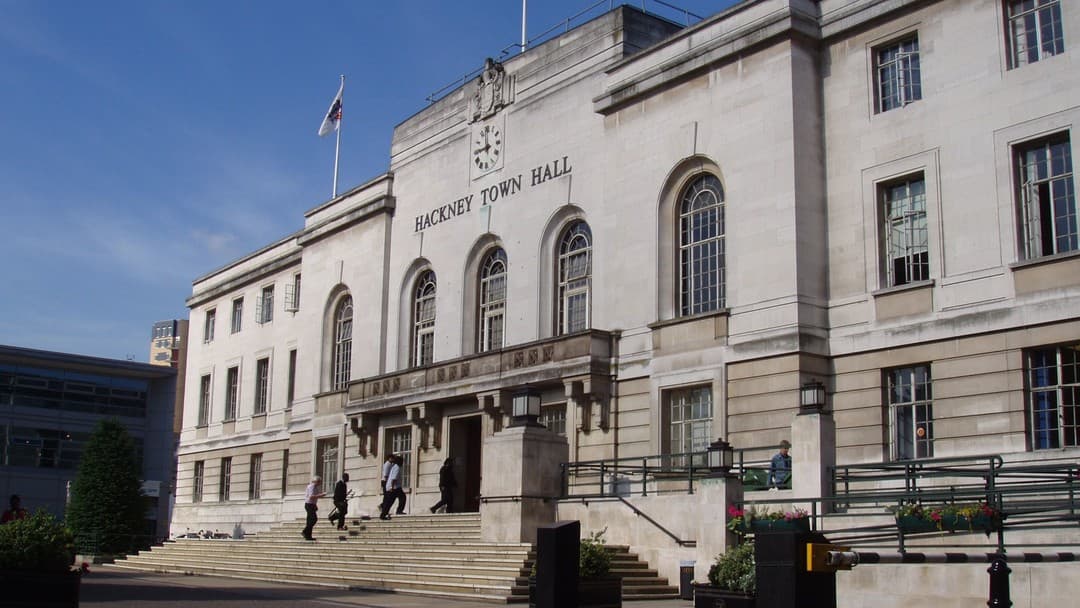
The High Court has found that the London Borough of Hackney acted unlawfully when it refused to place a family in Band A of its housing register, despite compelling medical and professional evidence that their accommodation posed an immediate risk to a disabled child's health and development.
In LLJ, R (on the application of) v The London Borough of Hackney [2026] EWHC 1145 (Admin), Mr Justice Coppel granted a declaration that the Council's appeal decision of 16 April 2025 was unlawful on multiple grounds. The claimant, her husband, and three young children, including a son (LLY) with severe autism and global developmental delay, had been living in a one-bedroom, third-floor flat owned by the Peabody Trust. The property was found to have severe damp and mould, with the bedroom having been rendered wholly uninhabitable by the time of a subsequent inspection.
The Council's appeal officer, Ms Parkinson, applied the wrong legal test, asking whether the household faced a "high risk to life and limb" rather than the correct Band A criterion under the Council's Allocations Policy: whether "a move is imperative to alleviate the immediate risk to the applicant's well-being or the well-being of a member of their household". The court held that a risk to well-being is broader than a risk to life and limb, and that "immediate risk" sets a lower threshold than "high risk."
The appeal decision was further vitiated by a failure to take into account highly relevant evidence. Letters from Hackney Ark, LLY's GP, his school, and an occupational therapist, all submitted alongside the appeal, did not appear in the list of documents considered by Ms Parkinson. The court inferred that these were not read, noting that her finding that health conditions were not "caused or worsened by the property or living conditions" was irreconcilable with their contents.
Ms Parkinson also erred in treating the damp and mould as a disrepair matter for Peabody to remedy. A surveyor's report from February 2025 had clearly stated that the condensation and mould were caused by overcrowding, not structural defects. The court found it more probable that the report was never read than that it had been misinterpreted.
The judgement contains a significant passage on the Council's conduct in litigation. After permission was granted, the Council purported to make a settlement offer that was ambiguously worded, did not acknowledge any error in the original decision, and threatened costs against the claimant if not accepted. Detailed grounds of defence filed shortly afterwards robustly defended the appeal decision as lawful. It was only at the oral hearing that the Council confirmed it had withdrawn the decision, but the witness statement later filed revealed it had not in fact been withdrawn at the time.
Mr Justice Coppel was critical of the Council's failure to engage seriously with the merits until after permission was granted, describing its conduct as falling short of the candour and co-operation required by defendants in judicial review proceedings. He cited the principles in R v Lancashire County Council, ex p Huddleston [1986] that public bodies are partners with the Administrative Court in upholding standards of public administration, and are not to be purely partisan in defending their own decisions.
Despite the appeal decision having been withdrawn by the time judgement was handed down, the court exercised its discretion to rule on the merits. With over 18 months having passed since the original decision and the family's circumstances remaining unresolved, the court held that declining to rule would risk further litigation on the same reasoning and would be a poor use of public resources.
The court declined to make a mandatory order placing the claimant in Band A, noting that the decision must be reconsidered in light of current circumstances. A declaration of unlawfulness was granted.
 Copyright & permissions
.jpg&w=3840&q=60)




__WEB.jpg&w=3840&q=60)







.jpg&w=3840&q=60)