-cropped-0k3d5gsz.jpg&w=256&q=75)

Litigating on camera: practical guidance for litigating in a livestreamed court
By Andrew Howell and Natalia Faekova
As live streaming expands across the courts, litigators must adapt to a new era of radically increased transparency
Monday 23 February 2026 had long been circled in legal diaries: the start date of Mazur & Ors v Charles Russell Speechlys LLP, one of the year's most anticipated hearings, in which the Court of Appeal is to rule on the question of who may lawfully conduct litigation. On the preceding Friday, as final preparations were underway, the Court of Appeal issued a Transmission Direction Order — requiring anyone wishing to observe the proceedings remotely first to request permission to do so.
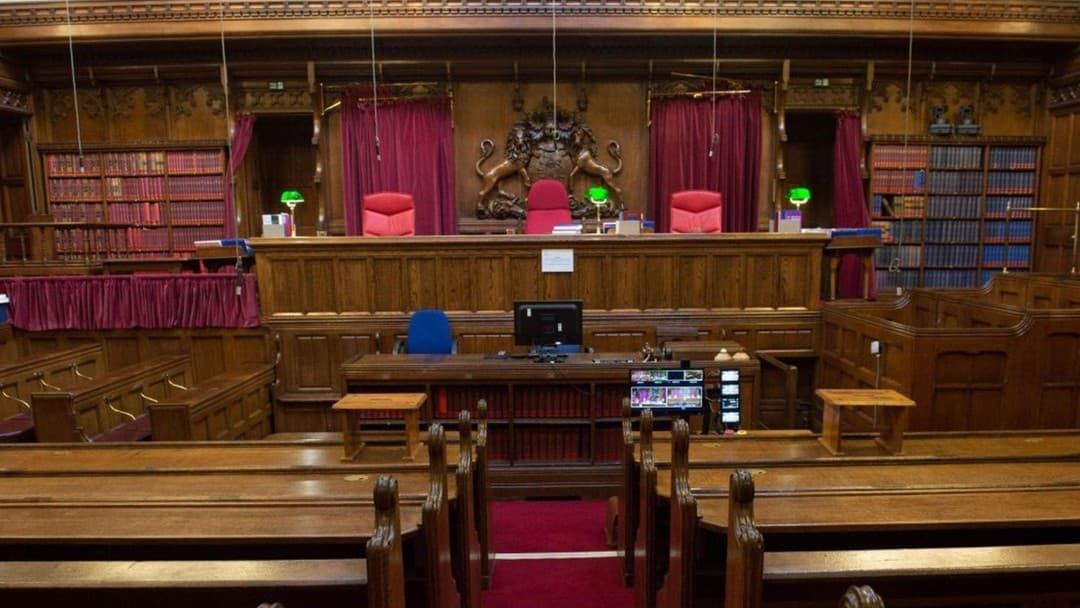
The requirement to seek permission was, at first glance, something of an anomaly. Most hearings in the Court of Appeal (Civil Division) are now routinely live streamed, with no prior permission required. Members of the public can simply navigate to the Court of Appeal (Civil Division) Live Stream site, click on the relevant case title, and watch proceedings on YouTube.
However, as the Master of the Rolls, Sir Geoffrey Vos, explained on the first day of the hearing, the Mazur case could not be live streamed in the ordinary way because one of the parties was a litigant in person. Section 6(2) of the Court of Appeal (Recording and Broadcasting) Order 2013 provides that: "in a hearing where any party is not legally represented, recording is only of the court giving judgment."
In other words, the default live streaming regime was unavailable. The Transmission Direction Order in Mazur, therefore, was a means by which the Court was nonetheless able to facilitate some degree of public access to the hearing, because, as the Order itself acknowledges, the case is "of great public interest" and "the Court anticipates there is likely to be interest from media representatives and members of the public in observing the appeal remotely."
This approach reflects the judiciary's broader commitment to open justice, most recently embodied in Practice Direction 51ZH, which we covered in a recent article. The two-year pilot (January 2026 – December 2027), operating across the Commercial Court, London Circuit Commercial Court, and the Financial List, requires key litigation documents — including skeleton arguments, witness statements, expert reports, and documents critical to understanding the case — to be publicly filed on CE-File by default once used in open court, removing the need for third parties to apply separately for access.
 Copyright & permissions