

Lawrence and others v Associated Newspapers: High Court dismisses Prince Harry's unlawful information gathering claim
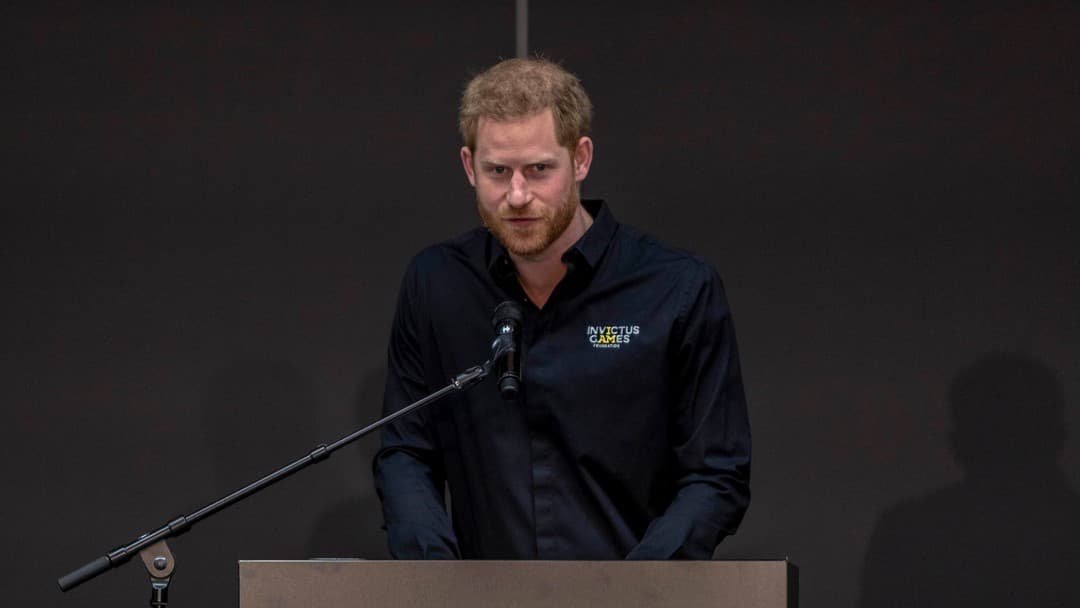
High Court dismisses unlawful information gathering claims by Prince Harry and co-claimants against Associated Newspapers.
The High Court has dismissed the privacy claims brought against Associated Newspapers Limited by seven prominent public figures, including Prince Harry, the Duke of Sussex, holding that the claimants failed to prove that their private information had been obtained unlawfully.
Handing down judgement in the King's Bench Division Media and Communications List, Mr Justice Nicklin rejected each of the six consolidated claims brought by Baroness Lawrence of Clarendon, Elizabeth Hurley, Sir Elton John, David Furnish, Sir Simon Hughes, Prince Harry and Sadie Frost Law (Baroness Lawrence of Clarendon OBE & Ors v Associated Newspapers Limited [2026] EWHC 1637 (KB)).
The claimants alleged that Associated, publisher of the Daily Mail, The Mail on Sunday and MailOnline, had habitually commissioned unlawful information gathering to source stories about them across 57 articles and incidents published between 1997 and 2015. The pleaded techniques included voicemail interception, the tapping of live telephone calls, the obtaining of confidential data by deception, and the instruction of private investigators. The remedies sought were for misuse of private information and, in one instance, breach of confidence.
Central to the outcome was the court's insistence on an article-by-article assessment rather than reliance on a generalised pattern of wrongdoing. Mr Justice Nicklin accepted that the use of third-party investigators, gaps in the surviving documentary record and evidence of practices at other newspaper groups formed part of the evidential context. None of those matters was determinative, he held, and the claimants still had to identify, for each article, a specific evidential link probative of unlawful gathering in that instance. That link was generally absent. In many cases the claimants had not defined with any precision the mechanism by which the information was said to have been obtained.
Because the substantive claims failed, the court considered it unnecessary to resolve Associated's limitation defence across the board. Constructing a hypothetical form of wrongdoing merely to test whether it was time-barred would, the judge observed, amount to guesswork. He made one exception. In relation to the Miskiw/Anderson emails, where the factual allegation was sufficiently defined, he found that even if liability had been established, the claims of Sir Simon Hughes and Ms Frost Law would have been statute-barred. Both had, or with reasonable diligence could have obtained, sufficient knowledge of a worthwhile claim before October 2016, six years before proceedings were issued.
The judgement also disposed of the so-called "Leveson Lies" allegation, under which the claimants contended that Paul Dacre, Elizabeth Hartley and Peter Wright had knowingly given false evidence to the Leveson Inquiry as part of a deliberate concealment. Mr Justice Nicklin found the allegation unproven. While he accepted that one passage of Ms Hartley's evidence had been expressed too broadly, he was not satisfied that any of the three had lied or intended to mislead. He was critical of the manner in which allegations of such seriousness had been advanced, observing that in significant respects the case had shifted from identified falsehoods to broader criticism of Associated's corporate response.
The evidence of Gavin Burrows, a former investigator on whom the claimants had relied, was found to be comprehensively undermined and incapable of supporting any disputed finding without independent corroboration.
Throughout, the court reiterated that it was resolving civil claims within an adversarial system, not conducting a public inquiry into the historic practices of a media organisation. A hearing has been listed for 29 and 30 July 2026 to determine the consequential orders.
 Copyright & permissions



.jpg&w=3840&q=60)



.jpg&w=3840&q=60)