Knapp v R: Court of Appeal upholds murder conviction despite manslaughter left only for co-accused
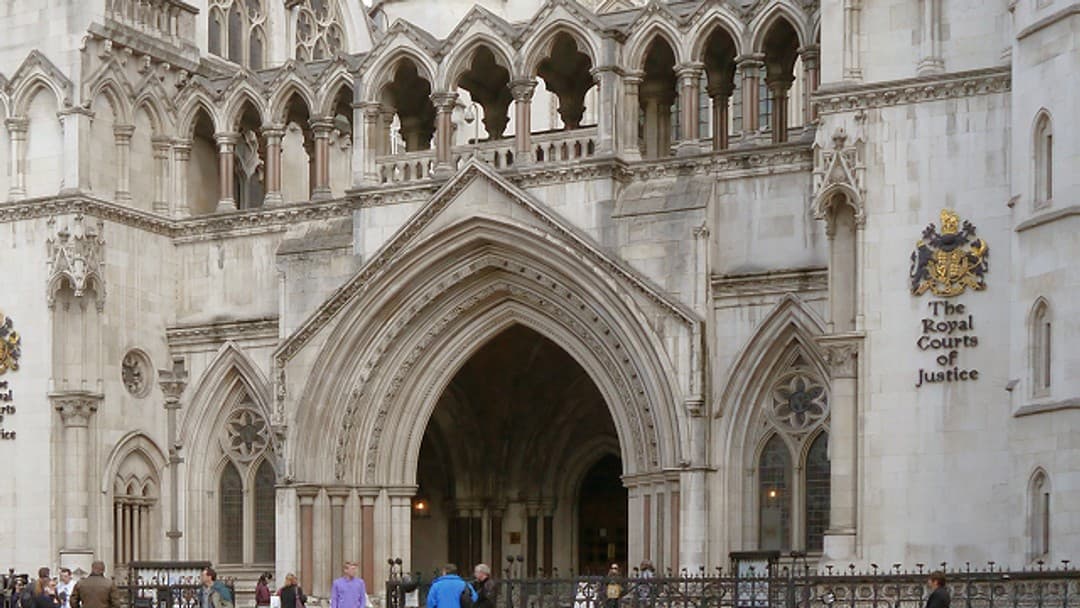
CCRC reference fails as manslaughter was not obviously raised on evidence against appellant.
The Court of Appeal has dismissed an appeal against a 2002 murder conviction referred by the Criminal Cases Review Commission, holding that the trial judge was right not to leave manslaughter to the jury as an alternative verdict.
In Knapp v R [2026] EWCA Crim 1437, Lord Justice Jeremy Baker, sitting with Mr Justice Johnson and Mr Justice Fordham, rejected the argument that the omission was a material misdirection under R v Coutts [2006] UKHL 39.
Background
Robert Knapp and David Croke, since deceased, were convicted at the Central Criminal Court of the 1999 murder of Mohammed Raja, who was stabbed and then fatally shot at his home. The prosecution case was that property developer Nicholas Van Hoogstraten, embroiled in litigation with Mr Raja, asked Mr Knapp, who acted as his enforcer, to arrange the killing, and that Mr Knapp recruited Mr Croke.
Mr Van Hoogstraten, who was not alleged to have been present, was acquitted of murder but convicted of manslaughter, a conviction later quashed. The judge had left manslaughter in his case because he had given evidence that he had previously sent people to threaten business associates but never to kill them. Neither Mr Knapp nor Mr Croke sought a manslaughter direction. Both denied being present, and the issue in their cases was identification.
During deliberations the jury asked whether joint enterprise would apply if a defendant was involved but "simply nearby" rather than inside the house. The judge answered that it could, provided the jury were sure he was party to a joint enterprise to kill or cause really serious bodily harm. He refused a defence request to leave manslaughter on the basis that Mr Knapp might have been elsewhere, having relayed instructions. The court refused leave to appeal on both points in 2003.
The appeal
Paul Taylor KC, for the appellant, argued that manslaughter obviously arose on two bases: that Mr Knapp was present but the gunman went beyond an agreement to frighten or kidnap, or that he was absent when that happened. Applying Coutts, R v Foster [2007] EWCA Crim 2869 and R v Barre [2016] EWCA Crim 216, the court reiterated that an alternative must be left where it is obviously raised by the evidence and is one to which a reasonable jury could come. It need not be left where it is trivial, insubstantial or would not reflect the real issues in the case.
Neither basis met that test. Two armed men arrived after careful preparation. Both were present in the hallway as Mr Raja was repeatedly stabbed, and both remained while the gunman reloaded. The warning shot theory was speculation, and it was immaterial whether Mr Knapp was in the room at the moment of the fatal shot. The defence's acceptance that whoever was present must have intended at least really serious harm was not tactical, but reflected the only reasonable inference from the evidence.
The scenario that Mr Knapp was elsewhere was, as the trial judge had said, outside anything the evidence could support. The jury's note most likely concerned his whereabouts at the moment of the shooting, and the judge's answer ensured conviction only on a proper joint enterprise basis.
Nor had the judge overlooked the issue; Coutts consolidated rather than changed the law. Mr Van Hoogstraten's position was materially different: he was remote from events, whereas Mr Knapp was at the scene and able to control them.
The jury had not been unfairly forced into a choice between murder and acquittal, and the conviction was safe.
Louis Mably KC and Lyndon Harris appeared for the Crown.
 Copyright & permissions