Kalinga v R: Court of Appeal quashes offensive weapon conviction over crutch attack
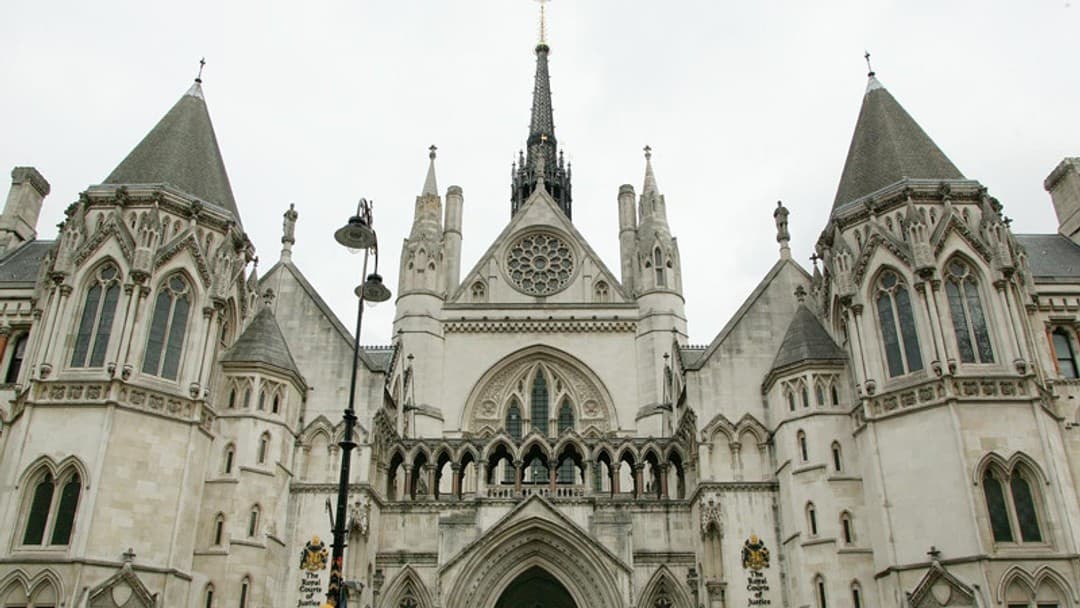
Court of Appeal clarifies when instantly using an object as a weapon escapes section 1(1) liability.
The Court of Appeal (Criminal Division) has quashed a conviction for possessing an offensive weapon, ruling that a man who used a crutch to attack another man within one or two seconds of being handed it could not be guilty of the separate offence under section 1(1) of the Prevention of Crime Act 1953.
Handing down judgement on 1 September 2026 in Anthony Kalinga v R [2026] EWCA Crim 1135, the Vice President of the Court of Appeal Criminal Division, Lord Justice Edis, sitting with Sir Gary Hickinbottom and Mrs Justice Ellenbogen, held that the trial judge at Bournemouth Crown Court had erred in refusing a defence application to withdraw the weapons charge from the jury.
The case arose from an altercation in Bournemouth in the early hours of 25 April 2025, captured on CCTV. Anthony Kalinga and an acquaintance, Ebima Cessay, became involved in a physical confrontation. During a lull, Kalinga handed Cessay one of two crutches Cessay was carrying because of a leg injury. After further exchanges, Cessay struck Kalinga with a crutch, and a bystander then passed Kalinga the second one. Footage showed Kalinga striking Cessay with it within one to two seconds of receiving it, causing injuries including a cut to the forehead and a broken nose.
Kalinga was convicted at trial of assault occasioning actual bodily harm and of having an offensive weapon in a public place, and was sentenced to a total of 14 months' imprisonment, with the weapons offence attracting one month concurrent. He appealed only against the weapons conviction, arguing that the trial judge should have accepted a submission of no case to answer.
Sir Gary, giving the leading judgement, traced the development of the law under the 1953 Act from R v Jura [1954] through to R v Tucker [2016], noting that the courts had at times struggled to reconcile competing lines of authority on whether the instantaneous use of an object as a weapon could itself establish the intent required for a separate possession offence.
The Court confirmed that the settled position, established in Ohlson v Hylton [1975] and followed in R v Humphreys and later cases, is that no offence is committed under section 1(1) where a person arms themselves with an object for instant use against a victim. The provision is aimed at the carrying of weapons with intent formed before any occasion for violence arises, rather than at the use of an object seized during an assault. Where the taking up of an article and its use cannot properly be separated from the assault itself, no separate weapons offence arises.
Counsel for the Crown, who had not appeared at trial, accepted before the Court of Appeal that the judge had misapplied the law and that the application to dismiss the count ought to have succeeded. The Court agreed, describing the CCTV evidence as striking and finding that Kalinga's possession of the crutch and his use of it could not be treated as distinct from the assault itself.
The Court further observed that the weapons count should not have been added to the indictment at all, since it added nothing beyond the assault charge and risked confusing the jury. That observation echoed earlier authority, including Bates v Bulman [1979], suggesting that a second charge under the 1953 Act is often more likely to obscure than to assist the resolution of cases already covered by a substantive assault offence.
The conviction on the weapons count was quashed, with no retrial sought. The Crown had already reflected Kalinga's use of the crutch in the sentence imposed for the assault, meaning the overall sentence remains unaffected by the outcome of the appeal.
 Copyright & permissions
.jpg&w=3840&q=60)