J's Supermarket v Home Office: Court of Appeal upholds sponsor licence revocations
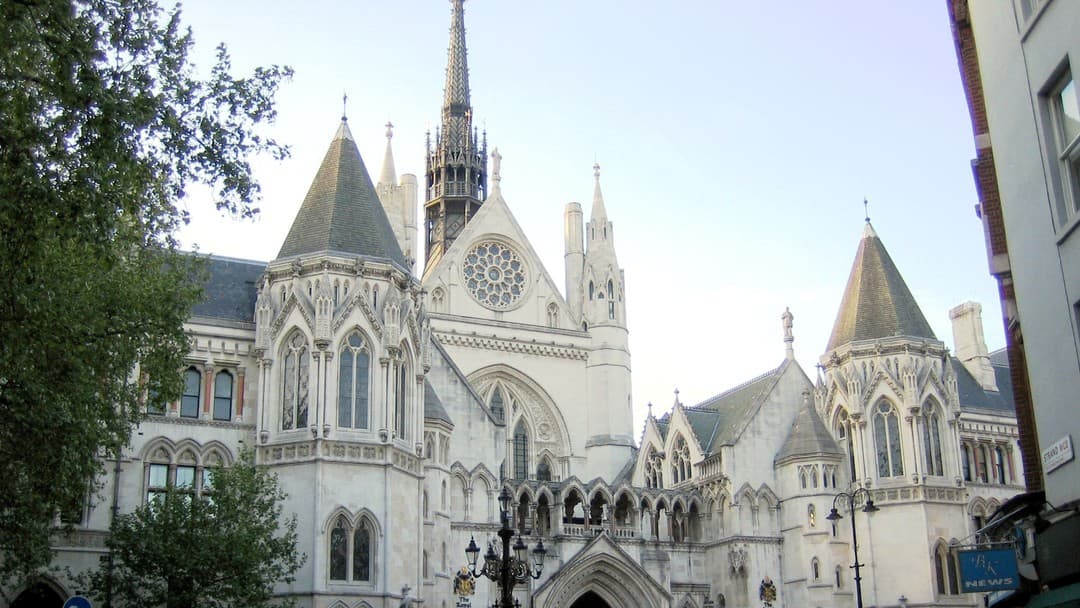
Court of Appeal clarifies sponsor licence revocation test, dismissing employers' appeals against Home Office decisions.
The Court of Appeal has dismissed appeals by two employers against the revocation of their Home Office sponsor licences, in a judgement clarifying how the "highly likely" test under section 31(2A) of the Senior Courts Act 1981 applies where some, but not all, of the Secretary of State's grounds for revocation are found to be unlawful.
The two conjoined appeals concerned J's Supermarket Limited, a small grocery business in south London, and Prestige Social Care Services Ltd, a care provider, both of which held sponsor licences permitting them to employ overseas workers under the Skilled Worker route until those licences were revoked following compliance visits.
J's Supermarket's licence was revoked after a Home Office compliance officer found that two sponsored employees, recruited respectively as a retail manager and a shopkeeper, described their actual duties as shop-floor tasks such as stocking shelves and serving customers, markedly different from the managerial responsibilities set out on their certificates of sponsorship. The Secretary of State concluded the roles were not genuine vacancies and had been created to facilitate the employees' leave to remain. The Court of Appeal upheld the finding, rejecting arguments that the process had been procedurally unfair or that the Home Office had failed to properly consider witness evidence submitted on the company's behalf, finding that the discrepancies had been clearly identified to the employer at each stage and a fair opportunity given to respond.
Prestige's case turned on different issues. The Home Office had revoked its licence citing, among other things, a staff turnover rate far exceeding the care sector average, the recruitment of a worker, referred to as Mr F, who had failed the required English language test with no basis to expect he would pass, and the sponsorship of a worker, referred to as Ms K, into a role requiring driving despite her having disclosed on her application that she could not drive. The High Court had found that the conclusion drawn from Ms K's case, that her role was therefore not a genuine vacancy, was irrational, since an inability to meet a job's requirements does not mean the job itself is fictitious; it instead pointed to poor recruitment practice. The Court of Appeal agreed, dismissing the Secretary of State's cross-appeal on this point, and also upheld the finding that this particular ground could not be salvaged under section 31(2A), because the Home Office's own "minded to find" correspondence had withdrawn reliance on that specific finding before resurrecting it, without further warning, in the final decision.
Nonetheless, the Court of Appeal upheld the overall revocation of Prestige's licence, agreeing with the High Court that it was highly likely the same outcome would have followed regardless, given separate and independently sufficient findings of systemic recruitment failures and high staff turnover falling within the guidance's discretionary revocation grounds. Lord Justice Dingemans, giving the lead judgement, rejected the submission that section 31(2A) could never apply once part of a decision-making process had been found unlawful, holding that the provision remained available where the decision-maker had identified alternative, independently sustainable grounds, so long as the court did not stray into assessing the merits of the underlying decision itself.
The court also confirmed that a finding that a sponsored role poses a "threat to immigration control" does not require proof of dishonesty, and can rest on serious incompetence or systemic recruitment failures alone, distinguishing that threshold from the heightened procedural fairness required where dishonesty is specifically alleged, as established in Balajigari and Prestwick.
 Copyright & permissions