

James v James: High Court rules on will construction and statutory substitution under section 33

Master McQuail determines whether a granddaughter inherits her late father's share of a residuary estate.
The High Court has ruled that a granddaughter is entitled to take her late father's share of a residuary estate by statutory substitution, in a judgement examining the interpretation of a 1994 will and the operation of section 33 of the Wills Act 1837.
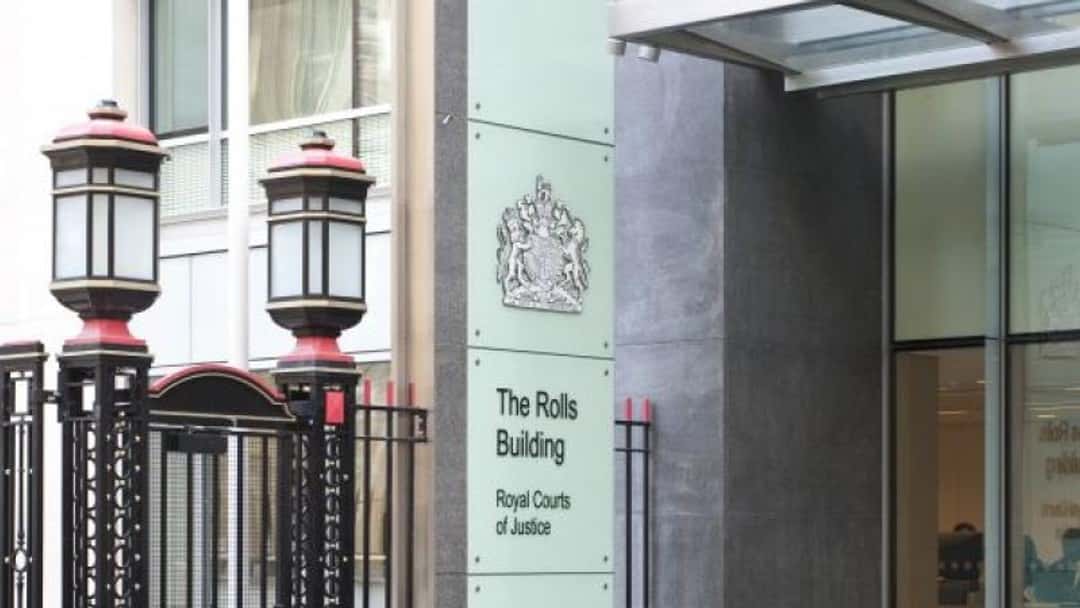
In Olivia Priscilla James v Jonathan Sylvester James [2026] EWHC 2190 (Ch), Master McQuail was asked to construe clause 9 of the will of Constantia James, who died in February 2023. The clause left the residuary estate to the deceased's two sons, Mark and Jonathan, in equal shares, with a proviso allowing their issue to take by substitution in certain circumstances if a son died before receiving a vested interest. Mark died in 2017, predeceasing his mother, and was survived by his only child, the claimant. Jonathan survived the deceased.
The claimant's standing to apply for Jonathan's removal as executor under section 50 of the Administration of Justice Act 1982 depended on whether she was a beneficiary under clause 9. That, in turn, depended on whether the words "as shall survive me" demonstrated a contrary intention sufficient to displace section 33, which otherwise directs that a gift to a predeceasing child takes effect as a gift to that child's surviving issue.
Counsel for the claimant, Tomos Rees, relied on a line of authority including Ling v Ling, Hives v Machin, Burns v Bean and Re Brackstone, in which survivorship wording of this kind was held insufficient, without more, to exclude section 33. He submitted that a contrary intention required the will's language to show affirmatively that a deceased beneficiary's issue should not inherit, and that Rainbird v Smith, which reached the opposite conclusion on its facts, had since been treated as an outlier by subsequent decisions.
The defendant, appearing in person, argued that the armchair principle supported his position as the sole surviving named beneficiary, and referred to a number of authorities he said he had located with the assistance of AI. Master McQuail found, following submissions from both parties after the hearing, that none of those cases addressed the construction question in issue and that they offered no assistance in interpreting clause 9.
Master McQuail held that there was no ambiguity in clause 9 permitting the admission of extrinsic evidence, and that no admissible evidence of the testator's intentions from 1994 existed in any event, the solicitors' file no longer being available. Evidence of a more recent estrangement between the deceased and the claimant, even had it been adduced, could not bear on the construction of a clause signed decades earlier. The proviso in clause 9, far from indicating an intention to exclude substitutionary gifts, was itself concerned with issue taking by substitution, reinforcing rather than undermining the application of section 33. Silence as to the precise situation that had arisen was not sufficient to displace the statutory default.
Declaratory relief was granted in the claimant's favour. A further hearing has been listed to deal with consequential matters and the outstanding application for the defendant's removal as executor.
The judgement adds to a growing body of first instance authority preferring the reasoning in Ling v Ling over Rainbird v Smith, and confirms that ordinary survivorship language in a residuary gift will rarely, on its own, be read as excluding the statutory substitution mechanism for the issue of a predeceasing beneficiary.
 Copyright & permissions




.jpg&w=3840&q=60)





.jpg&w=3840&q=60)