Irama v Formark: High Court refuses permission to appeal and imposes a civil restraint order
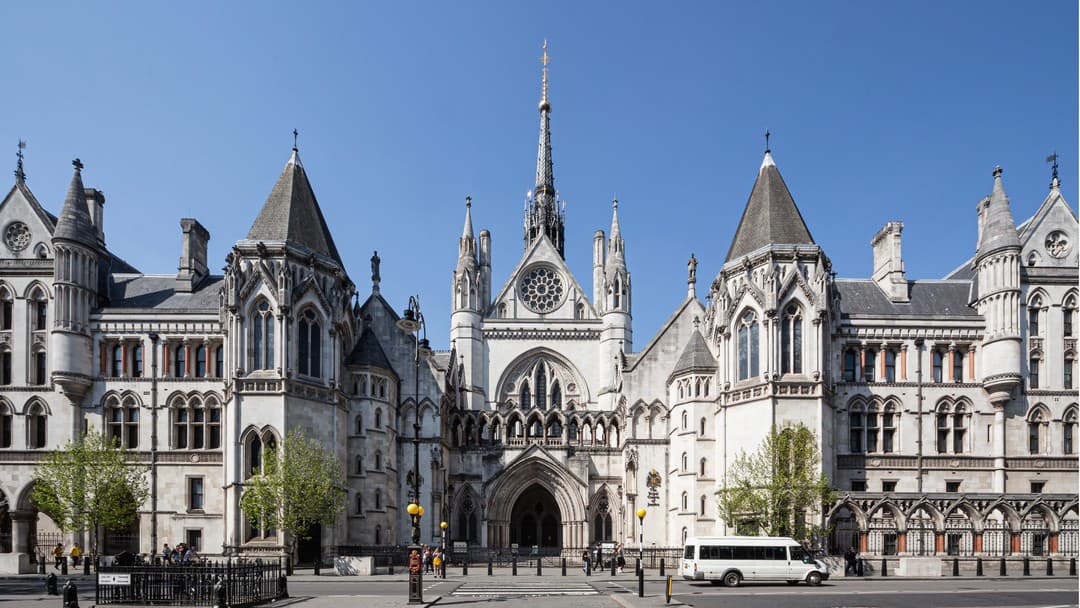
Griffiths J dismisses a costs appeal as totally without merit and restrains further applications.
The High Court has refused a renewed application for permission to appeal in a long-running costs dispute, certified the application as totally without merit, and made a limited civil restraint order against both the corporate appellant and its director.
Mr Justice Griffiths gave judgement on 3 July 2026 in Irama Pte Limited v Formark Scaffolding (Holdings) Limited [2026] EWHC 1681 (KB), on an appeal from an order of Her Honour Judge Bloom in the County Court at Central London. Permission had already been refused on the papers by Martin Spencer J in June 2026.
The appellant company was unrepresented. Its director, Parvinder Chopra, applied for rights of audience under CPR 39.6, the rule implementing Lord Woolf's recommendation that companies should ordinarily be permitted to take the steps a litigant in person could take. Griffiths J traced the discretion back to Charles P Kinnell & Co Ltd v Harding, Wace & Co [1918] 1 KB 405 and, with some hesitation, granted the right of audience for the hearing. He recorded that Mr Chopra was poorly suited to the task, holding no legal qualification, and had filed the sealed order and transcript only the day before, provided no appeal bundle, and sent submissions by email, some as attachments that could not be opened. He noted that at least three of Mr Chopra's previous applications had been certified totally without merit, though neither he nor the company was yet subject to a civil restraint order.
The underlying claim, brought in 2021 for alleged rent arrears, had effectively collapsed. The claimant's solicitors came off the record before a pre-trial review in January 2024, the claimant did not attend, and HHJ Baucher struck out the claim, ordering costs and a £30,000 interim payment. An attempt to appeal was out of time, Bourne J refused an extension, and the order became final. The interim payment remained unpaid.
The defendant then pursued detailed assessment. The claimant served no points of dispute, and a default costs certificate for £187,553.11 was issued in May 2024. Successive attempts to set it aside failed, first before HHJ Saunders and then before HHJ Bloom, whose order of 5 December 2025 dismissed the application as totally without merit and imposed further costs of £17,000 and £4,500.
Much of the argument concerned whether Darren Malone, a costs draughtsman later called to the Bar, had held rights of audience at earlier hearings. Griffiths J held the objection to be both unfounded and irrelevant. Anyone heard with the court's permission is an exempt person under Schedule 3 to the Legal Services Act 2007, and an appeal lies against an order, not against the audience rights of those present. In any event, HHJ Bloom had considered the set-aside application on its merits despite points of dispute being some 18 months overdue, and found none because no points of dispute had ever been served.
The judge examined each ground of appeal. Grounds challenging earlier orders were out of time and closed off by previous refusals; the remaining grounds, raising conflict of interest, a supposed defect in the certificate, and Denton v TH White Ltd [2014] EWCA Civ 906, had no bearing on HHJ Bloom's reasoning. The costs orders were summary assessments, not indemnity awards, and disclosed no arguable error.
Refusing permission and recording the application as totally without merit, Griffiths J made a limited civil restraint order against the company and Mr Chopra personally under CPR 52.20(6) and PD3C, requiring the court's permission for any further applications in the proceedings.
 Copyright & permissions