ICG v Colliers: High Court allows negligence amendments over disputed 2018 valuation
Court permits ICG to re-amend its negligence claim against Colliers over a contested property valuation.
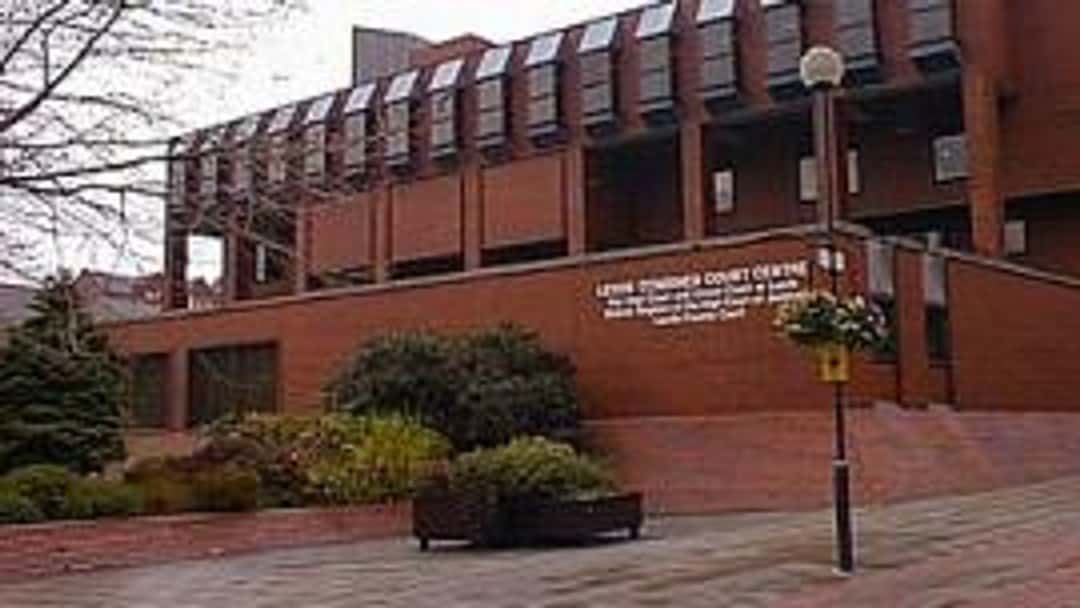
By allowing the bulk of the claimants' proposed re-amendments, Mr David Halpern KC, sitting as a Deputy High Court Judge, has cleared the way for ICG and its co-claimants to advance a fresh head of negligence against the valuer Colliers ahead of a trial expected in early October.
The dispute in ICG Manager Limited and others v Colliers International Valuation UK LLP [2026] EWHC 1749 (Ch) turns on a valuation dated 31 January 2018. The claimants, which include ICG Manager Limited, ICG Longbow Senior Debt Investments No.1 LLP, the BUPA Pension Scheme trustee and Apex Group Fiduciary Services, had made a secured loan against the property. They contend that a competent valuation would have revealed that the outstanding loan exceeded 75 per cent of the property's value, breaching the loan-to-value (LTV) covenant in the facility agreement. Had they known, they say, they would have moved to sell sooner and limited the loss ultimately crystallised on a later sale.
Disclosure in December 2025 proved pivotal. It showed that Colliers' valuer, Mr Paul Hale, had prepared a draft valuation on 21 January 2018 of £22.41m, equating to an LTV of 79.2 per cent. Following a conversation with Capreon, the borrower's agent, on 30 January, he issued a final figure of £23.75m the following day, an LTV of 74.74 per cent and comfortably within covenant.
That sequence generated pointed correspondence. The claimants' solicitors, Burges Salmon, initially invited the court to infer that Mr Hale had increased his figure at the borrower's prompting to keep the covenant intact. RPC, for Colliers, read the letters as advancing a case of conscious impropriety. The judgement records that the natural reading of the January letter did suggest an allegation of breach of fiduciary duty in preferring the borrower's interests, a characterisation the claimants later disavowed, confirming that no case of intentional wrongdoing or fraud was being pursued. The judge observed that serving three successive drafts of the re-amended particulars told against, rather than for, the claimants' conduct.
On the substance, the judge applied the familiar threshold of a real, as opposed to fanciful, prospect of success, together with the principles on late amendments drawn from Quah Su-Ling v Goldman Sachs. Colliers accepted the amendments would not imperil the trial date.
Most of the proposed additions survived. The judge held it arguable that decreasing the net initial yield without good reason was negligent, that failing to obtain risk-management approval was a proper particular of breach, and that a valuer advising a lender should not permit the borrower to influence the reported figure absent objective justification. Crucially, he accepted that a causal inference could be drawn from the temporal link between the 30 January call and the revised figure, subject to the pleading being recast to assume the conversation preceded the change.
Not everything passed muster. An internal email in which Mr Hale described the property as "utterly awful" was refused a place in the pleading, being a matter for cross-examination rather than a particular of breach. References to the covenant outcome being an "unplanned" effect were also struck, as duplicative or incoherent within a negligence case.
Colliers will be permitted a supplementary witness statement from Mr Hale confined to the new allegations. The claimants must bear the costs occasioned by the amendments, including consequential re-amendment of the defence.
 Copyright & permissions