Hosein v Attorney General of Trinidad and Tobago: Privy Council dismisses constitutional claim over 17-year delay
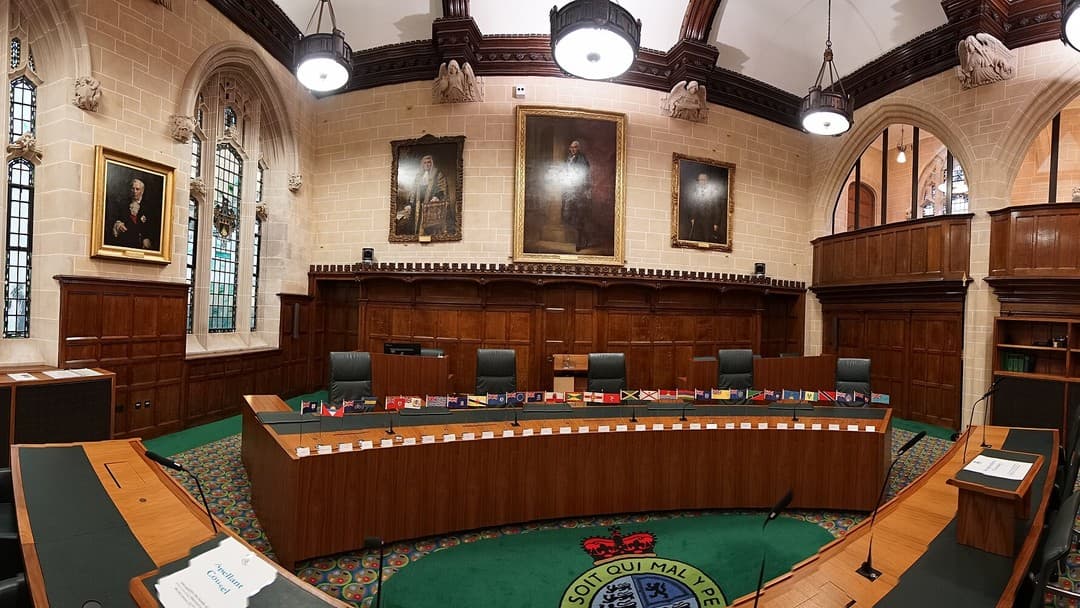
A state employee retrenched in 2003 fails to obtain constitutional relief after the Board finds his 17-year delay in bringing proceedings to be inordinate and without cogent explanation.
The Judicial Committee of the Privy Council has dismissed an appeal by Anthony Noel Hosein, formerly employed as an Estate Constable at Caroni (1975) Ltd, a State-owned company in Trinidad and Tobago. The Board, in a judgement delivered on 29 April 2026, upheld decisions of both the High Court and the Court of Appeal that the constitutional motion brought by the appellant was an abuse of process owing to inordinate delay.
Hosein was retrenched by Caroni in August 2003 after being denied the opportunity to accept a Voluntary Separation Employment Package (VSEP) before the deadline. He alleged that his treatment amounted to discrimination on grounds of race and sex, and to victimisation. The constitutional claim eventually filed in December 2020 asserted infringements of his rights to due process, equality before the law, equality of treatment, and fair treatment under sections 4 and 5 of the Constitution of Trinidad and Tobago.
The delay between the events giving rise to the claim and the filing of the constitutional motion spanned 17 years. In the intervening period, Hosein had pursued a complaint under the Equal Opportunity Act, lodged in 2009 — six years after his retrenchment — and referred to the Equal Opportunity Tribunal in 2013. That claim was withdrawn by the appellant in July 2020 without any determination on the merits.
The Board, in a judgement delivered by Lord Hamblen, confirmed that delay in bringing a constitutional claim may constitute an abuse of process and may independently disentitle a claimant to the discretionary relief available under section 14 of the Constitution. The governing principles derive from Durity v Attorney General of Trinidad and Tobago [2003] 1 AC 405, which establishes that where delay is inordinate, a cogent explanation must be provided. No fixed time limit applies, but a constitutional claim that could have been brought promptly in 2003 demands justification when filed nearly two decades later.
Two periods of delay were examined. For the years 2003 to 2009, the appellant argued he had refrained from pursuing constitutional relief on the basis that a parallel remedy would become available under the Equal Opportunity Act. The Board found this explanation illogical: the Act, though passed in 2000, was not yet operational in 2003, meaning no parallel remedy existed at the time. Waiting for a remedy that was not then accessible could not constitute a cogent reason for inaction.
For the period 2009 to 2020, the appellant pointed to alleged procedural and constitutional infirmities within the Tribunal proceedings, including claims that the Tribunal lacked lawful authority following the Board's decision in Maharaj v Attorney General of Trinidad and Tobago [2019] UKPC 6, and that its Chair was conflicted by past political associations. The Board was unpersuaded. The authority of the Tribunal was protected by section 36 of the Interpretation Act, which insulates the validity of a body's acts from defects in the appointment of its members. The allegations of apparent bias disclosed no real risk and, in any event, remedies had been available within the proceedings themselves.
The Board also addressed the submission that prejudice to the defendant must be established before a claim can be struck out for delay. This was rejected. The focus of the inquiry is on abuse of the court's process, not solely on harm to the opposing party, and neither Durity nor Webster v Attorney General of Trinidad and Tobago [2015] UKPC 10 impose any such requirement.
The Court of Appeal's approach — directing itself to the correct legal framework, identifying inordinate delay, and assessing whether cogent reasons had been provided — was found to be without error. The standard of appellate review applicable to multi-factorial evaluative judgements requires more than disagreement with the outcome; no ground for intervention was established.
 Copyright & permissions








.jpg&w=3840&q=60)
.png&w=3840&q=60)