HMRC v HFFX LLP: Supreme Court draws the line on purposive tax interpretation
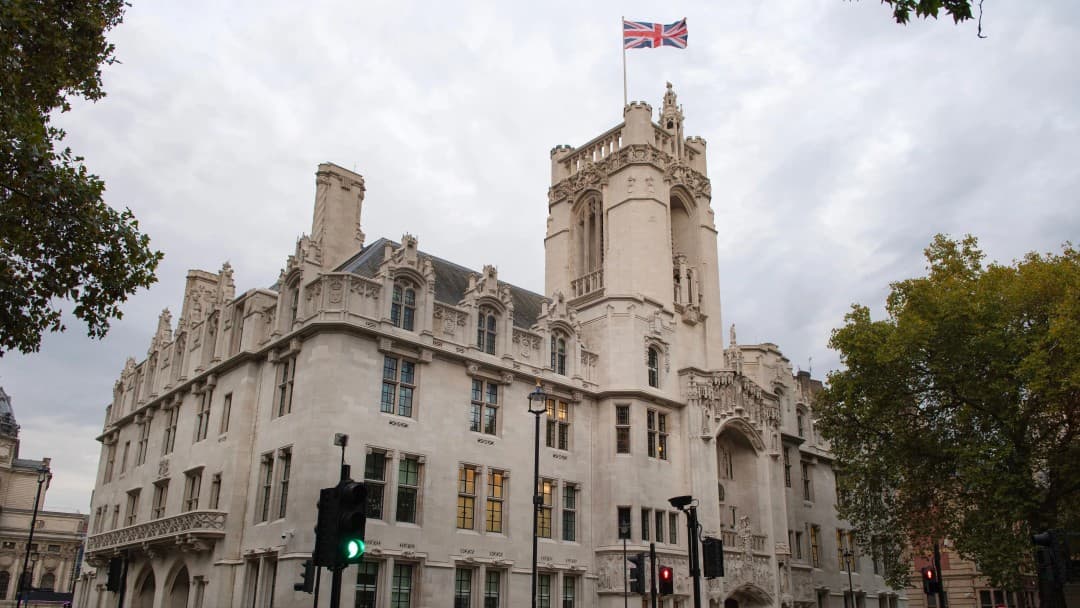
Supreme Court rules deferred profit scheme not caught by partnership income rules, but individual partners still taxed.
A foreign exchange trading firm spent years constructing an elaborate deferred remuneration scheme designed to route profits through a corporate member and pay them out later at lower tax rates. The Supreme Court has now confirmed what every tribunal and appellate court below it concluded: the scheme worked in one direction and failed in another, and the result is a definitive statement on how far HMRC can push purposive statutory interpretation in tax cases.
The firm at the centre of the dispute, HFFX LLP, was a highly profitable forex trading vehicle within the GSA group. Rather than paying profits directly to its individual partners, HFFX allocated a substantial portion to a corporate member, GSAM, which invested the money in fund shares and then, over three annual tranches, contributed the proceeds back to HFFX as "special capital" before reallocating it to the individual partners. The plan was straightforward: corporate tax rates are lower than income tax rates, and if the profits could spend time in corporate hands before reaching individuals, the overall tax take would be reduced.
HMRC attacked the scheme on three fronts. The most significant was section 850 of the Income Tax (Trading and Other Income) Act 2005, which allocates partnership profits for income tax purposes according to the partners' profit-sharing arrangements. HMRC argued that looking at commercial reality, the deferred amounts were always going to reach the individual partners and should be treated as their income from the outset. The Supreme Court, in a unanimous judgement delivered by Lord Sales, rejected that argument.
The issue is not academic. If HMRC had succeeded on section 850, the corporate tax paid by GSAM on its profit allocation would have had to be repaid. More broadly, it would have given HMRC a significant tool for re-characterising deferred profit arrangements in LLPs and partnerships more widely.
The Supreme Court's reasoning is grounded in the language of the statute. Section 850 allocates profits according to contractual rights existing in the relevant accounting period. In the relevant years, the individual partners had no contractual right to the amounts allocated to GSAM; they had at best a right to be considered for a future discretionary payment. That is not the same thing, and the fact that payments were made in practice in accordance with recommendations does not transform a contingent expectation into a present entitlement. HMRC's appeal to the underlying commercial purpose of the provision could not override that reading, because the purpose of section 850, properly understood, is precisely to follow the contractual allocation between partners rather than to second-guess it.
The Supreme Court endorsed the reasoning in the Court of Appeal's earlier BlueCrest decision and went further in explaining why the purposive approach cannot rescue HMRC here. There was nothing artificial or circular in the GSAM structure: it had genuine commercial purposes, including retention and incentivisation of staff, and GSAM's discretion was real. The Ramsay doctrine, which allows courts to look through transactions that serve no commercial purpose, simply had no purchase on these facts.
The individual partners fared less well on the second issue. They argued that the deferred payments they actually received were not taxable because GSAM's discretion was too unfettered to constitute a "source" of income under section 687 of ITTOIA. That argument was dismissed. Applying the Braganza principles, GSAM's discretion was not absolute: it was subject to an implied obligation to exercise it rationally and for proper purposes. That was enough to prevent the payments being characterised as mere voluntary gifts and to supply the necessary source. The exercise of discretion under a legal framework, even where the outcome is not guaranteed in advance, is itself the source.
The wider message is pointed. HMRC's repeated attempts to use purposive construction to expand the reach of section 850 beyond its textual limits have now been rejected at every level. If Parliament wants deferred profit arrangements in partnerships to be caught differently, the Supreme Court's clear steer is that it should legislate to that effect, as indeed it began to do in 2014 with changes to the LLP rules. That is not a criticism; it is simply how the system is meant to work.
Commissioners for His Majesty's Revenue and Customs v HFFX LLP; Atkins and others v Commissioners for His Majesty's Revenue and Customs [2026] UKSC 17, Lord Sales (with whom Lord Lloyd-Jones, Lord Hamblen, Lord Burrows and Lady Rose agreed), 17 June 2026.
 Copyright & permissions







.jpg&w=3840&q=60)