High Court refuses Tate brothers permission for judicial review over complainants' identity disclosure
Chamberlain J finds neither irrationality nor Article 6 breach arguable in extradition disclosure challenge.
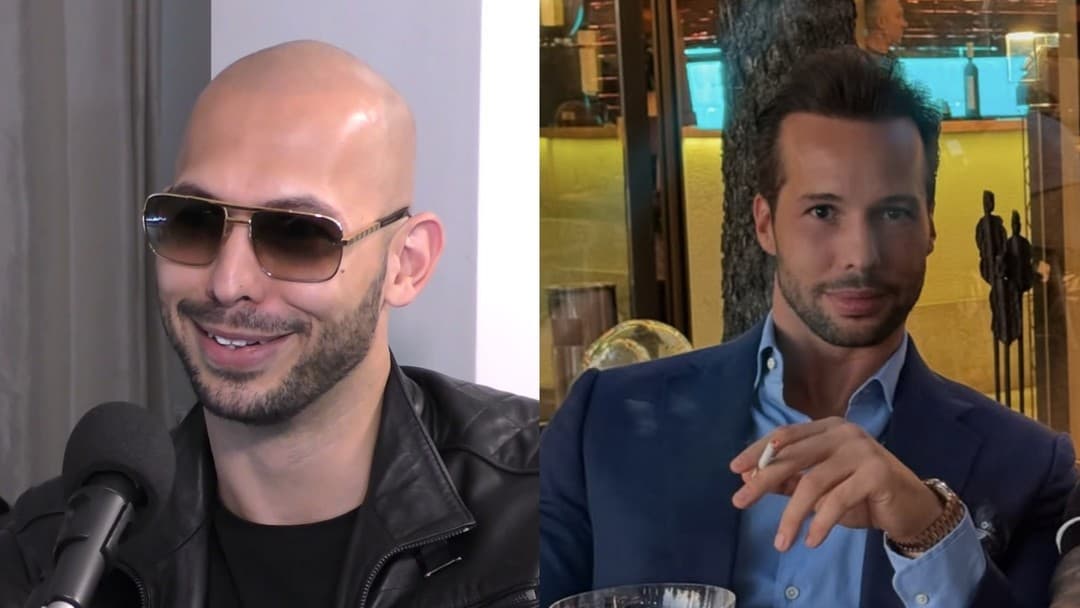
The High Court has refused Andrew and Tristan Tate permission to apply for judicial review of the Crown Prosecution Service's refusal to disclose the identities of complainants in extradition proceedings against them. In R (Andrew Emory Tate and Tristan Tate) v Director of Public Prosecutions [2026] EWHC 1600 (Admin), Mr Justice Chamberlain determined that neither of the two grounds of challenge was arguable.
The UK is seeking the extradition of the brothers from Romania, where they have been habitually resident since 2017, to stand trial for a series of serious offences. Andrew Tate faces three counts of rape, four of assault occasioning actual bodily harm, two of human trafficking and one of controlling prostitution for gain, alleged between 2014 and 2016. Tristan Tate faces three counts of rape, six of assault occasioning actual bodily harm and two of human trafficking, with offences alleged between 2012 and 2016. The Bucharest Court of Appeal ordered extradition in March 2024, conditional on the conclusion of the Romanian criminal proceedings against them.
The brothers challenged the CPS's refusal to name the complainants on two grounds: irrationality, and breach of Article 6(3)(a) of the European Convention on Human Rights, which guarantees that those charged with a criminal offence be informed promptly of the accusation against them.
On irrationality, Chamberlain J accepted that while no statutory disclosure duty yet arose under the Criminal Procedure and Investigation Act 1996, the common law could impose a qualified duty in appropriate circumstances. He nonetheless held that the CPS's refusal was coherent and rational, and that the contrary was not arguable. A Specialist Prosecutor had met each complainant personally, assessed their vulnerability and mental health concerns, and concluded that no adequate safeguard could protect them once their identities were known to individuals of the claimants' public profile. The court found the claimants' notoriety to be a permissible and relevant consideration: the risk of names spreading across social media platforms with millions of followers was precisely the kind of harm a responsible prosecutor could weigh. Security-backed undertakings offered by the claimants, ultimately raised to £20,000 each, were rejected on two bases: there was no enforceable legal mechanism within the jurisdiction to administer payment, and the financial offer did not in any event mitigate the risk of harm to complainants.
On the Article 6 ground, Chamberlain J accepted it was at least arguable that the claimants had been "charged with a criminal offence" in the autonomous Convention sense, given that a full Code test charging decision had been made. That, however, did not determine the outcome. Article 6(3)(a) rights must be assessed holistically across the proceedings as a whole, not at an isolated early stage. The claimants already knew the offence categories and the relevant date ranges. Their complainants' identities will be disclosed upon surrender to the United Kingdom and before their first court appearance. Any prejudice arising from delayed disclosure can be addressed before the Crown Court by way of an application to stay proceedings for abuse of process, with a further right of appeal if needed. Ground 2 was equally unarguable.
The court noted separately that, had the DPP pressed the argument that the claim was out of time, it would not have succeeded, given the CPS's repeated representations that the disclosure decision remained under ongoing review.
Permission was refused on both grounds.
R (Andrew Emory Tate and Tristan Tate) v Director of Public Prosecutions [2026] EWHC 1600 (Admin). Mr Justice Chamberlain. 26 June 2026. Sallie Bennett-Jenkins KC and Robert Fitt (instructed by Holborn Adams) for the claimants. Tom Little KC (instructed by the Crown Prosecution Service) for the defendant.
 Copyright & permissions
.jpg&w=3840&q=60)