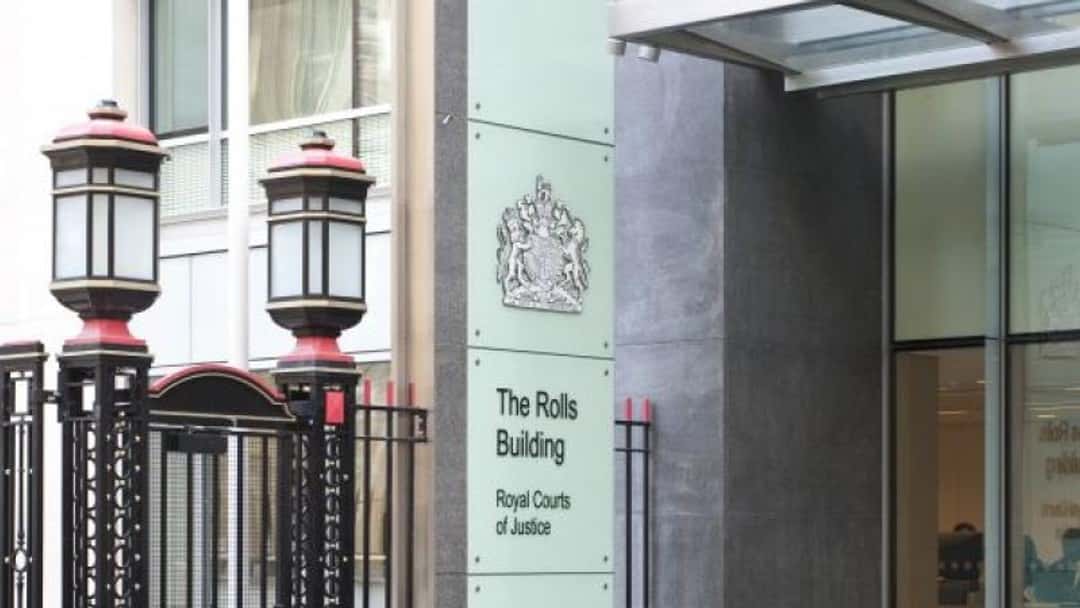
High Court refuses permission for derivative claim in Gamett v Hughes dispute

Court finds no director would pursue claim over ownership of German subsidiary built on decades-old oral deal.
The High Court has refused permission for a shareholder to continue a derivative action against his co-director and business partner of thirty years, finding the claim was fundamentally undermined by two decades of contemporaneous documents contradicting the version of events now advanced.
In Philip Gamett v Paul Hughes [2026] EWHC 2004 (Ch), Andrew de Mestre KC, sitting as a Deputy Judge of the High Court, refused Philip Gamett's application under section 261 of the Companies Act 2006 for permission to continue a derivative claim against Paul Hughes on behalf of Continental Clothing Company Limited, holding that no director acting in accordance with section 172 of the Act would choose to pursue it.
Gamett and Hughes had run the clothing business together since the 1990s, becoming equal shareholders and directors of the company in 2001. Gamett's claim centred on an oral agreement said to have been reached in 2002, under which a German subsidiary, Continental Clothing Company GmbH, would be established and run by Hughes but would ultimately belong to the company, with its profits distributed accordingly. Gamett sought a declaration that the company was beneficial owner of the German entity's shares, an account of its profits, and damages for various alleged breaches of duty by Hughes arising from the way the subsidiary was operated over more than twenty years.
Having received permission on the papers at the first stage, the claim faced a substantially different task at the second stage hearing, where the court had the benefit of evidence and argument from both sides. The judge found the merits of the claim weak at every turn. A body of contemporaneous material, including the company's own annual accounts from 2006 onwards, correspondence sent by solicitors on Gamett's own instructions in 2011, an agenda he prepared for a meeting with Hughes that year, and his own emails, consistently described the German company as owned by Hughes personally, with profits split on a basis entirely different from that now pleaded. The judge also noted that Gamett had received substantial payments totalling over £2 million from the German company or Hughes personally over the years, which Hughes said represented Gamett's agreed share of profits, and for which Gamett had offered no alternative explanation consistent with his current case.
The judge further identified a structural difficulty with how the claim had been framed: the underlying oral agreement was pleaded as a contract between Gamett and Hughes personally, to which the company was not a party, making it unclear how breaches of that agreement translated into breaches of Hughes's duties as a director owed to the company, rather than simply giving rise to a personal claim between the two individuals. This mattered under section 263(3)(f) of the Act, which requires a court to consider whether a shareholder could pursue the same complaint in his own right, a route the judge found would also spare the company any exposure to costs.
Applying the guidance in Iesini v Westrip Holdings [2011] 1 BCLC 498 and Franbar Holdings Ltd v Patel [2008] BCC 885, the judge concluded that a notional director would attach little importance to continuing a claim of this weakness, particularly given the mismatch between the very substantial costs of litigating events stretching back to 2002 and the limited, largely unquantified financial benefits on offer. Concerns were also raised, though not determinative, about Gamett's good faith in bringing the claim only after a wider falling out with Hughes.
The judge additionally found that Gamett had failed to make full and fair disclosure at the first permission stage, though it was unnecessary to determine the consequences of that failure given permission was refused in any event. The derivative action was accordingly dismissed.
 Copyright & permissions