High Court refuses freezing order in Freestream Aircraft v Seven Hundred dispute
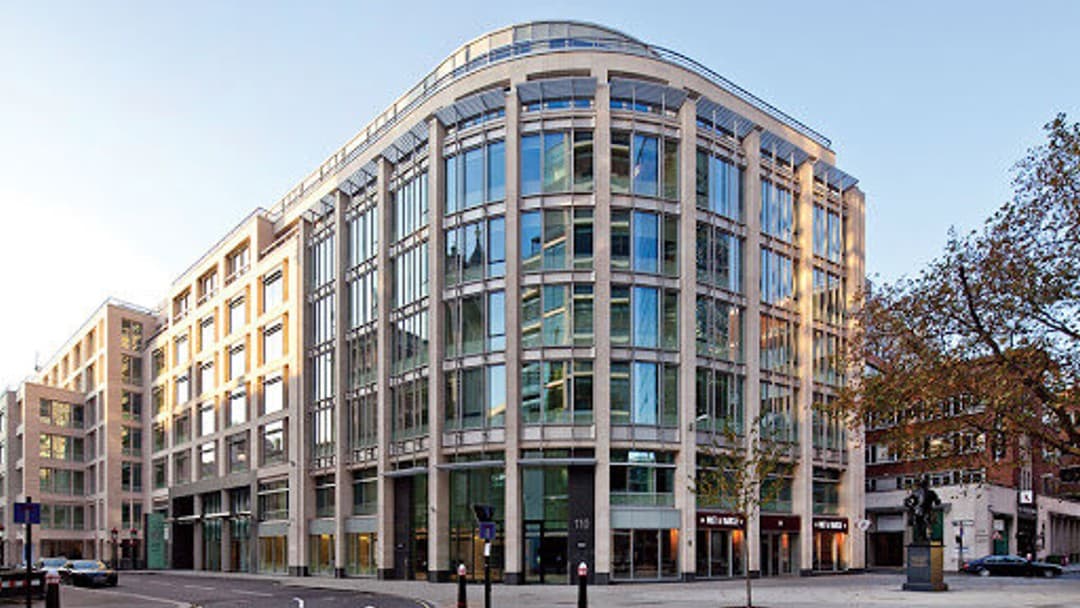
High Court declines £1.85m freezing injunction against private jet broker after Flexjet business sale, finding no risk of dissipation.
The High Court has refused an application by Freestream Aircraft Limited for a domestic freezing injunction against Moonshot Investments Limited, formerly The Jet Business (International) Limited, in a dispute arising from the sale of a Gulfstream G700 aircraft.
Handing down judgement on 1 July 2026, Nicola Rushton KC, sitting as a Deputy Judge of the High Court, found that although there was a serious issue to be tried in the underlying claim, Freestream had failed to establish a real risk that a future judgement would go unsatisfied.
The underlying litigation concerns a claim by Freestream for unpaid commission of US$837,500 against Seven Hundred Limited, arising from the sale of a private jet in May 2025 to alleged affiliates of FXSolutions, a company within the Flexjet group headed by Kenneth Ricci. Freestream's claim against the second and third defendants, the broker formerly known as The Jet Business and its director Steven Varsano, is for allegedly inducing Seven Hundred to breach the underlying fee agreement.
The freezing application arose after Freestream discovered in May 2026 that the second defendant had changed its name and sold its entire brokerage business to a newly incorporated Flexjet entity, with Mr Varsano taking up a new role within the Flexjet group. The consideration comprised cash, received into the company's UK bank account, and shares in a Delaware company. Freestream argued this divestment amounted to an unjustified dissipation of assets and that a real risk of further dissipation existed, given the liquid nature of the cash proceeds, the difficulty of enforcing against the US shares, and the absence of any trading history for the company's proposed new ventures in sectors such as artificial intelligence and biotech.
On the threshold question of whether there was a serious issue to be tried, the deputy judge rejected arguments that the inducement claim was doomed for want of a causative link or a properly pleaded acceptance of repudiatory breach, save in one narrow respect concerning the timing of the alleged acceptance under the fee agreement's one-year window.
On risk of dissipation, however, Freestream's application failed. Applying the principles summarised in Fundo Soberano de Angola v Dos Santos and Holyoake v Candy, the court held that solid evidence of a real risk was required, and that generalised assertion or mere inference would not suffice. Freestream accepted that the business sale was a bona fide, arm's length transaction unconnected to the litigation, and did not dispute that it had been made at full value. The deputy judge held that a company was in principle entitled to use its own assets freely for legitimate business purposes, including selling an existing business and redeploying the proceeds into new ventures, without this amounting to unjustified dissipation. The evidence showed the cash proceeds remained in the company's UK bank account and that its net assets, confirmed by its accountants to exceed US$10 million, had if anything improved following the sale.
The court distinguished Guerrero v Monterrico Metals and Bravo v Amerisur Resources, both cases in which the relevant English company was being wound down entirely with no assets left behind, describing those situations as materially different from a company that continued to trade and retained its sale proceeds within the jurisdiction. The court declined to draw any adverse inference from the company's refusal to disclose commercially sensitive details of the transaction or its future investment plans, holding that such refusal could not itself found a risk of dissipation absent some other prima facie case, which Freestream had not raised.
The application was refused, with the question of whether relief would otherwise have been just and convenient not arising for decision.
 Copyright & permissions