High Court orders doctor to repay £190,000 in Hinton v Stobinski director's duties case
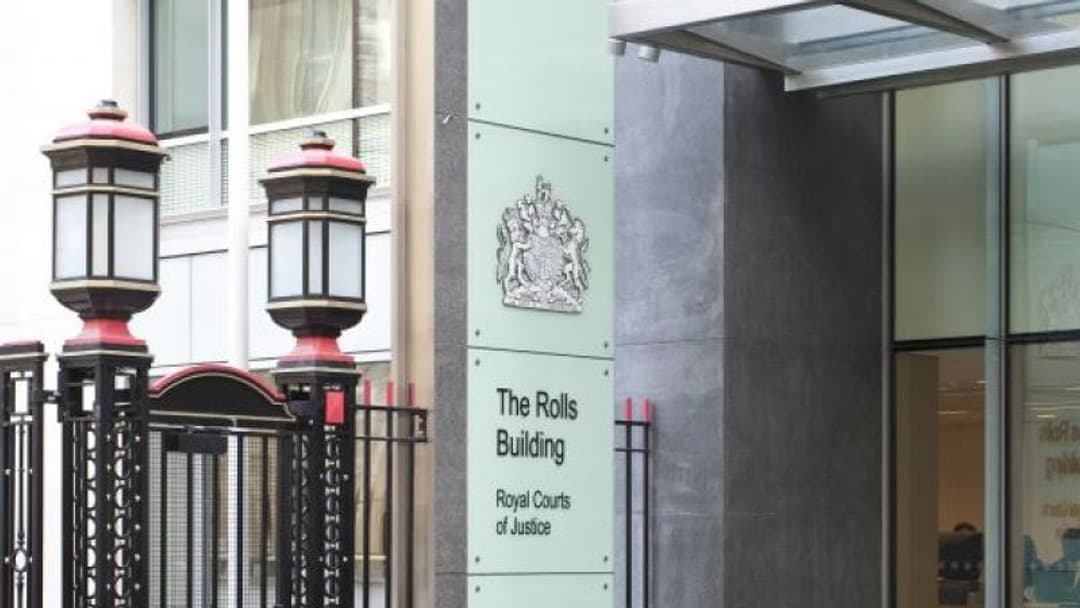
Judge finds sole director breached fiduciary duties after overdrawing loan account and diverting company funds.
The Insolvency and Companies List has ordered a doctor to pay almost £190,000 to the liquidator of his former service company, having found that his evidence on a disputed director's loan account was so incoherent it could be given no weight.
Handing down judgement on 22 September 2026 in Hinton v Stobinski [2026] EWHC 2386 (Ch), Deputy ICC Judge Curl KC ruled against Dr Marek Stobinski, the sole director and shareholder of St Mark Lions Limited, a company used to channel some of his earnings as a medical practitioner. The company entered creditors' voluntary liquidation in October 2022, and its liquidator, Lloyd Hinton, brought claims totalling £214,195.29 for breach of directors' duties under the Companies Act 2006.
The claim comprised three elements: an overdrawn director's loan account of £112,506, unexplained payments of £63,189.29 covering online purchases, auction fees and entertainment spending, and £38,500 paid directly to Dr Stobinski under the description "MGMT CHARGE". The liquidator argued the company had been insolvent or bordering on insolvency from December 2019, given an accumulating corporation tax debt, and that Dr Stobinski had prioritised his own spending over addressing it.
Before reaching the substance of the claim, the judge dealt with a procedural challenge concerning the scope of section 212 of the Insolvency Act 1986, which allows a liquidator to pursue company claims in their own name without issuing separate proceedings. Counsel for Dr Stobinski argued that a simple debt claim could not be brought this way, relying on the long-standing authority of Re ETIC Limited [1928] Ch 861. Judge Curl agreed, finding that the wider modern wording of section 212 still required conduct amounting to misconduct connected to the office of director, and that an ordinary failure to repay a loan did not meet that threshold. However, he rejected the argument that the claim was a nullity incapable of correction, distinguishing the line of authority in Milburn-Snell v Evans [2012] 1 WLR 41, and indicated he would have permitted the proceedings to be rectified under CPR rules 19.2 and 3.10, following the approach taken in Manolete Partners plc v Hayward and Barrett Holdings Ltd. Ultimately this did not affect the outcome, since the liquidator succeeded on an alternative basis.
Much of the judgement addressed the reliability of Dr Stobinski's evidence, which the judge described as shifting and, at times, incomprehensible. The director had claimed variously that he was a creditor rather than debtor of the company, that sums recorded as "Other Debtors" were unconnected to him, and that the disputed payments represented salary, loan repayment or dividends, positions that were mutually contradictory and unsupported by any documentary evidence. Correspondence from the company's accountants was found to have repeatedly obstructed the liquidator's inquiries before eventually conceding that the loan account figure was accurate.
The judge concluded that Dr Stobinski had failed to apply his mind to the company's interests as distinct from his own, breaching his duties under sections 171, 172, 174 and 175 of the Companies Act 2006. Applying an objective standard of review, drawing on the Supreme Court's guidance in BTI 2014 LLC v Sequana SA, the judge found that a reasonable director would have taken steps to recover the loan account once the company was bordering on insolvency, rather than continuing to draw on it.
Judgement was entered for £190,153.99, combining the full loan account balance, a proportion of the unexplained payments not already reflected in that balance, and the management charge payments. Submissions on interest and costs remain outstanding.
 Copyright & permissions