High Court grants Voluntary Bill of Indictment in Riviere aggravated burglary case despite prosecution delay
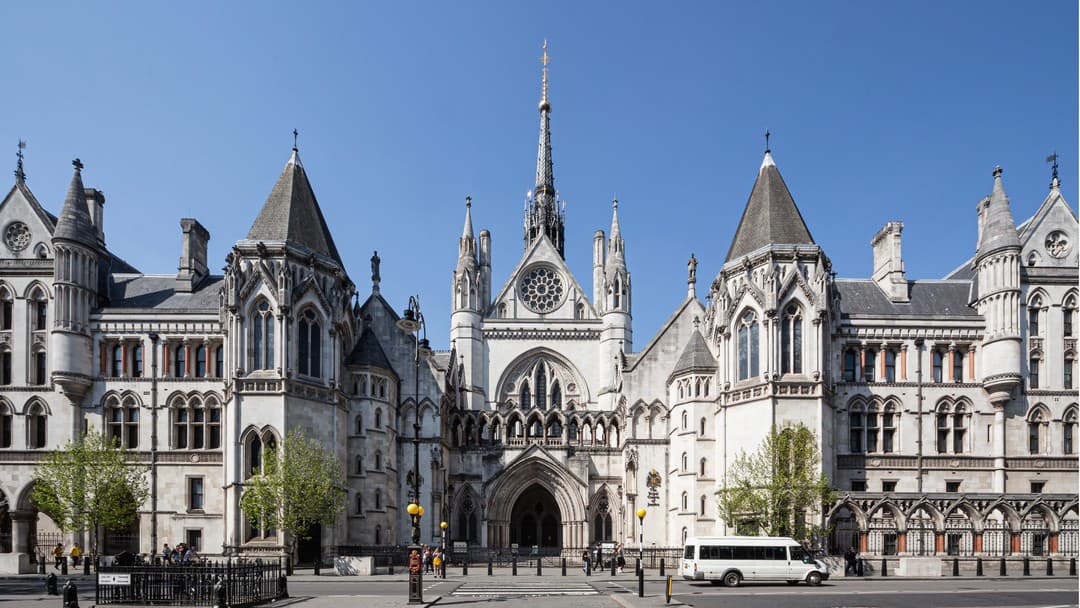
Court revives dismissed charges against five men over armed Kent farmhouse raid, citing new forensic evidence.
The High Court has granted an application for a Voluntary Bill of Indictment against five men whose aggravated burglary charges were dismissed by the Crown Court, finding that new forensic and telephone evidence provided a sufficient case to answer despite what it described as a regrettable lack of prosecutorial efficiency.
In R v Joshua Riviere & Ors [2026] EWHC 1858 (KB), Mr Justice Hilliard considered an application concerning Joshua Riviere, Akile Lee-Walton, Dejon Jones, Lamin Joof and Philip Osemwegie, all of whom faced a charge of aggravated burglary contrary to section 10(1) of the Theft Act 1968 following an incident at a farmhouse in Stone Street, Canterbury, in the early hours of 20 March 2024. The prosecution's case was that a group of around ten men, some armed with an imitation firearm and a machete, broke into the property, threatened its occupants and stole a wallet and a watch. Her Honour Judge Russell dismissed the charges against all five defendants in July 2024, citing the absence of forensic evidence linking them to the scene, mismatches between witness descriptions and the defendants' appearance, and inconclusive CCTV footage.
The Voluntary Bill application, lodged in December 2025, relied on evidence obtained after the dismissal hearings. Forensic analysis identified glass fragments on Mr Lee-Walton's shoes matching an uncommon glass type from the property's broken doors. Telephone downloads showed Mr Riviere had received the farm's postcode and a request for torches in the hours before the raid, together with a voice message indicating he was minutes away from the scene, while Mr Joof's telephone showed he had shared the property's location with a Snapchat group and had taken a photograph nearby around the time of the offence. Cell site and ANPR evidence placed two vehicles, including one carrying Mr Osemwegie, travelling in convoy from London to the scene and back.
Applying the principles set out in R v Davenport, IPE Marble Arch Limited v Moran and CPS v Walker-Scarlett, Mr Justice Hilliard held that this material, considered alongside the evidence already available, established a prima facie case against all five men, finding it would be open to a jury to conclude that the occupants of the vehicles had travelled to Kent together for a common purpose rather than merely to deliver cannabis, as some defendants had claimed.
The judgement was nonetheless critical of the prosecution's handling of the original proceedings. Mr Justice Hilliard noted that footwear and telephone evidence had not been pursued with sufficient urgency, that correspondence from the defence had frequently gone unanswered, and that the Crown Court had previously described prosecution disclosure failures as "a shambles" and "an abject failure". He further observed that, once the new evidence was obtained by August 2024, the seventeen-month delay before the Voluntary Bill application was lodged was difficult to justify.
Despite these criticisms, the court declined to treat the delay as amounting to an abuse of process, applying the test in R v Maxwell and finding no specific prejudice to any defendant that would prevent a fair trial. Balancing the strong public interest in prosecuting serious armed offending against the prosecution's shortcomings, Mr Justice Hilliard concluded it was in the interests of justice to grant the application in respect of all five defendants, subject to a short procedural step allowing Mr Jones's representatives an opportunity to raise any further matters, which they subsequently declined to pursue.
 Copyright & permissions