High Court grants Oxfordshire County Council injunction over unauthorised flag campaign
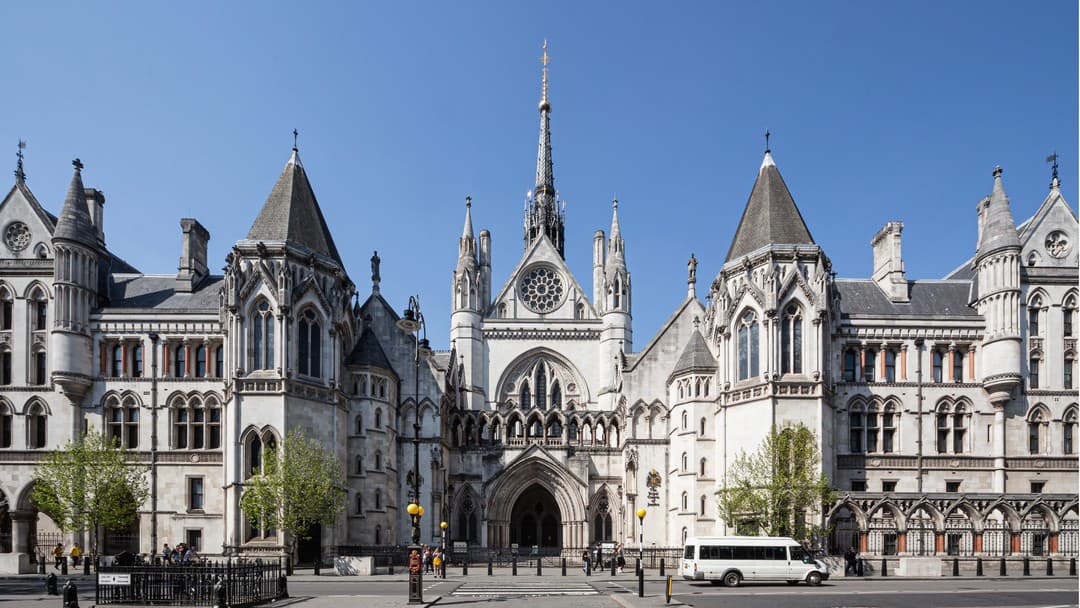
High Court grants injunction against named individuals and persons unknown over unauthorised flag affixing on highways.
The High Court has granted Oxfordshire County Council final injunctions restraining the unauthorised affixing of flags to highway structures across the county, covering both a named defendant and a wider category of unidentified individuals, in a judgement that examines the limits of protest rights against a local authority's statutory duties as highway authority.
Mr Justice Dexter Dias heard the application after individuals associated with groups called Raise the Colours and Raise the Colours Oxfordshire began attaching Union Flags and Flags of St George to lampposts, signs and other highway structures across Oxfordshire from August 2025 onwards, without the council's consent. The council, as highway authority for most roads in the county, has statutory ownership of highway surfaces and structures and a duty under the Highways Act 1980 to maintain them and protect public access. Repeated removal of the flags by council contractors was followed by their reattachment, and the council's evidence detailed extensive incidents of contractors and council staff being obstructed, filmed, and subjected to abusive behaviour while carrying out removal work, alongside evidence from local residents and a chief superintendent of Thames Valley Police describing road safety concerns and demands placed on policing resources.
Of the four named defendants, three, Ben Cullen, Ryan Bridge and Trudy Wells, gave undertakings to the court not to engage in further flag-related activity, though the judgement records that Ben Cullen and Trudy Wells were subsequently found to have continued similar conduct, including affixing flags in Cambridge and communicating an intention to keep contesting the council's action. The fourth defendant, Kevin Good, neither acknowledged service nor signed an undertaking despite indicating through others that he would, and the council pursued a final injunction against him directly.
Central to the judgement was the council's application for an injunction against "persons unknown", a category the courts may only restrain following the Supreme Court's decision in Wolverhampton City Council v London Gypsies and Travellers, which requires a compelling justification demonstrated by evidence of a strong probability of unlawful conduct causing real harm. Mr Justice Dexter Dias found this threshold clearly met, noting that prosecution under section 132 of the Highways Act, which carries a maximum fine of £2,500 and no custodial option, had proven an inadequate deterrent against sustained and repeated unlawful conduct.
The judgement gave close consideration to the engagement of articles 10 and 11 of the European Convention on Human Rights, covering freedom of expression and assembly, applying the five-stage framework set out in DPP v Ziegler. While accepting that the rights were engaged, the judge found the council's interference was prescribed by law, pursued the legitimate aim of protecting public highway access and the council's proprietary rights, and was proportionate, since flags could lawfully be displayed on private property and alternative means of expressing patriotism remained available. He rejected the suggestion that a genuine mistaken belief in a right to affix flags could amount to a reasonable excuse under the statute, citing the established principle that ignorance of the law affords no defence.
Applying the fifteen-factor framework drawn from Wolverhampton and subsequent case law, the judge was satisfied that the council had met its duties of full and frank disclosure, that the evidence comfortably exceeded the threshold for relief, and that the geographical scope, twelve-month duration, and provisions for alternative service and liberty to apply built adequate safeguards into the order. Final injunctions were granted against both persons unknown and Kevin Good, restraining the attaching or marking of flags on highway structures, obstruction of council contractors, and harassment of council members, employees or contractors involved in flag removal.
 Copyright & permissions









.jpg&w=3840&q=60)