High Court dismisses Sex Matters challenge to police guidance on transgender strip searches
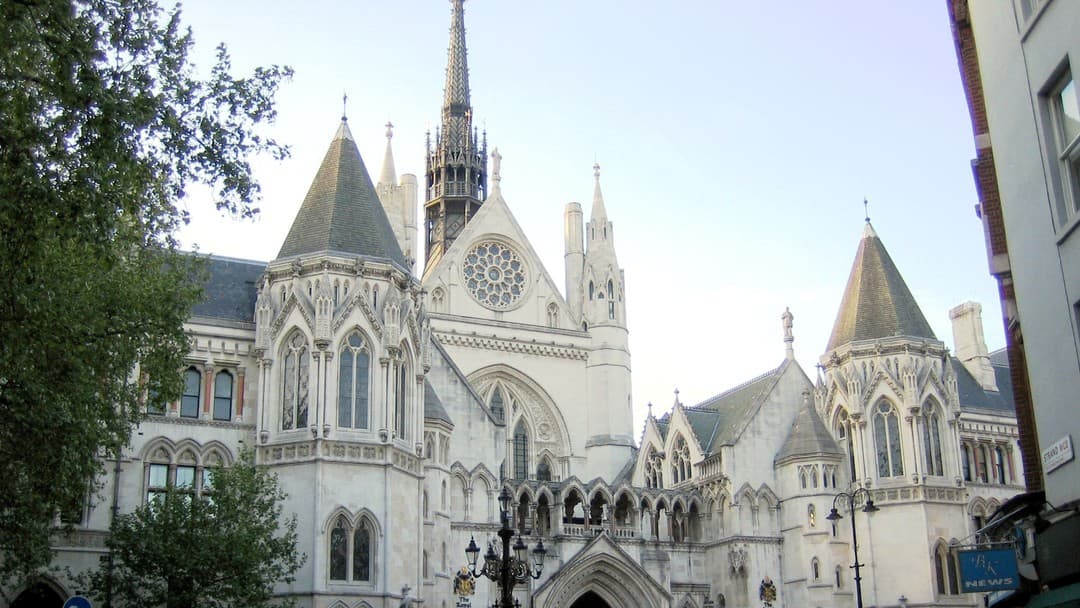
High Court rules consensual opposite-sex strip searches by police do not breach PACE's same-sex search requirement.
The High Court has dismissed a judicial review brought by the charity Sex Matters against guidance issued by the National Police Chiefs' Council and the British Transport Police, finding that police officers retain a common law power to carry out strip searches of transgender detainees by an officer of a different biological sex, provided both parties consent.
Mr Justice Linden heard the claim, which challenged interim guidance issued by both forces permitting strip searches to be conducted on a consensual basis outside the ordinary requirements of the Police and Criminal Evidence Act 1984. Section 54(9) of PACE, along with equivalent provisions in sections 54A and 54B, requires that a constable carrying out a search be of the same sex as the person searched. Following the Supreme Court's ruling in For Women Scotland Ltd v Scottish Ministers, both parties proceeded on the agreed basis that "sex" in this context means biological sex, regardless of whether a person holds a gender recognition certificate.
Sex Matters argued that the guidance was ultra vires because PACE conferred no power on police to depart from the same-sex requirement, even with consent, and that Parliament had deliberately placed police search powers on a comprehensive statutory footing when enacting PACE, abolishing prior common law powers under section 53. Counsel for the charity characterised the same-sex requirement as a statutory guarantee protecting both detainees and officers, arguing it could not be waived by agreement without undermining the wider scheme of the legislation.
The defendants argued that a police officer retains the same underlying capacity as any private citizen to act with another person's consent, and that PACE's provisions govern only the coercive powers exercisable without consent, leaving intact any common law ability for an officer and a detainee to agree to a search falling outside that statutory framework. They pointed to the general principle that physical interference with another person is lawful where consent is genuinely given, and to safeguards built into both sets of guidance, including the ability of any party, officer or detainee, to withdraw consent at any point, with no career detriment to an officer who declines.
Mr Justice Linden accepted the defendants' analysis. He held that Part V of PACE was concerned with codifying the coercive powers of police officers rather than displacing their underlying capacity, as citizens, to enter into consensual arrangements. Since Parliament is presumed not to alter common law principles without clear indication, and since nothing in the relevant sections suggested an intention to extinguish the possibility of a consensual search agreed between an officer and a detainee, the two could stand together. He was not persuaded that the absence of any express consent provision in section 54, in contrast to other sections in Part V, indicated a deliberate exclusion of consent for strip searches specifically. His conclusion was expressly confined to strip searches under sections 54 to 54B, leaving open the position regarding intimate searches under section 55, which were not the subject of the guidance under challenge.
A separate ground concerning compliance with the public sector equality duty was withdrawn before the hearing, and a third ground concerning Annex L to PACE Code C was not pursued after the defendants conceded that Annex L, which addresses gender recognition certificates, was likely unlawful following For Women Scotland and would not be relied upon.
In a postscript, the judge recorded that he had refused a late application by the Good Law Project to intervene after judgement had already been circulated in draft, on the basis that the request came too late and any application to raise fresh arguments could instead be made to the Court of Appeal in the event of an appeal.
 Copyright & permissions









.jpg&w=3840&q=60)