High Court apportions damages in Aitsan v Duffy fraudulent misrepresentation appeal

Chancellor rules sale proceeds must be split between pre-completion and completion payments in deceit claim.
The High Court has overturned a decision that left a group of off-plan property investors with no damages at all, despite establishing that they had been defrauded by an architect who certified unfinished student flats as complete.
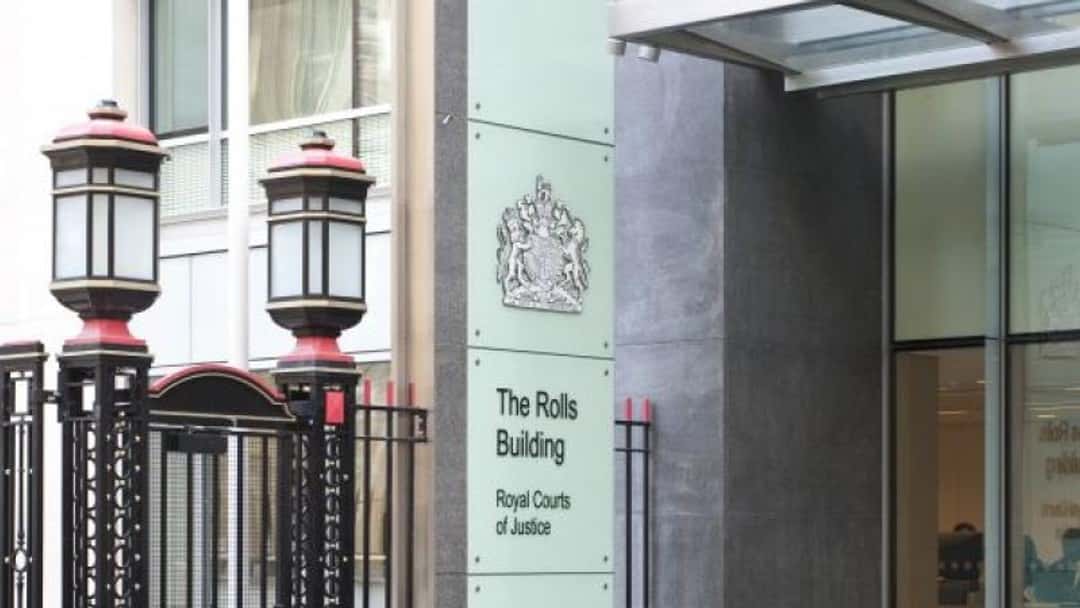
In Aitsan Limited & Ors v Stuart Robert Duffy & Anor [2026] EWHC 1993 (Ch), the Chancellor of the High Court allowed an appeal against Master Pester's assessment of damages, ruling that a fairer method of calculation was required where fraud occurs partway through a series of payments rather than at the point of contract.
The claimants had invested in an off-plan development of student flats in Newcastle-under-Lyme in 2017, paying deposits and instalments before a final completion payment fell due. That payment was only triggered once an architect's completion certificate confirmed the flats were ready for occupation. Stuart Duffy, the architect, was later found liable for deceit after it emerged the certificates were fraudulent and the flats were nowhere near complete.
Using the lead claimant, Aitsan Limited, as an example, £39,000 had been paid before the fraudulent certificate, with a further £13,000 completion payment made in reliance on it. Aitsan eventually sold its lease, in its unfinished state, for £32,000.
At first instance, Master Pester held that the claimants' loss was the completion payment itself, but that credit had to be given for the proceeds of sale, applying the House of Lords authority Smith New Court Securities Ltd v Citibank NA [1997] AC 254. Because the £32,000 sale price exceeded the £13,000 completion payment, this produced a loss of nil for Aitsan and most other claimants.
On appeal, the claimants argued that the sale proceeds derived value from the earlier payments as well as the completion payment, and that ignoring this produced an unjust result. The Chancellor agreed that some adjustment was necessary but rejected the claimants' primary submission that the full pre-completion sum should be deducted from the sale proceeds, since this would inflate the loss beyond the completion payment itself, a result he described as making no sense given the fraud never induced payments beyond that sum.
Instead, the Chancellor adopted an apportionment approach, advanced for the first time on appeal, permitted despite the general caution against new arguments under Singh v Dass [2019] EWCA Civ 360. The completion payment represented a quarter of the total sums paid by Aitsan, so a quarter of the £32,000 sale proceeds, namely £8,000, was treated as attributable to that payment. Deducting this from the £13,000 completion payment produced a net loss of £5,000.
The judgement noted that neither treating the sale proceeds as full credit nor ignoring them altogether reflected the reality that value in the sale price derived partly from payments made before the fraud occurred. The Chancellor also rejected the respondent's argument that the claimants' true counterfactual position, involving a hypothetical insolvency recovery, should reduce the award further, holding this was foreclosed by the trial judge's earlier findings on causation.
The court will hear submissions on the resulting figures and costs at a further hearing.
 Copyright & permissions




.jpg&w=3840&q=60)