Hanson v Parole Board: member guidance on IPP licence termination oral hearings held unlawful
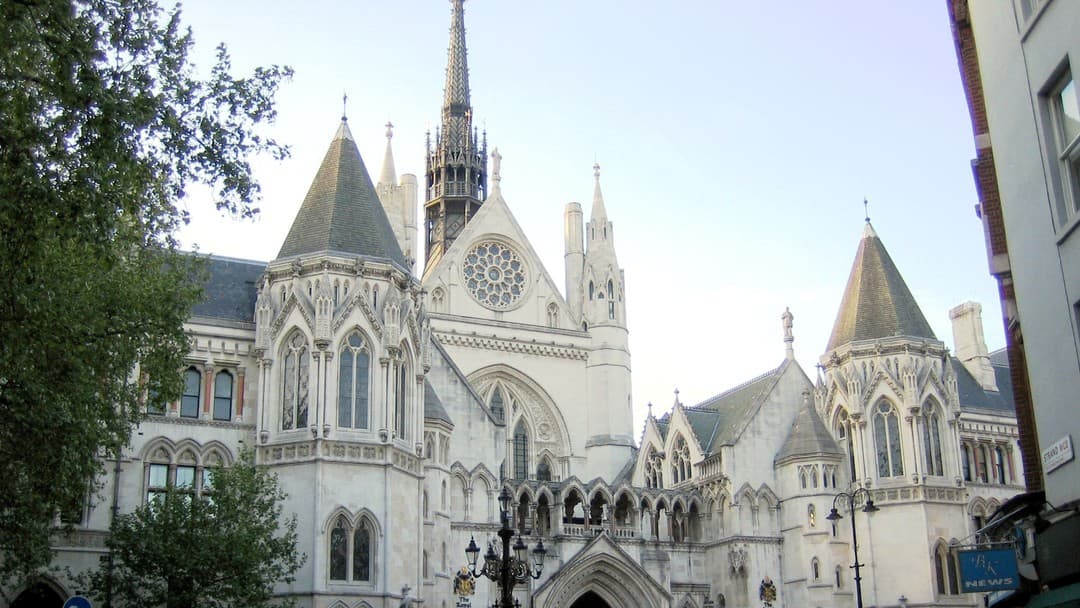
Sheldon J rejects exceptionality test and finds Osborn principles apply to termination decisions.
The Administrative Court has quashed key passages of the Parole Board's guidance to its members on when to direct an oral hearing before terminating a licence under an imprisonment for public protection sentence, holding that there is no basis in law for a test of exceptional circumstances and that the general principles in Osborn v Parole Board [2014] AC 1115 apply.
In R (Hanson) v The Parole Board for England and Wales [2026] EWHC 1723 (Admin), handed down remotely on 9 July 2026, Mr Justice Sheldon allowed the claim on both grounds. Jude Bunting KC appeared for the claimant, instructed by SL5 Legal. Tom Little KC and Thomas Jones appeared for the Board, instructed by the Government Legal Department. The Secretary of State for Justice did not appear. A parallel claim brought by Nathan McIntosh is stayed behind this one.
Background
Mr Hanson received an IPP sentence in 2009 aged 18, for firearms offences in which the sentencing judge accepted he was probably not one of those going to pull the trigger. His tariff was 54 months. He was released in 2019, recalled in 2020, and re-released in October 2024 after an oral hearing at which the panel described the decision as finely balanced and was particularly influenced by his oral evidence.
The Secretary of State referred the licence for termination in February 2025. The probation team supported it, describing a significant shift in his thinking and recognition that he had been exploited by older peers from the age of 14. A single member panel refused termination on the papers in March 2025, finding the changes relatively recent and requiring further testing. Reconsideration was refused in April.
Section 31A of the Crime (Sentences) Act 1997, as amended by the Victims and Prisoners Act 2024, now carries a statutory presumption of termination once the qualifying period expires. The Board's Imprisonment for Public Protection Member Guidance states, in bold, that directions to oral hearing should only be required in exceptional circumstances, and that because a referral is confined to licence termination, "Osborn principles do not apply".
The guidance
Sheldon J held both statements fell within categories (i) and (iii) of the taxonomy of unlawful policies in R (A) v Secretary of State for the Home Department [2021] 1 WLR 3931.
Nothing in the case law or the Parole Board Rules 2019 supports an exceptionality threshold. Each case turns on its own circumstances and what is at stake for the individual. That a person is no longer in custody does not deprive the decision of real importance, particularly where licence conditions are onerous and may amount to, or come close to, imprisonment at common law. A recent oral hearing at the release stage, and the statutory presumption, will often lessen the call for a hearing, but not invariably.
The non-exhaustive examples given in paragraph 16.18, covering critical disputes of fact, vulnerabilities and complex mental health or cognitive functioning, did not cure the defect. Read in the shadow of the first sentence, a conscientious member would ask whether a dispute of fact was truly exceptional. Between February 2025 and February 2026 the Board made 734 final termination decisions and directed only four oral hearings.
The statement that Osborn does not apply was likewise a misstatement. Its ratio concerns release and transfer to open conditions, but Lord Reed's articulation of the values served by procedural fairness, the utilitarian benefit of better decisions, the avoidance of a sense of injustice, and congruence with the rule of law, bears on all Parole Board decision-making.
The decision in Mr Hanson's case
The panel member must be assumed to have followed the guidance absent cogent reason to depart, and her reasoning nowhere mentions fairness. On its face the decision was unlawful. The reconsideration member appeared open to a broader approach than exceptionality but did not grapple with the wider points in Osborn, nor with the submissions made on Mr Hanson's behalf. There was no discussion of what was at stake given the length of his custody, of what he might say directly to dispel concerns about further testing, or of the sense of injustice arising where both the statutory presumption and the probation recommendation favoured termination.
Sheldon J declined to apply section 31(2A) of the Senior Courts Act 1981. The claim succeeded on both grounds.
 Copyright & permissions