Green v Public Service Commission: Privy Council clarifies who sets public service qualifications in Trinidad and Tobago
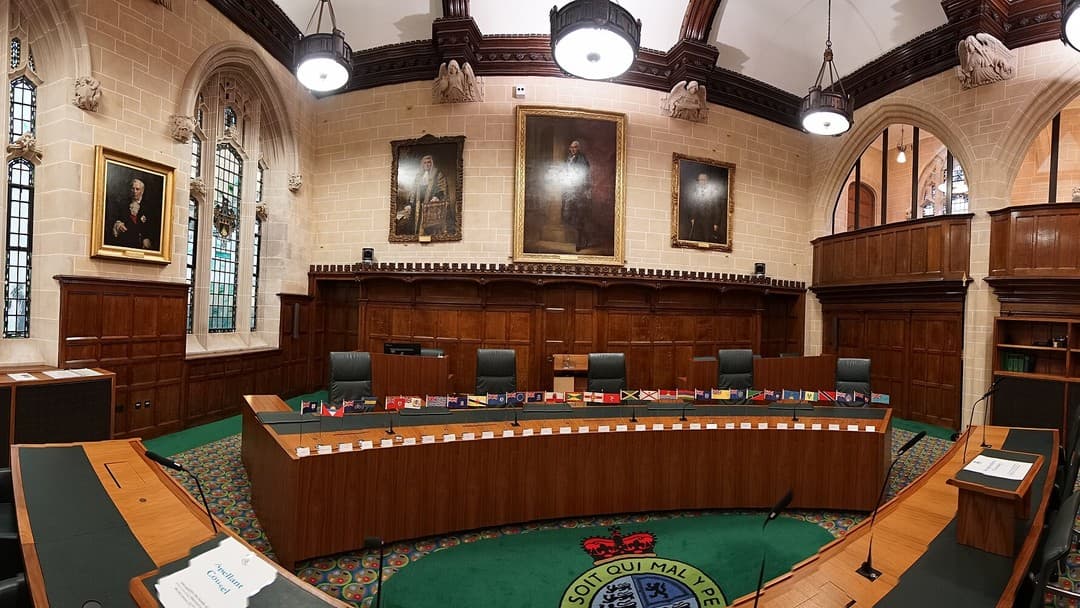
The Board restores the High Court's dismissal of a fire officer's promotion challenge, resolving a long-running constitutional dispute.
The Judicial Committee of the Privy Council has allowed the appeal of the Public Service Commission of Trinidad and Tobago ("PSC") in Ian Green v Public Service Commission [2026] UKPC 20, overturning a Court of Appeal decision that had found the PSC acted irrationally and in breach of natural justice when it declined to promote a Fire Sub-Station Officer ("FSSO") to Fire Station Officer ("FSO").
The respondent, Ian Green, served as an FSSO from 1998 until his retirement in December 2015. In 2006 he applied for a determination by the Chief Fire Officer ("CFO") that his Post-Graduate Diploma in Human Resource Management constituted an equivalent related qualification to the Graduate Diploma of the Institution of Fire Engineers ("GDIFE"), as contemplated by regulation 8(1)(b) of the Fire Service (Terms and Conditions of Employment) Regulations 1998. Following consultation with the Chief Personnel Officer ("CPO") and the Permanent Secretary, the CFO concluded it did not. Green did not challenge that determination. When the PSC promoted five other FSSOs in 2015, each of whom had satisfied the statutory qualification requirements and ranked above him on the relevant merit list, Green sought judicial review.
Seepersad J dismissed the claim at first instance, holding that Green had not satisfied either limb of regulation 8(1) and was therefore ineligible for promotion. The Court of Appeal reversed that decision on two bases: first, that the CFO's memorandum of 12 July 2006 constituted a positive determination of equivalence which the PSC had wrongly ignored in favour of the CPO's contrary advice; and second, that regulation 8(1)(b) and section 34(1)(aa) of the Fire Service Act should be read down as unconstitutional, on the ground that prescribing minimum qualifications for public office was properly a matter for the PSC rather than the executive.
The Privy Council rejected both conclusions. On the constitutional issue, Lord Doherty, delivering the judgement of the majority, held that the setting of minimum qualifications for public office has always been a function of the executive as employer, and that there is no provision in the Constitution of Trinidad and Tobago which transfers that function to the PSC. The power vested in service commissions under section 121(1) of the Constitution is the power to appoint — not the power to define what an office requires. Those are distinct questions, and the Court of Appeal erred in eliding them. The Board affirmed the longstanding line of authority holding that regulation 18(4) of the PSC Regulations, and its equivalents, require the PSC to have regard to specifications set by the executive, and declined to depart from the Court of Appeal's earlier decision in Ramsahai v Teaching Service Commission.
On the question of whether a determination of equivalence had been made, the Board was equally clear. The CFO's memorandum of 12 July 2006 was a preliminary expression of view ahead of the required consultation, not a concluded determination. The letter of 11 May 2007, sent on the CFO's behalf following that consultation, was the operative decision — and it was adverse to Green. Seepersad J was entitled to reject the subsequent affidavit evidence of former CFO Skeete seeking to disavow the letter's contents. The Court of Appeal further erred in treating Green's inclusion on the 2013 merit list as an implied determination of equivalence, a contention raised for the first time on appeal and without the evidential foundation that would have been explored had it been pleaded at first instance.
Sir Anthony Smellie dissented on the merits. In his view, the material before the PSC was at best ambivalent: the 2013 list, submitted under cover of a memorandum describing its candidates as qualifying for promotion, raised a genuine question about the incumbent CFO's assessment of Green's eligibility that the PSC was obliged to investigate rather than dismiss. The Court of Appeal's concern, properly understood, was not whether equivalence had in fact been established, but whether the PSC had given due and rational consideration to all relevant material before it — including documents that arguably pointed in Green's favour.
The Board restored Seepersad J's order dismissing the claim and set aside both Court of Appeal decisions, including the majority's direction that damages be assessed under the Judicial Review Act.
 Copyright & permissions
.png&w=3840&q=60)








.jpg&w=3840&q=60)