GI Globinvestment Ltd v XY ERS UK Ltd: no freestanding fiduciary duty of disclosure, Court of Appeal holds
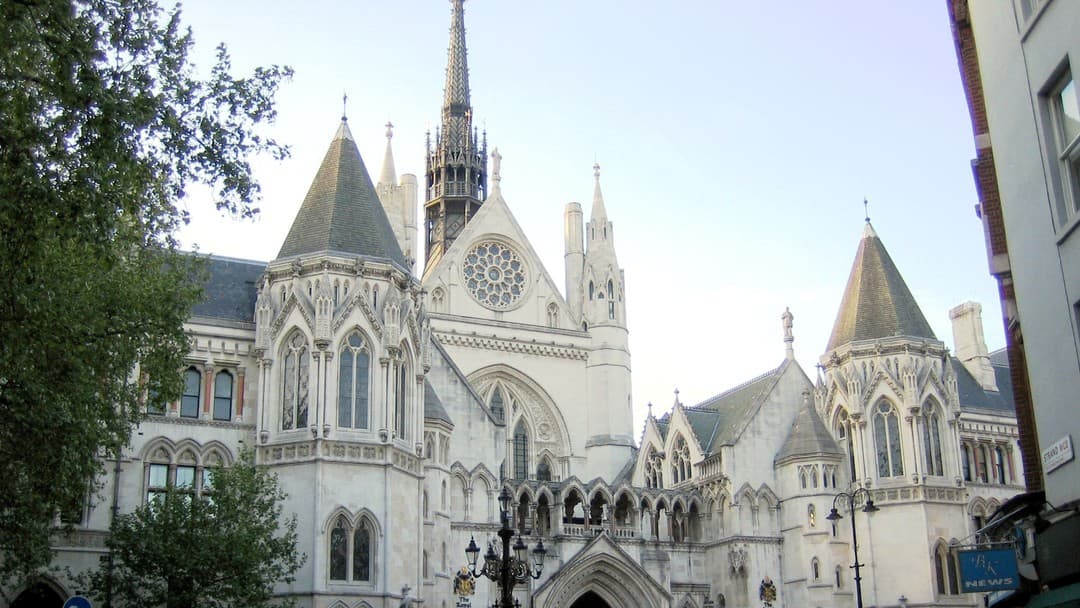
Court of Appeal rejects freestanding fiduciary duty of disclosure and upholds finding of informed consent.
The Court of Appeal has dismissed an appeal by two investors who claimed that a financial adviser breached fiduciary duties by failing to disclose all information relevant to their affairs. Newey LJ, with whom Asplin LJ and Popplewell LJ agreed, held in GI Globinvestment Ltd & Anor v XY ERS UK Ltd [2026] EWCA Civ 1248 that disclosure facilitates informed consent but is not a discrete fiduciary obligation.
Background
The appellants, a family investment vehicle and a family member, suffered heavy losses in March 2020 when pandemic market turmoil forced the liquidation of two compartments of a Luxembourg fund and wiped out their investment in a third. XY had recommended the fund, whose initiator also owned XY's group and the fund's general partner.
Jacobs J rejected claims of fraud, conspiracy and breach of fiduciary duty after a 28 day trial. The appeal concerned only the fiduciary duty claim.
Positive duty of disclosure
The appellants argued that a fiduciary contemplating an arrangement capable of compromising its loyalty must disclose all facts relevant to its principal's affairs, and that informed consent could not arise without such disclosure. Newey LJ reframed the issue: the question was not whether XY's duties had been "moulded" by the contract, but whether a fiduciary has a positive duty to disclose.
He concluded that it does not. Australian decisions, including Breen v Williams and Maguire v Makaronis, treat informed consent as an answer to what would otherwise be a breach, and Daly v Sydney Stock Exchange did not assist the appellants once read with later authority. Arden LJ in Item Software v Fassihi expressly declined to find one, and references to a "duty" of disclosure in older cases were shorthand for how a fiduciary avoids liability under the no conflict and no profit rules.
The Supreme Court's analysis in Hopcraft v Close Brothers and Millett LJ's formulation in Mothew point the same way. Newey LJ left open whether all fiduciary duties are invariably proscriptive, but found the appellants' approach inequitable, since a fiduciary could be liable even where the principal proceeded with full knowledge of every material fact.
Informed consent
The appellants said XY had not disclosed the fees payable to companies controlled by the fund's initiator, the role of a connected advisory company, or its ownership. Newey LJ accepted that disclosure must cover all material facts, and that placing the principal on inquiry is insufficient, but said materiality depends on the circumstances. Contrasting Imperial Mercantile with Anangel Atlas, the test is whether the principal had enough information to understand the nature and extent of the fiduciary's interest.
He also held that the sophistication of the recipient is relevant. Where an addressee in fact draws an inference and becomes aware of something, that must be taken into account, although imparting information from which a matter could merely be inferred would not suffice.
The judge found the investors sophisticated and experienced, and that they knew the initiator was the entrepreneur behind the fund, had a significant financial interest in it and owned its general partner, and that substantial sums were paid to the general partner, which in turn paid advisers. The structure was orthodox, and interests were largely aligned because fees tracked performance.
Given the limited circumstances in which an appellate court interferes with findings of fact or evaluative assessments, Newey LJ saw no basis to disturb the conclusion, which he considered correct. The investors did not know the connected company's ownership or precise role, but that did not affect the nature or scale of the conflict. The remedies grounds therefore fell away.
 Copyright & permissions