

Full Colour Black v Banksy: indemnity costs awarded after litigation used to threaten artist's anonymity
High Court finds defamation claim deployed as commercial leverage, not genuine vindication
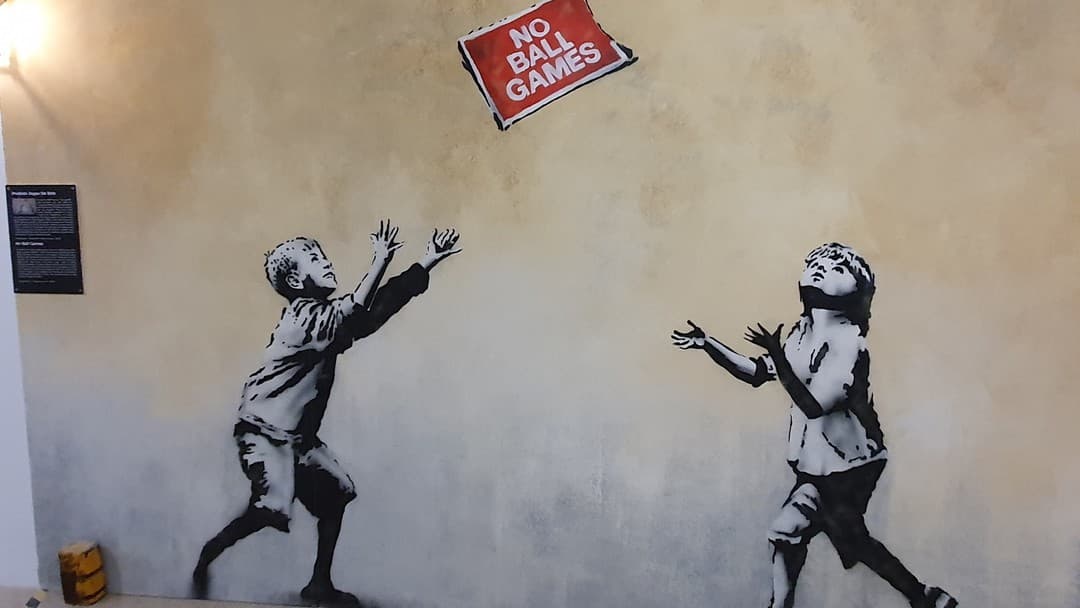
The High Court has ordered a licensing company to pay the defendants' costs on the indemnity basis after finding that libel proceedings brought against the artist known as Banksy were pursued not to obtain vindication but to exploit his well-documented fear of identification.
In Full Colour Black Limited (trading as Brandalised) v The artist known as "Banksy" & Anor [2026] EWHC 795 (KB), Mr Justice Nicklin held that the claim fell "outside the norm" for indemnity costs purposes. The claimant, FCB, had sued Banksy and his authentication body, Pest Control Office Limited, over an Instagram post in which Banksy urged followers to shoplift from a Regent Street GUESS store that had been displaying merchandise featuring his artwork without permission. FCB had licensed those images to GUESS under a commercial agreement.
The judgement traces a pattern of conduct predating the proceedings by more than a decade. In correspondence stretching back to 2011, FCB's sole director Andrew Gallagher had repeatedly drawn attention to the risk that any copyright litigation by Banksy would require him to give evidence and face identification — framing that risk as leverage in negotiations aimed at securing a commercial arrangement. The court found that the libel claim continued that strategy by other means.
Several features of the litigation pointed in the same direction. The Particulars of Claim contained an unexplained reservation of the right to seek an order requiring Banksy to identify himself. FCB's then solicitor made public statements — quoted in The Sun — observing that unmasking in court would be "the worst thing that could happen to Banksy". Correspondence pressed for Banksy's full name in the Acknowledgment of Service. When FCB filed its Reply, it resiled from earlier admissions concerning Banksy's authorship and responsibility for publication, reintroducing the possibility that he might be required to give evidence.
Nicklin J noted that honest opinion was "far and away the strongest defence" to the claim, yet the Second Defendant conspicuously omitted it from the Defence — a tactical decision the judge attributed to the risk that reliance on it would require Banksy to give evidence. That omission, in his view, was consistent with FCB having calculated that Banksy would be reluctant to take any procedural step that increased the identification risk.
Settlement correspondence in the weeks before discontinuance added further weight. Rather than confining proposals to compromise of the defamation claim, FCB's solicitors sought to link resolution to a broader "co-existence" arrangement permitting ongoing commercial exploitation of Banksy's works — a proposal the defendants rejected outright. FCB then served a notice of discontinuance shortly before the Second Defendant's summary judgment application was to be determined.
Applying the principles in Hosking v Apax Partners LLP [2019] 1 WLR 3347, the judge found the proceedings had been used as an "anvil for settlement" rather than pursued with any genuine objective of securing vindication by adjudication. Indemnity costs were awarded from 10 October 2023 — the date on which the defendants provided their substantive response and formally raised anonymity protection.
The defendants' application for a non-party costs order against Gallagher personally was refused. Nicklin J held that the jurisdictions are distinct and that conduct sufficient to justify indemnity costs against a company does not automatically satisfy the higher threshold required to displace limited liability. Control of the litigation, even sole control by a sole shareholder, was insufficient without either a finding that he was the "real party" in the relevant sense or evidence of serious impropriety qualitatively beyond opportunistic litigation strategy. The judge was not satisfied either limb was met on the evidence available.
The quantum of the payment on account remains to be determined, with written submissions to follow if not agreed.
 Copyright & permissions

.jpg&w=3840&q=60)

__WEB.jpg&w=3840&q=60)



.jpg&w=3840&q=60)