Free Church of England Central Trust v Hanna: final chance to plead case before possession
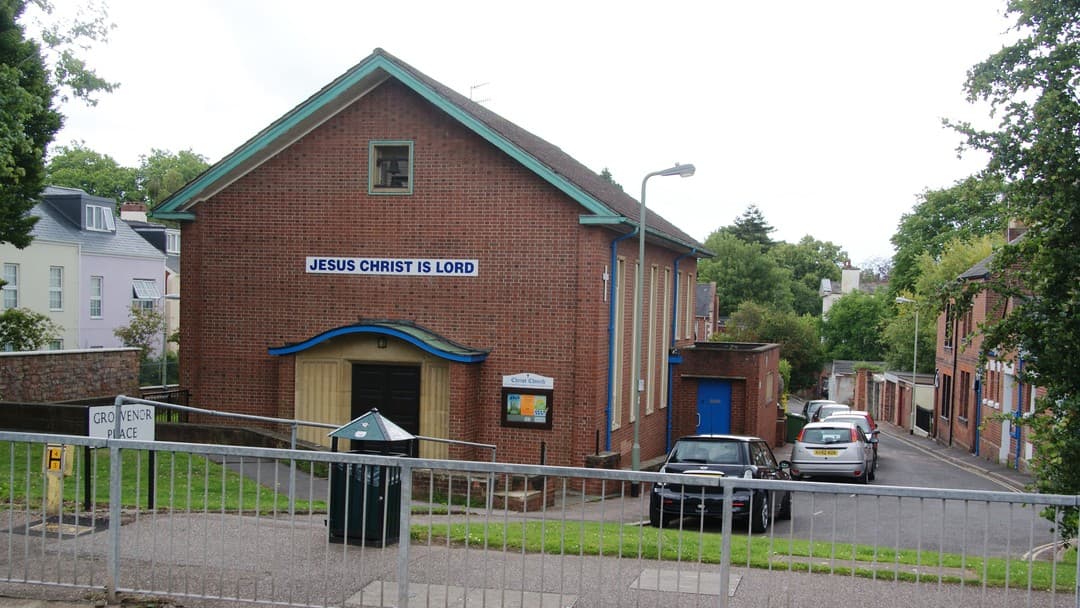
Master gives dissenting Exeter congregation final chance to plead counterclaim, but awards trust costs.
The High Court has declined to make immediate orders for possession and removal of charity trustees against members of a breakaway Exeter congregation, granting them a final opportunity to articulate their legal case and seek Charity Commission permission for a counterclaim.
In The Free Church of England Central Trust v Revd Steven Hanna [2026] EWHC 2883 (BP), Master Brightwell gave a consequentials ruling following his September judgement ([2026] EWHC 2260 (Ch)), in which the claimant succeeded on the principal issues concerning the trusts on which the properties of Christ Church, Exeter are held.
The defendants' central complaint has been that the bishops and Convocation of the Free Church of England (FCE) have moved the church towards Anglo-Catholicism, despite its foundation in opposition to it. The September judgement explained why a schism within a church does not by itself raise a justiciable issue, distinguishing General Assembly of the Free Church of Scotland v Overtoun [1904] AC 515, where the dissentients claimed to be the entirety of the continuing church.
Maxim Cardew, for the claimant, submitted that the breach of trust element could now be decided without further factual inquiry. Having left the FCE, the defendants were no longer acting in union with it, and orders for possession of the church building and their removal as charity trustees should follow.
The defendants, represented by Paul Stafford and Helen Bunce, served a draft defence and counterclaim, which counsel accepted was not in final form. It alleged that the claimant itself was in breach of trust by departing from the FCE's historic doctrine, and that five other congregations, now part of the Connexion, believed they were the true FCE.
The Master found the draft contained no coherent counterclaim and sought no relief. It did not assert that the defendants themselves formed part of the true FCE, nor plead any legal basis on which anyone other than the claimant could be entitled to the properties. He observed that the usual remedy for a charity trustee's breach is replacement rather than forfeiture. Any positive claim of breach of trust would also likely amount to charity proceedings, requiring permission under section 115 of the Charities Act 2011.
Nonetheless, "not without a little hesitation", the Master allowed one final opportunity, noting that the November 2025 directions order expressly envisaged further directions after the preliminary issues, and that the late availability of pro bono representation may have hampered preparation. The defendants were directed to serve a final draft statement of case and submit any Charity Commission application within 28 days. The claimant may still argue that the case lacks real prospects, is too late, or should remain under Part 8.
The court settled the form of declarations. Wording referring to a "separate charity" was replaced to avoid ambiguity. The parties agreed that the minister's house is held for the FCE's charitable purposes, and the Master rejected a proposed condition tying it to the Exeter congregation. He declined to define the church's "practices" in the declaration on the 2010 Constitution's objects clause, noting that doctrinal questions had not been before the court.
On costs, the claimant was "quite clearly" the successful party, and its loss on a subsidiary point of construction did not amount to exaggeration. Applying the principles summarised in Cleveland Potash Ltd v Drummond [2026] EWHC 2781 (BP), the defendants were ordered to pay the costs of the May hearing and the consequentials hearing. Earlier costs remain reserved. The question of a payment on account was adjourned, on the basis that an order could potentially stifle the defence, and the defendants may file evidence of means.
Maxim Cardew (instructed by Freeths LLP) appeared for the claimant. Paul Stafford and Helen Bunce (instructed by Camerons Solicitors) appeared for the first to fourth defendants.
 Copyright & permissions