Foster v Wargrave on Thames Housing Association: AI research subscription recoverable as a litigant in person disbursement
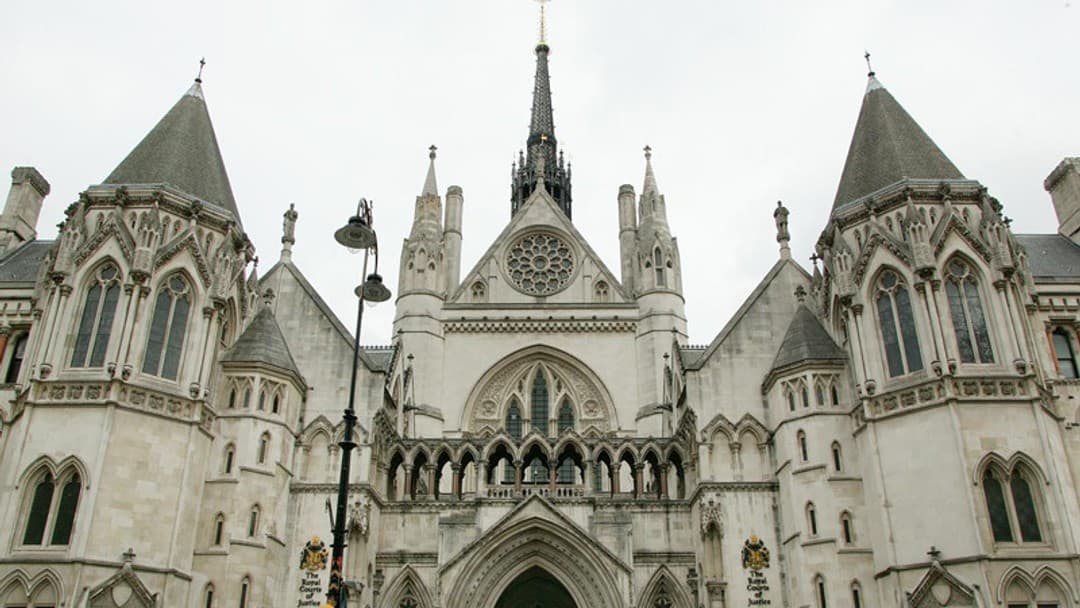
High Court allows litigants in person to recover £1,488 AI legal research subscription costs.
The High Court has allowed two litigants in person to recover the cost of an artificial intelligence legal research subscription as a disbursement. The ruling in Foster & Anor v Wargrave on Thames Housing Association Ltd [2026] EWHC 3000 (KB) appears to be the first to address directly whether such expenditure can be recovered from an opposing party.
Mr Justice Sweeting handed down the consequential judgement on 19 November 2026. It follows the appellants' successful appeal against a possession order made against them as tenants of a flat let by the respondent housing association.
The substantive appeal turned on the construction of an "Electricity Charge" in an assured shorthold tenancy. The court held that the charge covered only electricity supplied to the flat for off-peak underfloor or radiator heating, and did not extend to communal electricity costs, which fell under the separate service charge. The arrears underpinning the possession claim were therefore not wholly recoverable under the provision relied upon, and the possession order could not stand.
Repayment and statutory orders
The appellants sought repayment of all sums previously paid under the Electricity Charge. The judge declined. The appeal had decided only that possession could not be obtained on the basis of the arrears claimed, and not that nothing was payable. A heating supply had been made available to the flat whether or not the tenants chose to use it, which the judge compared to a water supply that a tenant does not use. Interest at the judgement rate would not have been appropriate in any event; a commercial rate would have been the correct measure.
An application for orders under section 20C of the Landlord and Tenant Act 1985 and paragraph 5A of Schedule 11 to the Commonhold and Leasehold Reform Act 2002 was refused as unnecessary, since the respondent accepted that the tenancy agreement contained no mechanism for passing on litigation costs. The judgement in a linked claim by the respondent for unpaid Electricity Charges was, however, set aside.
Costs
Costs were assessed on the standard basis. The judge was not persuaded that the case fell outside the norm so as to justify indemnity costs, observing that the respondent had won at first instance on a genuine point of construction.
The appellants claimed 649 hours at litigant in person rates across three years of litigation. Although the judge accepted that the appeal had been competently presented and that litigants in person often need more time than lawyers, he found the hours disproportionate to a relatively narrow dispute. Professional costs were reduced to £5,600, roughly 40% of the sum claimed. Printing and copying were cut from £822 to £300, and the supplemental claim for consequential proceedings was halved.
The AI subscription
The appellants sought £1,488 for a twelve-month subscription to a sector-specific legal AI tool from a major provider, bought specifically for the litigation.
The judge rejected the primary argument that this was a payment for "legal services" under CPR 46.5(3)(b). Following United Building and Plumbing Contractors v Kajla [2002] EWCA Civ 628 and Francois v Waltham Forest LBC [2024] EWHC 1162 (KB), that phrase refers to services provided by or under the supervision of a lawyer. The subscription was a tool, comparable to a legal database or practitioner text, with which the appellants carried out their own work.
He also rejected the respondent's argument that the cost was an irrecoverable overhead. No special rule was needed for AI, and expenditure on a specific litigation support service for particular proceedings is a recognised category. The judge said it would be an odd outcome if lawyers could deploy standing AI resources while litigants in person were effectively prevented from doing the same, which would undermine equality of arms. He stressed that the use must be responsible, warning that AI-generated prolix material is likely to see costs disallowed.
Noting that the appellants had no access to legal advice, that the proceedings concerned their home and that their submissions had been focused and successful, the judge allowed the sum in full. He emphasised that recoverability will remain fact-sensitive, concluding that while the technology may be new, the governing principles are not.
 Copyright & permissions