

Forthwell v Pontegadea: Supreme Court rejects transferred loss claim over Rogano closure
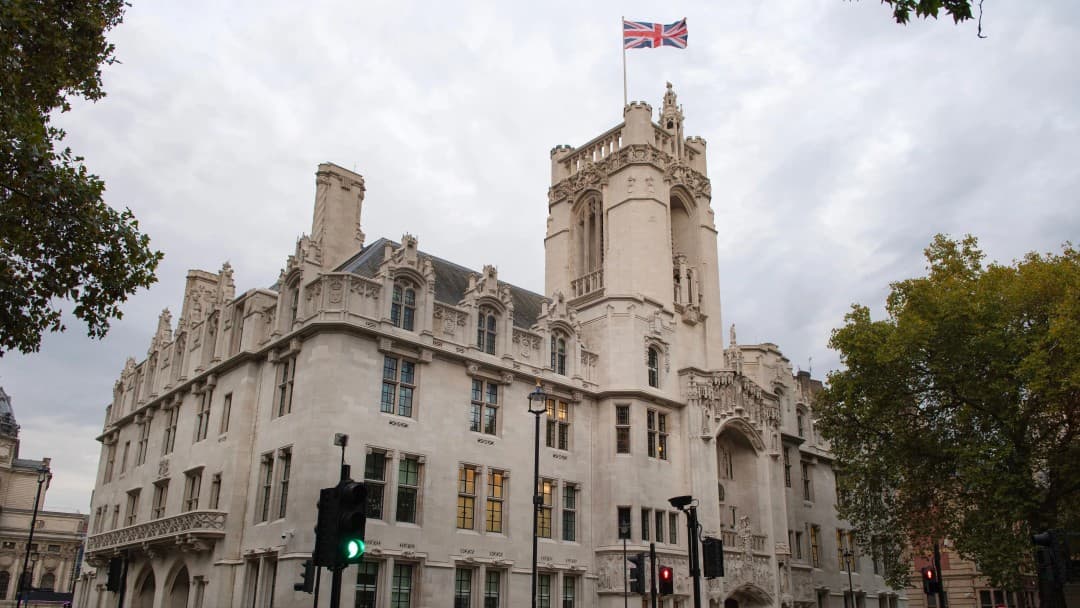
Justices reject Scots law extension to transferred loss doctrine in Glasgow restaurant lease case.
The Supreme Court has dismissed an appeal seeking to establish a distinct Scots law basis for recovering a third party's losses in contract claims, ruling that the approach relied upon had no proper foundation in either Scots or English law.
The dispute arose from the closure of the Rogano, one of Glasgow's oldest and best known restaurants, which had traded continuously from premises at 11 Exchange Place since 1935 until flooding and a subsequent fire in December 2020 and January 2021 left the building unrepaired and unfit to reopen. Forthwell Limited, tenant under a 1996 lease with landlord Pontegadea UK Limited, had licensed its wholly owned subsidiary, Lynnet Leisure (Rogano) Ltd, to trade from the premises as the Rogano restaurant and bar.
When Pontegadea failed to carry out repairs, Forthwell brought a commercial action seeking specific implement of the repairing obligations, alternative damages, and recovery of professional costs. It also sought substantial damages, running to over £1.1 million combined, representing Lynnet's past and anticipated future loss of profits while unable to trade, on the basis that Forthwell was entitled to recover Lynnet's losses on its behalf and account to it accordingly.
Judgement given on 17 September 2026, and delivered by Lord Doherty with the agreement of Lord Reed, Lord Stephens, Lady Simler and Lord Hodge, followed an unusual procedural turn. On the morning the appeal was due to be heard in Glasgow, the parties informed the court they had settled, and Forthwell sought to withdraw its appeal. The court declined to permit withdrawal, noting the settlement was not conditional on the appeal being withdrawn and that a related commercial action had been stayed pending the outcome, meaning the point of law required authoritative resolution regardless.
At first instance the commercial judge allowed the transferred loss claims to proceed, following the approach taken by Lord Drummond Young in McLaren Murdoch & Hamilton Ltd v The Abercromby Motor Group Ltd, which treated Lord Clyde's suggested solution in Alfred McAlpine Construction Ltd v Panatown Ltd as representing the law of Scotland. That solution would allow a contracting party to recover a third party's losses as a matter of general legal policy, rather than because such recovery was within the parties' contemplation when contracting. A majority of the First Division of the Inner House, Lord Malcolm dissenting, later reversed that decision and dismissed the claims.
The Supreme Court agreed with the majority below. Lord Clyde's solution in Panatown had not been endorsed by any other member of the House of Lords in that case, and later authorities including Swynson Ltd v Lowick Rose LLP provided no support for it either. Lord Drummond Young's characterisation of it as the majority view in Panatown was, the court found, simply incorrect, meaning the foundation for treating it as Scots law was unsound.
Beyond that error, the court found the proposed exception would be both too wide, since it could impose unforeseen liabilities on a party in breach who had not arranged its affairs on that basis, and too indefinite, lacking clear limits on its application. Forthwell's suggested requirement that the third party have a "material interest" in the relevant obligation was not considered a sufficiently robust safeguard.
The court declined to resolve, as unnecessary for the appeal, whether the so-called broader ground of recovery proposed in earlier authority forms part of the law of Scotland or of England and Wales, leaving that question open for a case in which it had been properly argued. The appeal was dismissed.
 Copyright & permissions







.jpg&w=3840&q=60)



