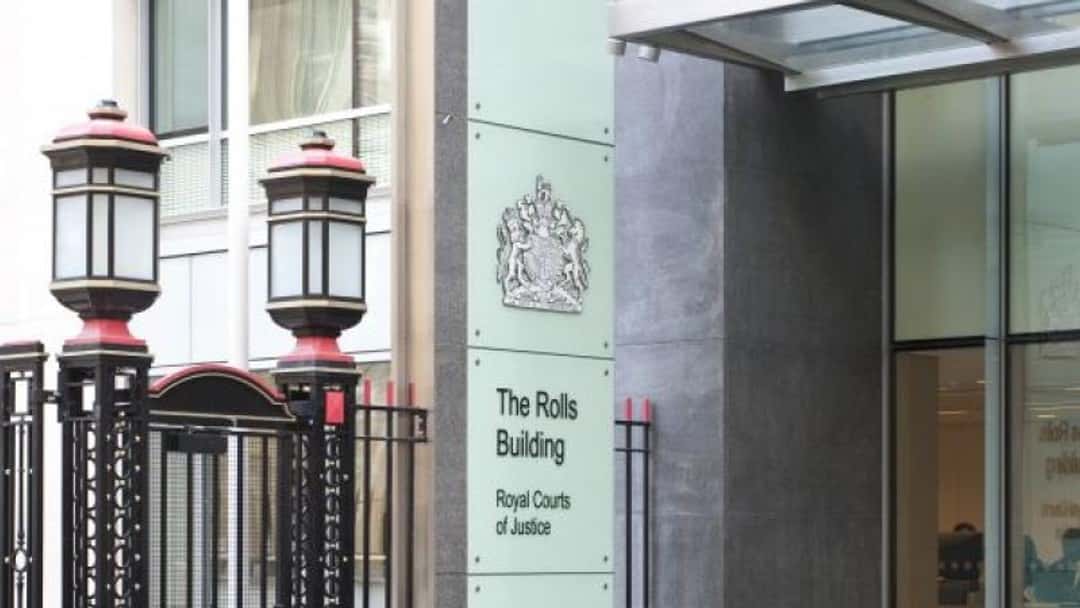
First-tier Tribunal dismisses family reunion appeal in A & Ors v The Entry Clearance Officer
Tribunal dismisses Article 8 family reunion appeal after finding sponsor and parents gave false evidence.
The First-tier Tribunal (Immigration and Asylum Chamber) has dismissed an Article 8 family reunion appeal brought by the parents and two minor siblings of a young Iranian Kurdish refugee, finding that credibility failures and unproven claims of financial and linguistic independence outweighed the family's emotional ties.
In a decision handed down on 22 September 2026 in A & Ors v The Entry Clearance Officer, First-tier Tribunal Judge D Brannan dismissed appeals against the Entry Clearance Officer's refusal of applications made outside the Immigration Rules by the sponsor's parents and two younger siblings, aged 11 and two. The sponsor, granted refugee status in the UK in March 2023 after fleeing Iran as an unaccompanied minor, was subject to an anonymity order protecting the identities of all family members.
The judgement centred on the credibility of the family's account. During cross-examination, the sponsor admitted that parts of witness statements, including his own and those of his parents, had been untrue. The family had claimed the parents were unable to travel to Iraq to see him, when in fact they had visited him there on two occasions. The sponsor said he had encouraged the deception because he believed the applications would otherwise be refused.
Judge Brannan found this admission significant not only in itself but because of how the case had been presented. Counsel for the appellants had argued that credibility was not in issue, since the Entry Clearance Officer's review had not expressly disputed the factual account. The tribunal rejected this, noting that the evidence in question had never actually been before the decision-maker when the original refusal was made, and that the review had expressly reserved the right to challenge unaddressed points at the hearing.
The judgement also scrutinised expert evidence from an independent social worker and a consultant psychiatrist, both of whom appeared to have exchanged draft reports before finalising their conclusions, a practice the tribunal said it did not approve of and treated with caution to avoid circular reasoning. Applying the guidance in HA (expert evidence; mental health) Sri Lanka [2022] UKUT 111 (IAC), the judge accepted a diagnosis of depression but found a diagnosis of post-traumatic stress disorder unsupported by any contemporaneous background evidence, concluding that an account of witnessing deaths during a Channel crossing was likely an embellishment.
Applying IA v SSHD [2025] EWCA Civ 1516, the tribunal found that family life existed between the sponsor, aged 20, and his parents, given his continued emotional dependency, but not in the reverse direction. On proportionality, the judge weighed the family's lack of English language ability and financial independence, together with the dishonesty found in their evidence, against the acknowledged emotional harm of continued separation. The tribunal concluded that the public interest in maintaining effective immigration control outweighed the interference with family life, noting that the family had chosen the sponsor's destination and had already maintained contact through periodic visits to Iraq.
The judge further observed that the outcome would have been the same even taking the appellants' case at its highest, without the adverse credibility findings. The appeal was dismissed in full, with no fee award made.
 Copyright & permissions