Ferrara v Ferrara: domicile of choice, forum and the limits of Italian separation agreements
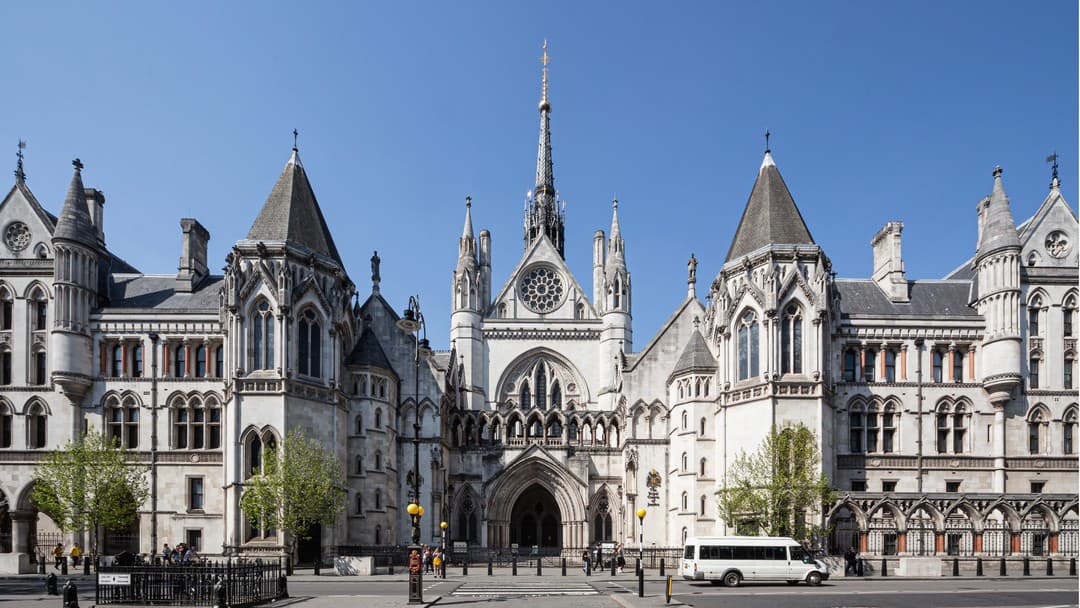
Court of Appeal upholds English jurisdiction in cross-border divorce dispute.
The Court of Appeal has dismissed a husband's appeal against a High Court ruling that his wife retained an English domicile of choice, and that Italy was not clearly the more appropriate forum for their divorce and associated financial remedy proceedings. The decision in Ferrara v Ferrara has significant implications for the law of domicile and for how courts approach forum disputes where parties have relocated abroad but carry deep connections with England.
The parties had lived together in London from 2006 until 2019, when the family relocated to Milan. The wife, an Australian-born model with 27 years of continuous residence in England, maintained that the move was temporary and made under pressure from her husband. The husband, an Italian financier, argued that the relocation was a permanent and agreed decision, and that Italian courts were the natural forum for the proceedings. A separation of property agreement — presented to the parties during their Italian wedding ceremony — would, if enforced, confine any Italian court to making maintenance orders only, with no power to make property adjustment or lump sum awards.
Domicile
Garrido J at first instance found the wife to be a truthful and reliable witness, while declining to place reliance on the husband's evidence unless independently corroborated. That credibility assessment was central to the Court of Appeal's analysis. Moylan LJ confirmed that the wife had acquired an English domicile of choice well before 2019, a finding the husband did not challenge on appeal.
The contested issue was whether she had subsequently lost it. The husband argued that the judge applied an incorrect legal test by using the word "permanently" in paragraph 19(ii) of the judgement, rather than also considering whether the wife had formed an intention to reside in Italy indefinitely. Moylan LJ rejected this reading. The two terms had been used interchangeably throughout the proceedings, including by the husband's own counsel, and the judgement as a whole — particularly paragraph 19(vi) — made plain that the judge correctly focused on whether the wife retained a genuine intention to return to England. She did. Her residence in Italy had, in her own mind, the hallmarks of being temporary, and there is no requirement for a clear plan to return to a domicile of choice for it to be retained.
Forum
The husband's application for a stay was refused below and the refusal upheld on appeal. Moylan LJ held that the range of factors pointing away from Italy was considerable: the proceedings in England could proceed without significant delay; the husband's business retained connections with London; the wife could not effectively participate in Italian proceedings without interpretation; and an LSPO mechanism was available in England but not in Italy. Most compellingly, the separation of property agreement could not be challenged in Italy, meaning that if proceedings were stayed and subsequently concluded there, the wife would almost certainly bring a Part III claim under the Matrimonial and Family Proceedings Act 1984 — rendering any stay wasteful of costs and time.
A notable divergence emerged between members of the court on the relevance of historical connections to forum analysis. Moylan LJ considered such connections capable of forming part of the broad evaluative exercise. Arnold LJ disagreed, expressing the provisional view that the forum non conveniens enquiry requires focus on current, not historic, links — and that HHJ Hess's summary in SA v FA [2022] misstated the law in this respect by introducing a broader "fairness and convenience" framing not derived from Spiliada or De Dampierre. Miles LJ declined to resolve the point, noting that it had emerged only in oral argument without the benefit of fully developed submissions.
That question of principle — whether historic connections remain live factors in the forum analysis — is expressly left open for a future case in which the court has full argument.
 Copyright & permissions