Family Court refuses forum stay in Brunner v Bartok divorce dispute
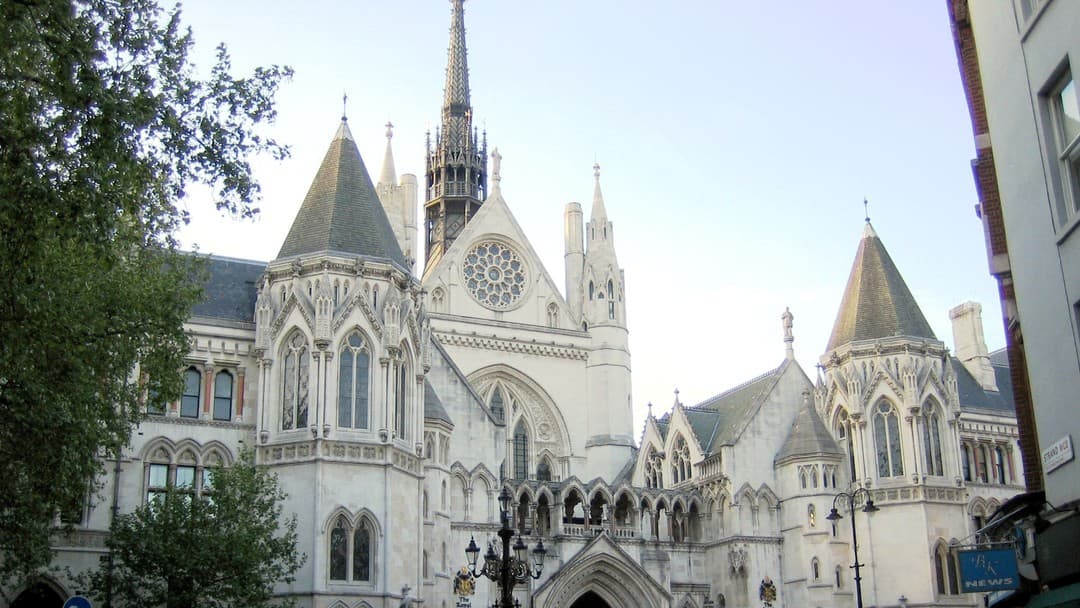
Judge rules England the appropriate forum after wife's litigation misconduct undermines her Florida claim.
The Family Court has refused an application to stay English divorce proceedings in favour of Florida, ruling that the applicant had failed to demonstrate the American state was clearly the more appropriate forum, and offering a detailed and critical re-examination of how courts should approach such disputes under English matrimonial law.
In Re A and Z (No 4) (Forum Non Conveniens) [2026] EWFC 203, Mr Justice McKendrick, delivering his fourth judgement in the proceedings between Ms Angelique Brunner and Ms Dorottya Bartok, dismissed Ms Brunner's application for a stay of the divorce and financial remedy proceedings Ms Bartok had brought in England, finding that the balance of fairness and convenience favoured allowing the case to continue before the courts of England and Wales.
The couple married in Hawaii in 2019 and again, following a pre-nuptial agreement signed the day before, in Florida in 2020. Ms Bartok issued divorce proceedings in England in October 2025, asserting a year's habitual residence, while Ms Brunner sought a stay in favour of Florida, relying on the pre-nuptial agreement's exclusive jurisdiction clause and her closer connections to the United States. The judge noted that Ms Brunner's challenge to English jurisdiction was confined to a service point she did not pursue, and that she had never disputed the underlying habitual residence claim.
The case was complicated by what the judge described as sustained litigation misconduct by Ms Brunner. Having herself sought and obtained directions for expert evidence on Florida law and permission to file evidence ahead of the forum hearing, she went on to breach maintenance and legal costs orders, ignored a hearing listed specifically for her to make the case for a stay, and continued pursuing parallel proceedings in Colorado and Florida despite having previously agreed to pause them. This led the judge to make a Hadkinson order restricting her participation in the proceedings, alongside a Hemain injunction requiring her to halt the overseas litigation. She did not attend the July hearing and was not represented, leaving her case to be assessed on untested written evidence that the judge found internally inconsistent, including conflicting accounts of where her assets were actually held.
The judgement also engaged in an extended analysis of a legal question left unresolved by the Court of Appeal's recent split decision in Ferrara v Ferrara, namely whether the statutory test for a discretionary stay under the Domicile and Matrimonial Proceedings Act 1973 should mirror the common law forum non conveniens principle from Spiliada Maritime Corp v Cansulex Ltd, as held in De Dampierre v De Dampierre, or whether it permits a broader inquiry into the parties' and the marriage's connections to competing jurisdictions, as favoured by Moylan LJ, rather than the narrower, action-focused approach preferred by Arnold LJ. Mr Justice McKendrick expressed respectful disagreement with the House of Lords' equation of the two tests in De Dampierre, reasoning that Parliament's chosen wording, and the Law Commission report that preceded the legislation, pointed toward a broader assessment tied to the marriage itself rather than the litigation alone. He nonetheless found that Ms Brunner's application failed under either approach.
Central to that conclusion was Ms Brunner's failure to establish that she met Florida's residency requirements, that the pre-nuptial agreement and its jurisdiction clause were valid, or that Florida connections outweighed the couple's substantial ties to London, where Ms Bartok has lived since 2016 and holds British citizenship. The court extended existing maintenance and legal services payment orders and directed the parties toward a further dispute resolution hearing following the next Florida hearing in August.
 Copyright & permissions